
Can you actually perform surgery on your floor to remove a single plank without dismantling the entire room? Most homeowners believe that a chipped or water-swollen board signals the end of their floor's seamless beauty. It's an exhausting eyesore that creates constant anxiety, especially when you consider the mechanical complexity of modern click-lock systems. This guide simplifies the process of replacing damaged laminate flooring by using professional-grade techniques. You'll learn how to move past the frustration of a ruined surface and toward a floor that looks brand new again.
Your home deserves a flawless finish. You shouldn't have to settle for a patch job that doesn't blend in. You'll learn how to identify repairable damage, source matching planks for older styles, and execute a replacement that maintains the floor's structural integrity. Whether you're considering a simple repair kit or a full professional replacement, this guide provides the clarity you need — including the exact tool list and technique that Orlando's top installers rely on every day.
★ Key Takeaways
- Learn to distinguish between minor surface chips and critical water swelling that requires immediate action.
- Master the "Incision" method for replacing damaged laminate flooring without dismantling your entire room.
- Understand why specific tools like oscillating multi-tools and wood glue are essential for a seamless, squeak-free repair.
- Know when a DIY fix isn't enough and how professional installation protects your home from hidden subfloor mold.
Identifying Your Damage: Scratches, Chips, or Water Swelling?
Before you commit to replacing damaged laminate flooring, you need to know exactly what you're dealing with. Not all damage is created equal. Some issues are merely surface-level scuffs that a professional repair kit can handle. Others indicate a deep structural failure that threatens the integrity of your entire room. You must distinguish between a cosmetic blemish and a mechanical breakdown of the plank's core.
Start with the "Tap Test." Gently tap the center of the damaged plank with a coin. A sharp, solid click means the board is stable. A hollow, echoing thud suggests the plank has detached from the subfloor or that moisture is compromising the core. If you hear that hollow sound, a surface fix won't last. You're likely looking at a moisture or leveling problem that requires a more comprehensive solution.
Water damage is the most urgent issue to identify. Unlike surface wear, moisture attacks the HDF (High-Density Fiberboard) core. If water seeps into the seams, the core expands — and this expansion is irreversible. A swollen core is also a breeding ground for subfloor mold, especially in Florida's humid climate. Catching water damage early prevents it from spreading to adjacent rows and turning a single-plank repair into a full room replacement.
Surface-Level Imperfections: Scratches and Scuffs
Scratches often appear as thin white lines — damage to the aluminum oxide wear layer. While frustrating, these don't usually compromise the board's structure. A color-matched wax filler crayon can disguise them effectively. Deep gouges are a different story. If pet claws or heavy furniture have dragged deep enough to reveal the dark core material, the board's seal is broken. A wax filler might hide the color, but it won't stop moisture from entering the core over time. If the gouge is wider than a few millimeters, it's time to consider a replacement rather than a patch.
Structural Failure: Swelling, Peaking, and Gapping
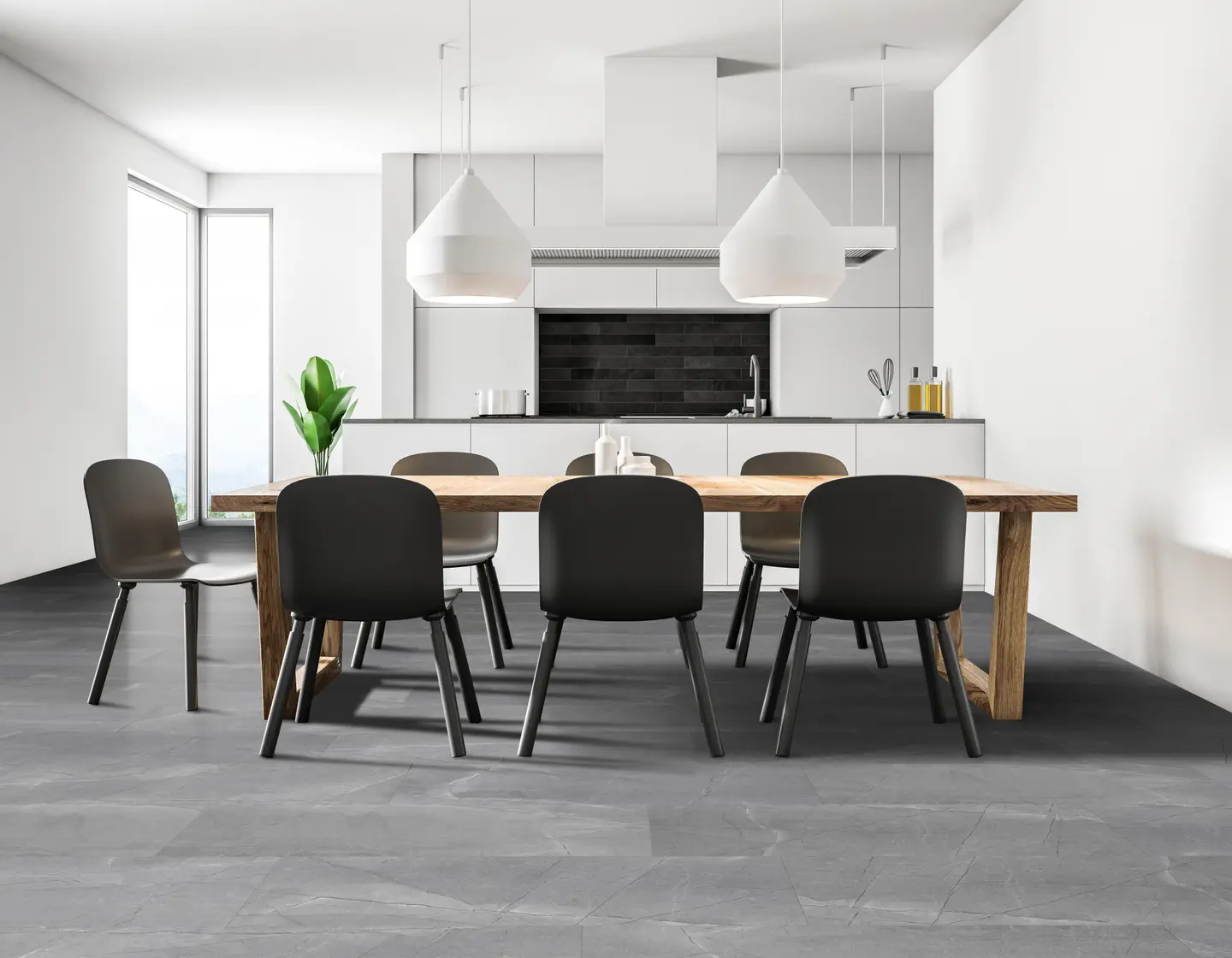
Structural failure looks like peaking or gapping. Peaking occurs when board edges swell and push upward, creating a visible ridge at the seam. This is almost always caused by liquid spills or high indoor humidity. Gapping happens when boards pull apart, leaving a visible space between the click-lock joints — often the result of poor installation or missing expansion gaps at the perimeter. When you see swollen, raised edges, replacing damaged laminate flooring is the only way to restore a flat surface. Once the HDF core absorbs moisture and blooms, it cannot be compressed back down.
The Click-Lock Challenge: Why Replacing Middle Planks Is Complex
Laminate flooring is a floating system. This means the planks aren't glued or nailed to your subfloor. Instead, they rely on a mechanical tongue-and-groove locking system to stay in place. This creates a unified, durable surface. However, this same strength becomes a significant hurdle when replacing damaged laminate flooring in the center of a room. You aren't dealing with one board; you're dealing with the cumulative tension of the entire floor.
The "Row Effect" is the primary challenge. Because every plank is physically locked into its neighbors on all four sides, you cannot simply lift a single board. To reach a center-room plank using standard disassembly methods, you would need to remove baseboards and take apart every row from the nearest wall. This often involves moving heavy furniture and risks damaging the locking tongues of perfectly good planks along the way.
The Anatomy of a Laminate Plank
Most laminate flooring consists of four distinct layers: the wear layer, the design layer, the HDF core, and the backing. The click-lock mechanism is precision-milled directly into the HDF core. While this core is incredibly strong under vertical foot traffic, it is brittle when subjected to the prying forces required for repair. If you aren't careful, the thin tongue will snap. Once that happens, the new plank won't have a secure anchor — leading to vertical movement, "bouncing" boards, and floor squeaks that persist for years.
Repair vs. Replacement: Choosing the Right Solution
The decision between a targeted repair and a full-plank replacement comes down to the depth and type of damage. Use this framework:
- Surface scratch (wear layer only): Wax filler crayon — no replacement needed
- Deep gouge exposing HDF core: Plank replacement recommended to seal against moisture
- Chipped corner or edge: Repair kit may suffice if the locking joint is intact
- Water swelling or peaking: Mandatory plank replacement — the HDF cannot be un-bloomed
- Gapping across multiple rows: Professional diagnosis — may indicate subfloor leveling issue
When in doubt, the Tap Test tells the story. A hollow sound beneath any plank — even one with no visible surface damage — suggests hidden moisture that requires immediate professional assessment. Ignoring it in Orlando's humid climate can allow mold to establish within 48 to 72 hours of the initial moisture event.
Step-by-Step: How to Replace a Damaged Laminate Board
Professional installers use the Incision Method for mid-room plank replacements. This surgical approach removes the damaged board in pieces without disturbing the surrounding floor. Here is the exact process our installation team uses at Cavalieri Flooring:
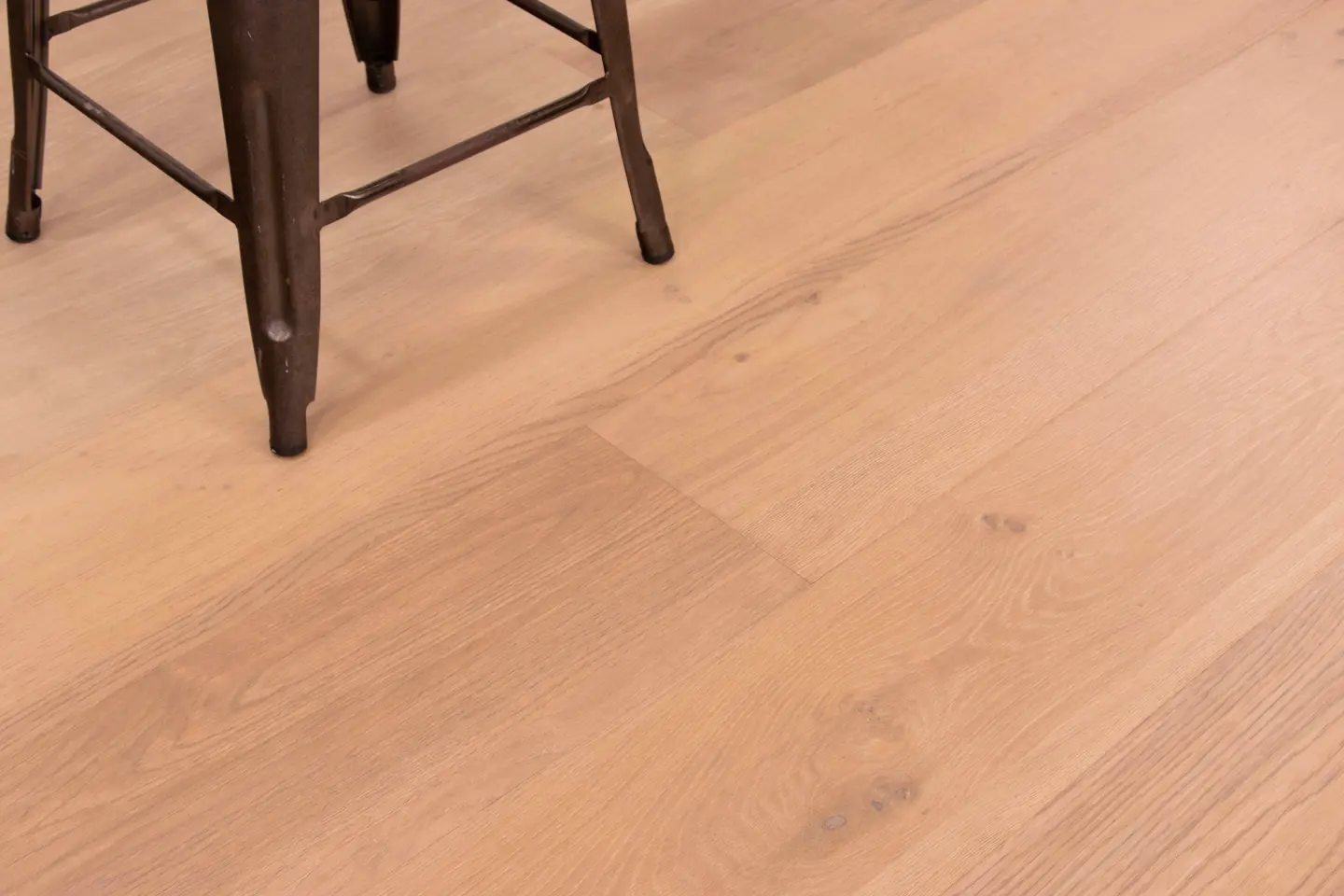
Tools Required
- Circular saw or oscillating multi-tool with a fine-cut blade
- Sharp wood chisel (1-inch wide)
- Utility knife
- Pry bar (thin, floor-safe)
- Wood glue or construction adhesive
- Pull bar and tapping block
- Moisture meter (strongly recommended)
- Matching replacement plank
The Incision Method — Step by Step
Step 1 — Score the perimeter. Using a utility knife and straightedge, score a line approximately ½ inch inside all four edges of the damaged plank. This protects the locking joints of the adjacent boards during the cutting phase.
Step 2 — Make relief cuts. Set your circular saw or oscillating multi-tool to cut just through the plank thickness (typically 8–12mm). Make two parallel cuts down the center of the plank lengthwise, and two crosscuts near each end. This divides the board into manageable sections.
Step 3 — Chisel and remove sections. Using the chisel, pop the center sections upward and remove them. Work from the center outward so you don't lever against the neighboring boards. The perimeter strips — the ½-inch margins you scored — remain last.
Step 4 — Remove perimeter strips carefully. Slide the chisel under each perimeter strip and gently pry upward. The goal is to free the locking tongues without snapping them off the adjacent planks. Go slowly — this is where most amateur repairs fail.
Step 5 — Check the subfloor. Before installing the replacement, inspect the subfloor for moisture. Use a moisture meter and look for discoloration, soft spots, or mold. If subfloor damage is present, address it before proceeding. In Orlando homes built on concrete slabs, verify the vapor barrier is intact.
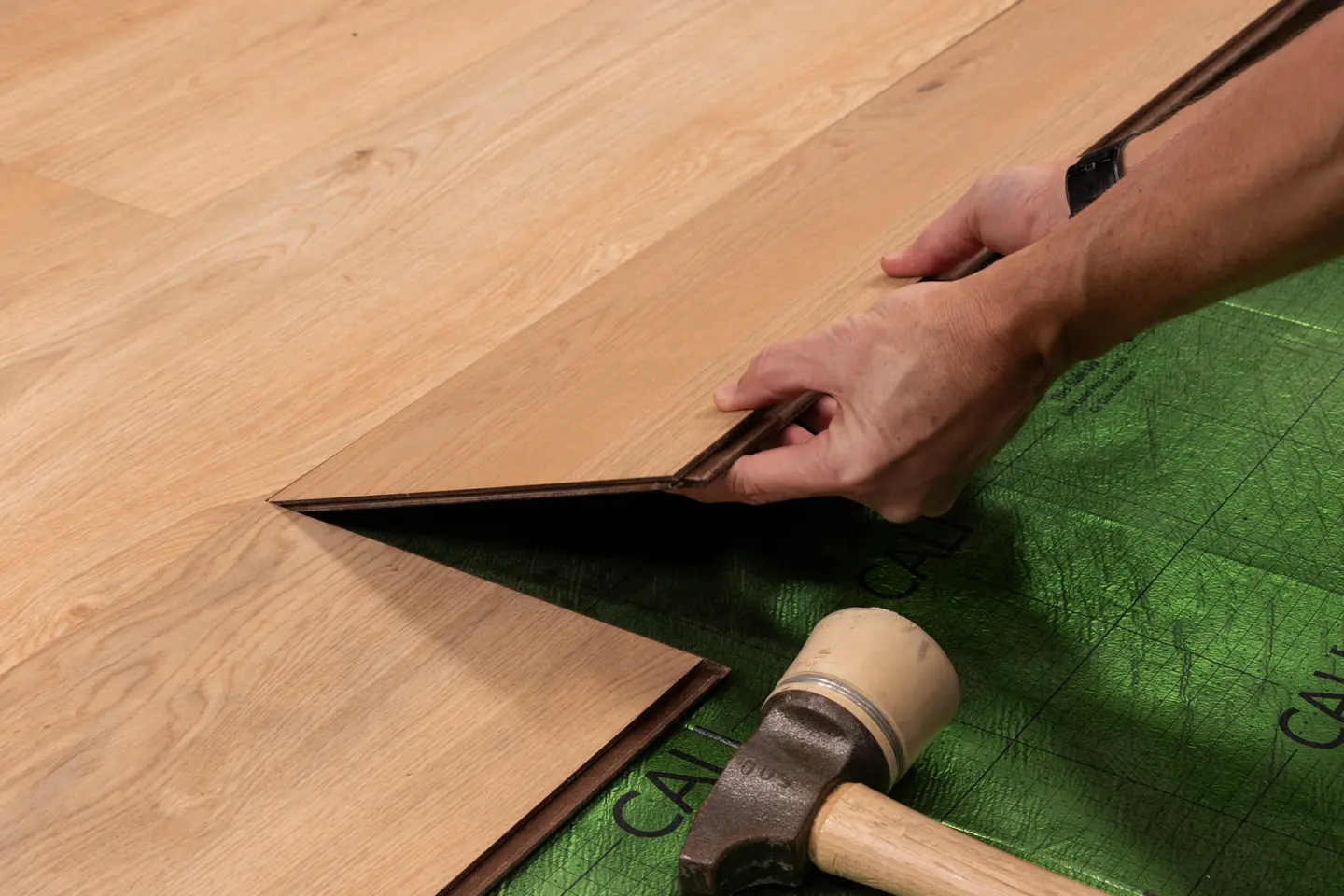
Step 6 — Prepare and install the replacement plank. On the replacement plank, remove the lower lip of the groove on the long edges and one short edge using a utility knife. This converts those edges to "drop-in" edges while the remaining edges retain their click-lock profiles. Apply a thin bead of wood glue to the modified groove edges and drop the plank into position.
Step 7 — Secure and clean up. Press the plank firmly into place, using a tapping block and mallet on the click-lock edges. Wipe away any squeezed-out glue immediately with a damp cloth. Place weights on the plank for 2 hours while the glue sets.
Beyond the Quick Fix: When to Invest in Professional Services
The Incision Method is effective — but it is also unforgiving of mistakes. A blade set even 1mm too deep will scar your subfloor. A misaligned cut will expose the seam at an angle that is visible from across the room. These are the scenarios where professional help delivers a return on investment that exceeds the cost of the service call.
Call a professional when:
- The tap test reveals hollow sound in multiple adjacent planks — water may have spread further than the visible damage
- You cannot source a matching replacement plank (the style may be discontinued — professionals often have access to manufacturer overstock)
- The subfloor shows signs of mold, rot, or structural softness
- The damaged plank is located in a doorway with complex transition requirements
- Your manufacturer warranty requires professional installation for repairs
- More than 10–15% of your floor shows damage — a full replacement may be more cost-effective than multiple targeted repairs
If the water damage has reached the subfloor, mold can establish within 48–72 hours in Orlando's climate. A professional installer will check for hidden mold, apply antimicrobial treatment, and ensure the subfloor is properly dried and re-leveled before the new laminate is installed. This protects your home's air quality and prevents the damage from reoccurring.
The Cavalieri Approach to Laminate Repair in Orlando
At Cavalieri Flooring, we've seen every type of laminate damage — from a single pet-claw gouge to entire rooms destroyed by slow dishwasher leaks. Our installation team is trained in both targeted plank replacement and full laminate installation, giving us the diagnostic perspective to recommend the most cost-effective path for your specific situation.
We carry an extensive inventory of popular laminate collections, which means we can often match discontinued styles or source close-match replacements within days rather than weeks. Every repair we perform is backed by our workmanship guarantee, and we always conduct a final moisture reading after the repair to confirm the subfloor is stable. If browsing our laminate collections reveals a better modern option than your current floor — or if you're ready to upgrade to the 100% waterproof performance of luxury vinyl plank — we can provide a complete replacement estimate at no cost.
Visit our showroom at 4301 36th St #101, Orlando, FL 32811, call (321) 424-0546, or request a free estimate online. Open Monday–Friday, 7:00 AM–5:00 PM & Saturday, 9:00 AM–3:00 PM.
Frequently Asked Questions
Can you replace just one damaged laminate plank without removing the entire floor?
Yes — using the professional incision method. A skilled installer carefully cuts the damaged board into sections and removes them piece by piece without disturbing the surrounding planks. This avoids the need to disassemble rows from the nearest wall. It requires specialized cutting tools and precision, which is why it's best performed by an experienced professional. See our laminate installation services for repair consultations.
How do I tell if laminate damage is surface-level or structural?
Use the Tap Test: tap the plank center with a coin. A sharp click indicates a stable, likely cosmetic issue. A hollow thud signals detachment or hidden moisture damage. Swollen edges, visible ridges at seams, or gray/black discoloration in the wood are signs of structural failure. These require plank replacement, not a filler kit. If you're unsure, schedule a professional assessment.
What causes laminate floors to swell and peak?
Swelling and peaking are caused by moisture infiltrating the HDF core. Once water seeps through the seams, the core fibers absorb it and expand permanently — there is no way to compress them back down once swollen. This cannot be reversed by drying. The board must be replaced. Common causes include liquid spills left unaddressed, missing expansion gaps around the perimeter, and high indoor humidity — particularly relevant in Orlando's subtropical climate.
Can I use a repair kit for deep chips or gouges in laminate?
Wax filler kits work for minor surface scratches that haven't penetrated the wear layer. However, if a gouge is wide enough to reveal the dark HDF core material, a wax fill only hides the color — it does not seal the board against moisture. A gouge wider than a few millimeters should trigger a full plank replacement to prevent long-term water infiltration and core swelling.
What tools do I need to replace a laminate plank using the incision method?
You need a circular saw or oscillating multi-tool with a fine-cut blade, a sharp 1-inch wood chisel, a utility knife, a thin pry bar, wood glue for the modified lock joints, a tapping block and mallet, and a moisture meter. Having a matching replacement plank ready before you start is critical. If your collection is discontinued, contact us — we may have overstock that matches.
When should I replace my entire laminate floor instead of patching it?
Consider a full replacement when: the damage covers more than 10–15% of your total floor area, water damage has spread to the subfloor and caused mold, you cannot source matching replacement planks, or the floor is over 15 years old with widespread wear. In many Orlando homes, a full upgrade to waterproof luxury vinyl plank is more cost-effective than extensive repairs to aging laminate — with the added benefit of 100% moisture resistance going forward.
Does replacing laminate planks void the manufacturer's warranty?
It depends on the manufacturer's terms. Most warranties require that any repairs be performed by a licensed flooring professional following the manufacturer's installation guidelines. DIY repairs using unapproved methods can void the remaining warranty. Always check your product documentation before attempting a repair, and consider hiring a certified installer to protect your coverage. At Cavalieri, every repair comes with documented workmanship coverage.
What is the best laminate flooring for Orlando's climate?
For Orlando's humid subtropical climate, choose laminate with a minimum AC4 wear rating, a moisture-resistant HDF core, and an attached underlayment with integrated vapor barrier. Twelve-millimeter planks with sealed edge technology offer the best resistance to Florida's humidity swings. If moisture is a persistent concern — near a bathroom, laundry room, or concrete slab — luxury vinyl plank offers 100% waterproof performance that laminate cannot match. Read our full vinyl vs. laminate comparison.
Need Expert Laminate Repair in Orlando?
Get a free estimate for laminate repair or replacement from Cavalieri Flooring. We serve all Central Florida neighborhoods.
Or call us now: (321) 424-0546
Related Articles & Resources
- Vinyl vs. Laminate: The Ultimate Comparison
- Is Waterproof Laminate Really Waterproof?
- Why Professional Installation Trumps DIY
- How to Clean Laminate Floors
- Best Flooring for High-Traffic Areas
- Shop All Laminate Flooring
- Shop Luxury Vinyl Plank (Waterproof Alternative)
- Laminate Installation Services in Orlando
- Get a Free Flooring Estimate
Don't Let One Damaged Plank Ruin Your Entire Floor
A single swollen or chipped laminate board is a solvable problem — if you act before the moisture spreads. The Incision Method allows professional installers to replace a single mid-room plank without dismantling your entire floor, preserving both the aesthetic and your manufacturer's warranty.
At Cavalieri Flooring in Orlando, we diagnose the full extent of damage, source matching planks, and execute repairs with precision tools — or help you transition to a more resilient floor if the situation calls for it.
Schedule Free Laminate Assessment