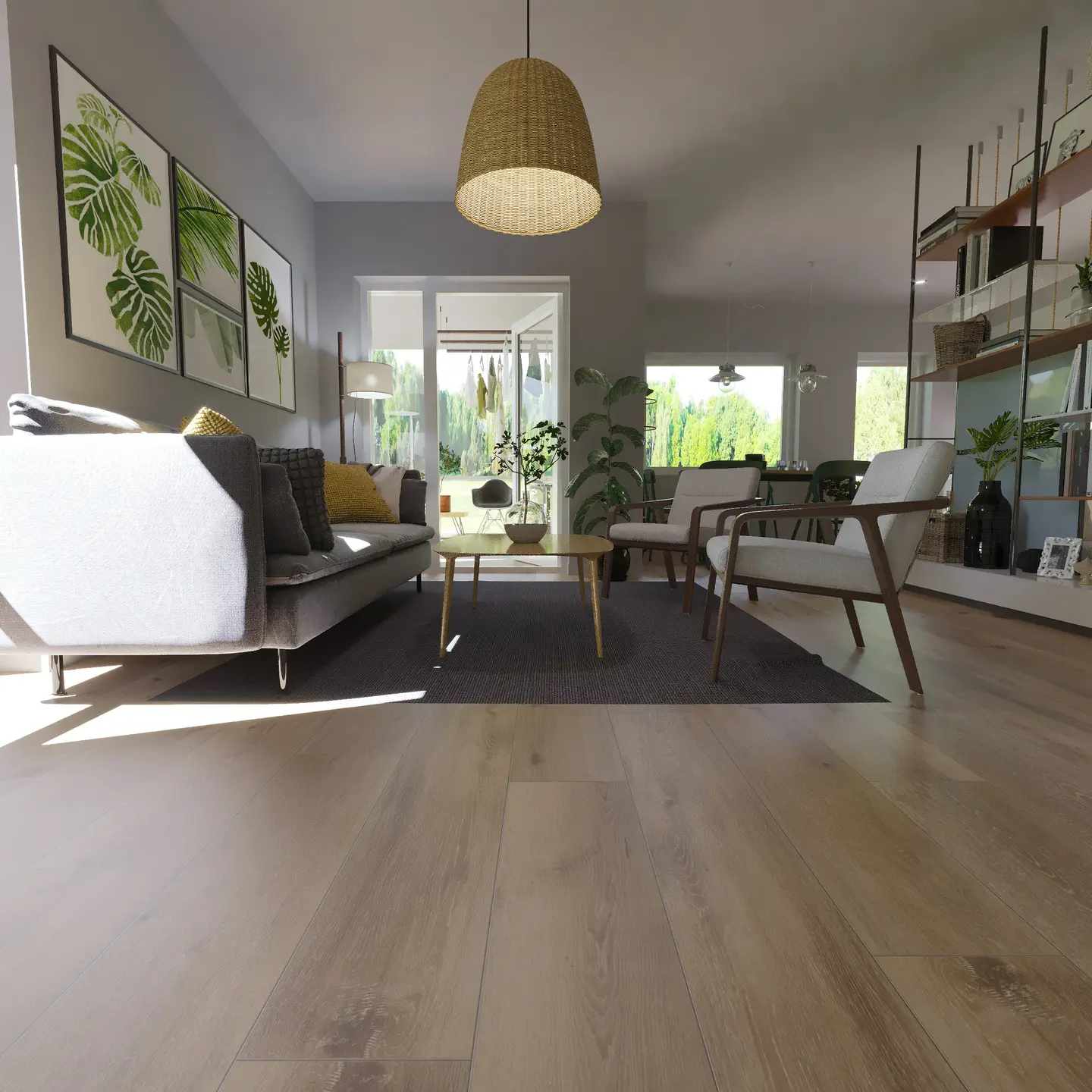
Florida has some of the most demanding conditions for flooring of any state in the country. Average outdoor relative humidity in Orlando runs between 74% and 90% depending on the season. Summers bring daily afternoon thunderstorms and months of heat that push interior moisture levels to extremes. Then the AC kicks on and drops humidity by 30–40 points — repeatedly, every single day. Over years, that stress cycle destroys the wrong floor.
After installing floors in hundreds of Orlando-area homes, we've seen exactly what holds up and what doesn't. This guide is the honest version — no fluff, no vague "consult a professional" answers. Just what works in a Florida home and why.
💡 Key Takeaway
In Florida, the enemy is not just water — it's humidity cycling. The best flooring is one that doesn't absorb moisture at all. SPC-core LVP and porcelain tile are the clear winners. Engineered hardwood works in fully conditioned spaces. Solid hardwood and standard laminate are high-risk choices that we do not recommend for most Florida installations.
Why Florida Is Different from the Rest of the Country
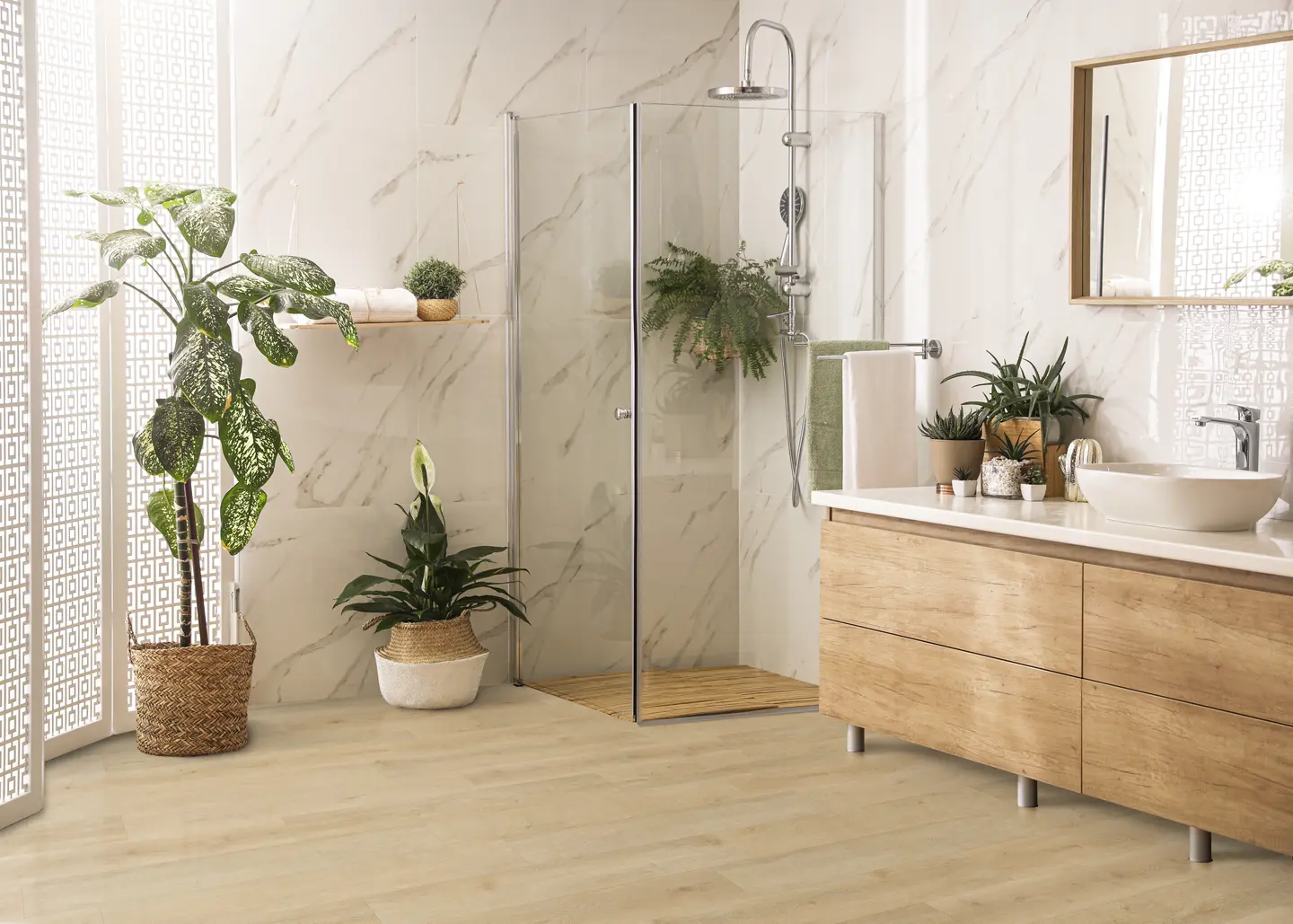
Most flooring guides are written for the continental United States — a climate where winters are dry and summers are moderately humid. Florida doesn't fit that mold. Here's what makes Central Florida uniquely punishing for floors:
The Humidity Swing Problem
Outdoor humidity in Orlando averages 87% in summer mornings and rarely drops below 60% even in our driest winter months. Inside an air-conditioned Florida home, relative humidity typically sits between 40–55%. Every time you open a door, come in from outside, or have windows open, moisture-laden air hits your floor. Every time the AC runs, that moisture is pulled back out. This constant expansion-contraction cycle is what cracks laminate joints, cups solid hardwood, and separates flooring from its substrate over time.
Slab Construction and Concrete Subfloors
The vast majority of Florida homes are built on concrete slabs — not wood subfloors with a crawl space like you'd find in the Northeast or Midwest. Concrete slabs naturally wick ground moisture upward. In summer, slab moisture levels in Florida can be surprisingly high even in a conditioned space. Any flooring installed directly on a slab needs to tolerate this ongoing moisture pressure from below, not just surface spills from above.
AC and Heating Cycling
Florida homes run AC nearly year-round. During summer, systems run hard and long. During our mild winters, they cycle between heat and cooling. Each AC cycle is a humidity swing. Floors that absorb moisture will swell when the AC is off and shrink when it runs — repeatedly. Over 5–10 years, that's thousands of cycles. The wrong floor shows it.
Storm Season and Water Intrusion
Hurricane season runs June through November, and even a near miss can push wind-driven rain under door thresholds and through screened lanai entries. Flash flooding from intense afternoon storms is common in low-lying areas of Orlando, Lake Nona, and surrounding communities. Your floor needs to survive not just humidity but actual water contact events.
Best Flooring Choices for Florida Homes
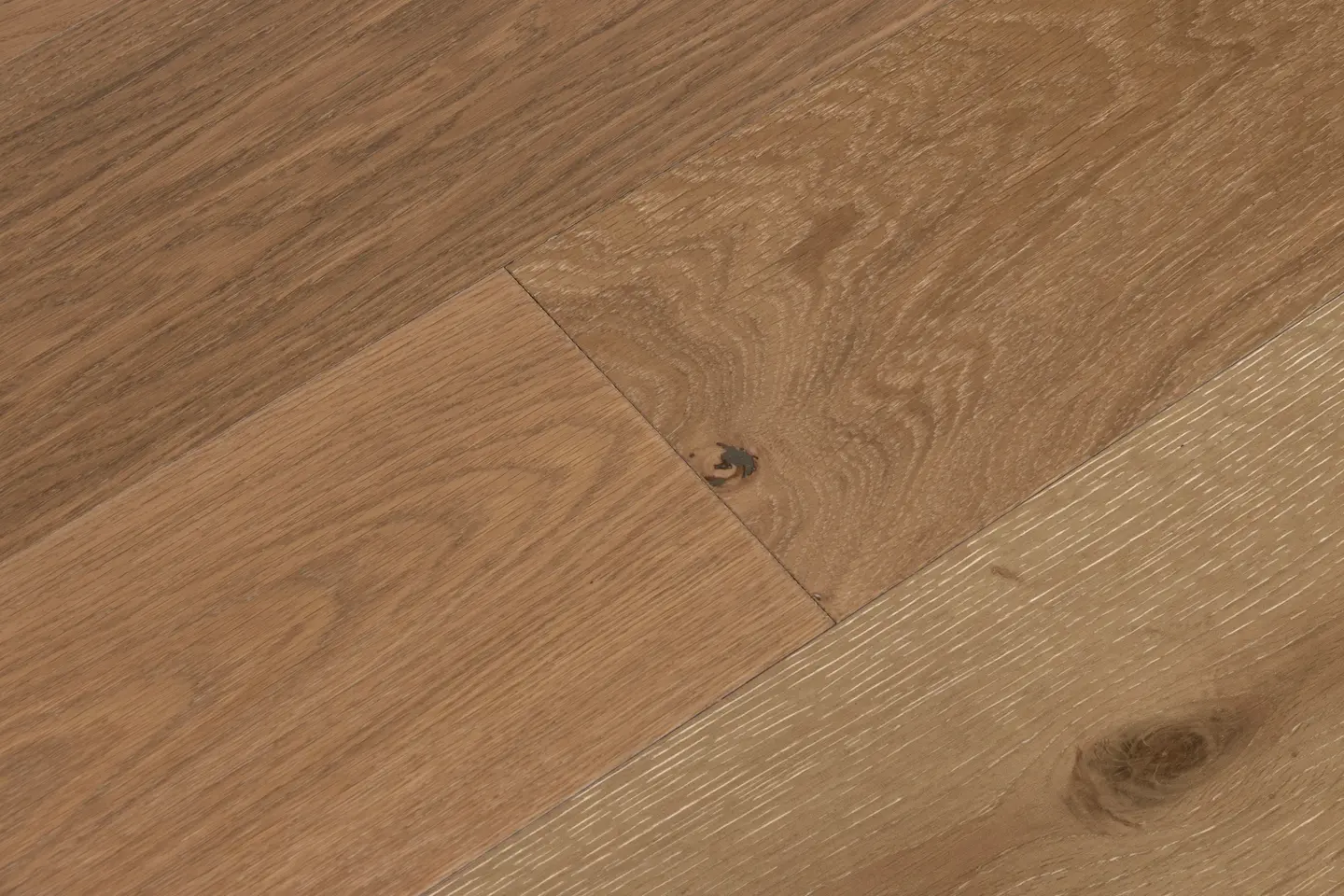
1. Luxury Vinyl Plank with SPC Core — The Clear Winner
Stone Polymer Composite (SPC) luxury vinyl plank is, without question, the best overall flooring for Florida homes. Here's exactly why:
- 100% waterproof at every layer — the wear layer, the print layer, and the SPC core are all completely impervious to water. Moisture from above or below cannot damage it.
- Dimensionally stable — SPC core contains stone powder that makes it rigid and resistant to expansion and contraction regardless of humidity swings. It doesn't absorb moisture, so it doesn't react to it.
- Installs directly on concrete — SPC-core LVP can go directly over a concrete slab with no moisture barrier required (though we often recommend one as a best practice).
- Handles temperature extremes — rated for installation in spaces up to 140°F, which matters for Florida lanais, garages, and direct-sun rooms.
- Mold and mildew resistant — because it contains no organic material, there's nothing for mold to feed on.
The one consideration: LVP still needs proper expansion gaps at walls and transitions. Even though it doesn't swell significantly, thermal expansion from direct sunlight can cause issues if it's installed too tight in rooms with large south-facing windows.
Best for: Every room in the house — kitchens, bathrooms, living areas, bedrooms, basements, laundry rooms.
Our top picks: Laguna Collection for coastal palettes, Longboards for wide-plank drama, Select Collection for whole-home versatility.
2. Porcelain Tile — The Proven Classic
Porcelain tile has been the go-to Florida floor for decades — and it earned that reputation. Porcelain is made at extremely high heat, creating a dense, almost non-porous surface that water, humidity, and heat simply cannot penetrate. It's completely unaffected by Florida's climate under any conditions.
The trade-offs are real though: tile is hard underfoot, cold in the morning (though in Florida that's often a feature rather than a bug), expensive to install, and difficult to replace if damaged. Grout lines require periodic resealing to prevent staining. And tile doesn't give you the warmth and softness of a wood-look floor.
Best for: Bathrooms, kitchens, laundry rooms, lanais, entryways, and any outdoor-adjacent space.
Verdict: Excellent performance, higher installation cost, less comfortable underfoot than LVP.
3. Engineered Hardwood — Good in Conditioned Spaces Only
Engineered hardwood has a real wood veneer on top of a plywood or HDF core. The layered construction makes it significantly more stable than solid hardwood in high-humidity environments — but it is not waterproof, and it still responds to major humidity swings.
In a fully air-conditioned Florida home where humidity is consistently maintained between 40–55% RH, quality engineered hardwood performs well. The key phrase is consistently maintained. If you travel for weeks and leave the AC off, or if you have a second home that sits unconditioned in summer, engineered hardwood will show the strain.
Best for: Primary bedrooms, offices, dining rooms, and other low-moisture zones in homes with reliable, consistent AC.
Not recommended for: Bathrooms, laundry rooms, kitchens, or any home that's left unconditioned for extended periods.
4. Bamboo — Climate-Specific Performance
Bamboo flooring — particularly strand-woven bamboo — is denser and harder than most hardwoods. Quality strand-woven bamboo has better humidity resistance than traditional hardwood, but it still contains organic fibers that react to extreme moisture swings. In Florida, treat bamboo similarly to engineered hardwood: it works in conditioned spaces with stable humidity, but it's a higher-risk choice than LVP or tile.
What to Avoid in Florida Homes
Solid Hardwood — High Risk
We install hardwood in Florida every week — and we want every customer to go in with eyes open. Solid hardwood absorbs and releases moisture. In Florida's humidity swings, solid hardwood will expand in summer and contract in winter's drier AC-cooled air. This leads to cupping (edges higher than center), crowning (center higher than edges), gapping, and over years, potential warping.
Proper acclimation and installation techniques reduce the risk, but they don't eliminate it. If you're set on real hardwood in Florida, choose a narrow-plank species with good stability ratings (white oak, hickory, maple) and commit to maintaining 45–55% indoor humidity year-round with a whole-home dehumidifier. Wide-plank solid hardwood (5"+ width) in Florida is genuinely high risk.
Standard Laminate — Not Suitable
Traditional laminate has an HDF (high-density fiberboard) core that absorbs moisture at the edges and seams. In Florida's humidity, that core swells. You'll see joints pushing up, edges lifting, and surface bubbling — sometimes within just a few years in a humid Florida home. The image layer can also separate from the core when moisture gets underneath.
Waterproof laminate (with a true waterproof core) performs better, but even the best waterproof laminate doesn't match SPC-core LVP in a high-humidity environment. At similar price points, LVP is simply the smarter buy in Florida.
Cork — Not for Florida
Cork is a beautiful, sustainable flooring option — but it's an organic material that absorbs moisture readily. In Florida's humidity, cork floors can swell, stain, and develop mold if not kept meticulously dry. We don't recommend cork for most Florida homes.
Room-by-Room Florida Flooring Guide
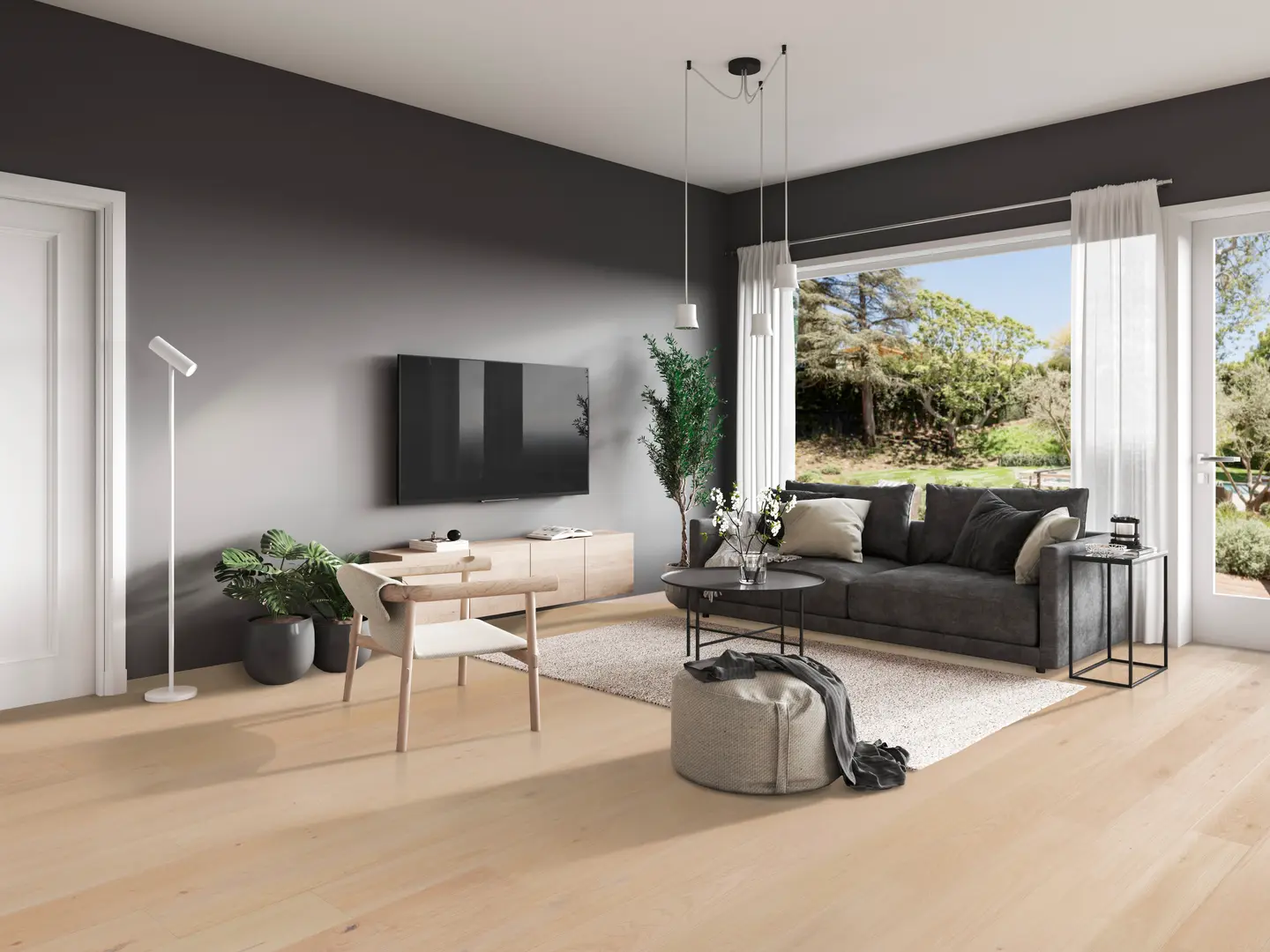
Living Room & Dining Room
Best choice: SPC LVP. Wide-plank formats (6"–9") look stunning in open-plan Florida homes and the format doesn't increase humidity risk at all. Engineered hardwood is a good second option if the room stays consistently conditioned.
Avoid: Solid hardwood in large open-plan rooms with high ceilings — air stratification means humidity swings are more pronounced.
Kitchen
Best choice: SPC LVP or porcelain tile. Florida kitchens see spills, tracked-in rain, and humidity from cooking all year round. You want 100% waterproof. LVP is more comfortable underfoot during long cooking sessions; tile is easier to clean but harder on your back and feet.
Bathrooms
Best choice: Porcelain tile or SPC LVP. Both are fully waterproof. Tile is the traditional choice and is unmatched for showers and wet areas. SPC LVP makes bathroom floors warmer and more comfortable, especially in children's bathrooms and primary suites where tile's coldness is unwelcome.
Avoid: Any wood-based product. Engineered hardwood does not belong in a Florida bathroom.
Bedrooms
Best choice: SPC LVP. It's softer underfoot than tile, looks beautiful in wood tones, and has zero humidity-related risk. Engineered hardwood is also fine in a fully conditioned bedroom where humidity is stable.
Laundry Room
Best choice: SPC LVP or porcelain tile — nothing else. Laundry rooms are one of the highest-risk moisture areas in any home. Washer hose failures, condensation from the dryer, and overflow events require a fully waterproof floor.
Lanai / Screened Porch
Best choice: Porcelain tile. Partially outdoor spaces in Florida are exposed to direct rain intrusion, UV light, and full outdoor humidity levels. Porcelain tile is the only true all-season Florida lanai floor. Outdoor-rated composite decking is a second option for wood aesthetics. No LVP product is rated for partially outdoor spaces with UV exposure and wind-driven rain.
Garage
Best choice: Sealed concrete or epoxy coating. Garages in Florida reach extreme temperatures (120°F+) and have oil, chemical, and water exposure that exceeds the tolerance of most flooring products. LVP and tile are not recommended for Florida garages.
What to Look For When Buying Florida Flooring
SPC vs. WPC Core
Both SPC (Stone Polymer Composite) and WPC (Wood Polymer Composite) are 100% waterproof — but SPC is denser, more dimensionally stable, and better suited for Florida's temperature extremes. WPC is softer and more comfortable underfoot but can expand slightly in very high heat (think south-facing rooms in direct sun). For most Florida installations, SPC is the safer choice.
Wear Layer Thickness
The wear layer is the clear protective coat on top of LVP. For Florida family homes: 12 mil minimum for bedrooms and low-traffic areas; 20 mil for kitchens, living rooms, and entryways; 28 mil and above for commercial spaces, vacation rentals, and very high-traffic homes. Thicker wear layers are also more scratch-resistant — relevant if you have dogs with active claws.
Expansion Gap Requirements
Even though LVP doesn't absorb moisture, thermal expansion still requires proper gaps at all walls and fixed objects. In Florida where floor temperatures can swing significantly, follow the manufacturer's expansion gap requirements precisely — typically ¼" at walls. Failure to maintain proper gaps is one of the most common causes of buckling in otherwise waterproof floors.
Acclimation
LVP and engineered hardwood both need to acclimate to your home's temperature and humidity before installation. For Florida homes, this means bringing the flooring into the conditioned space (not the garage) for at least 48–72 hours before installation. This lets the product reach equilibrium with your home's specific conditions before it's locked down.
Underlayment
For concrete slab installations in Florida, use an underlayment with a built-in vapor barrier even if your LVP manufacturer says it's not required. The extra protection against slab moisture transmission is inexpensive insurance against long-term moisture-related problems.
Florida Flooring FAQ
What is the best flooring for Florida humidity?
Luxury vinyl plank with an SPC core is the best flooring for Florida humidity. It is 100% waterproof at every layer and completely unaffected by moisture absorption. Porcelain tile is the runner-up. Engineered hardwood works in temperature-controlled interiors. Avoid solid hardwood and standard laminate.
Can you put hardwood floors in a Florida home?
You can, but it carries real risk. Solid hardwood absorbs and releases moisture with humidity swings. Florida's cycling between 80–90% outdoor humidity and 40–50% air-conditioned indoor humidity stresses solid hardwood repeatedly. Narrow-plank species with good stability ratings (white oak, hickory) in homes where humidity is actively controlled year-round are your best chance at success. Wide-plank solid hardwood is high risk in Florida. Engineered hardwood performs significantly better.
Does laminate flooring work in Florida?
Standard laminate is not recommended. The HDF core swells at seams and edges in Florida's humidity, causing joint failure and surface bubbling. Waterproof laminate performs better but still cannot match SPC-core LVP in high-humidity environments. At similar price points, LVP is the smarter buy.
What flooring is best for a Florida lanai?
Porcelain tile is the definitive answer for lanais and screened porches. It handles rain, UV light, full outdoor humidity, and temperature extremes without any maintenance concerns. No wood-look floor — LVP, engineered hardwood, or laminate — is rated for partially outdoor applications with wind-driven rain exposure.
How does AC cycling affect flooring in Florida?
Wood-based floors expand when humid air enters and contract when the AC reduces indoor humidity. Over years, thousands of these cycles cause cupping in hardwood, joint failure in laminate, and squeaking in both. SPC-core LVP and porcelain tile do not absorb moisture, so they're immune to this cycling damage.
Ready to choose the right floor for your Florida home?
Visit our Orlando showroom at 4301 36th St #101, call us at (321) 424-0546, or schedule a free in-home estimate. We install hundreds of floors across Central Florida every year — we'll tell you honestly what will hold up in your specific home and budget.
Schedule Free Estimate