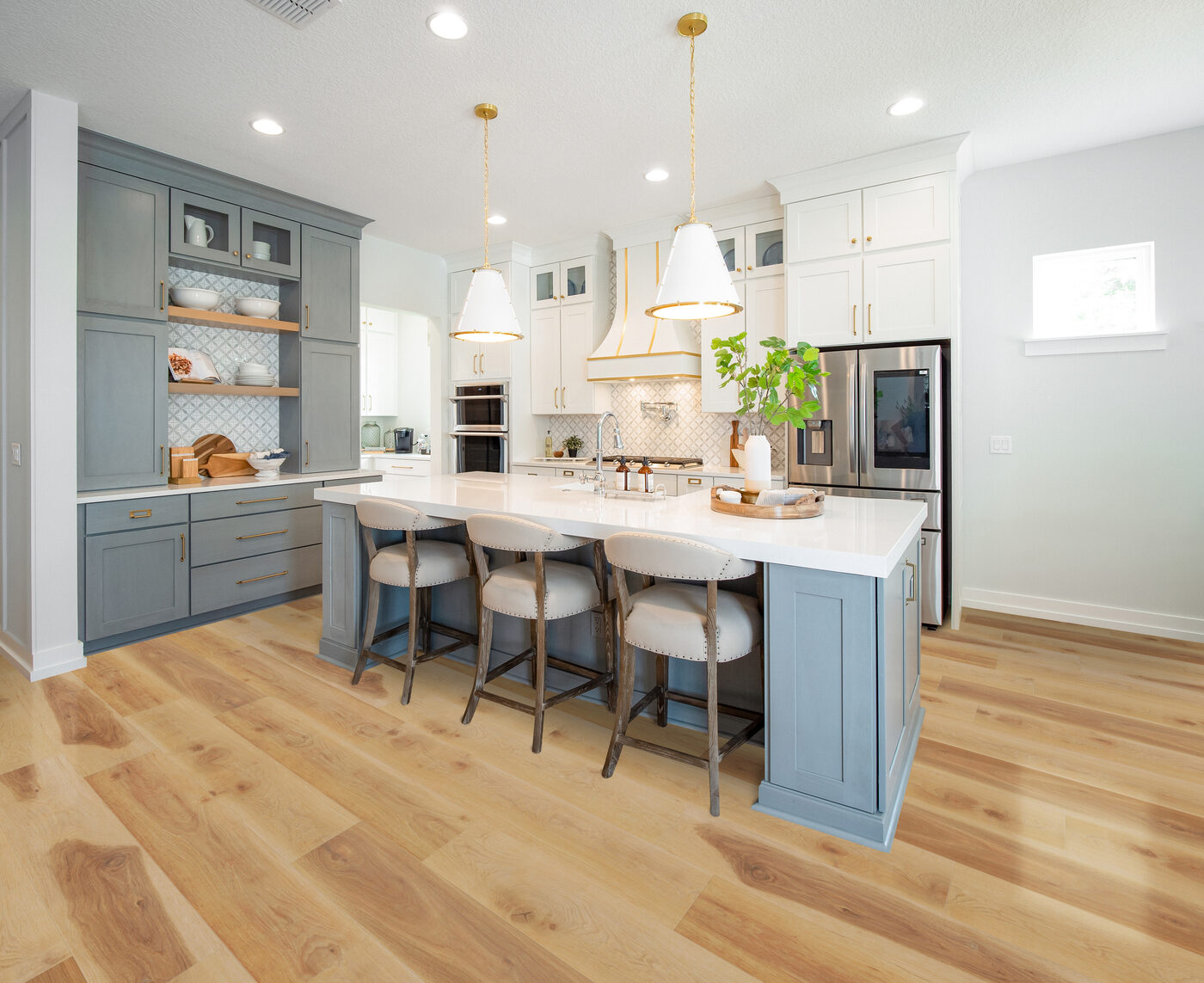
Quick answer: The closest possible match comes from a stair tread manufactured specifically for your flooring collection — same brand, same colorway, same production run. Color is just one of six matching variables. Grain direction, embossing texture, sheen level, plank width, and dye lot all determine whether two pieces look intentionally coordinated or accidentally close-but-wrong when viewed side by side in your home's lighting.
The 6-Level Matching Hierarchy
Not all stair matching options are equal. Here is the hierarchy from best to worst, with realistic guidance on each level:
All 10 Matching Variables — Why Color Is Not Enough
Homeowners and even some installers focus only on color when selecting stair accessories. But in the real world, under real home lighting, six other variables determine whether two pieces look matched or look "almost right but slightly off."
| Matching variable | Why it matters | How to check it |
|---|---|---|
| Base color | The most obvious variable — warm vs. cool tone, lightness vs. darkness | Compare under your room's dominant lighting, not store lighting |
| Grain pattern | LVP grain is a photographically reproduced wood grain; different runs vary | Hold pieces side by side — grain knots and lines should be visually similar |
| Embossing texture | The tactile surface texture — wire-brushed, hand-scraped, smooth — affects both look and feel | Run a finger across both surfaces; raking light reveals depth differences |
| Sheen level | Matte, satin, semi-gloss — even a small sheen difference is very visible on stairs | Compare under a raking light source from the side; reflections reveal sheen mismatches |
| Plank width | A wide-plank floor paired with a narrow-width stair tread looks inconsistent | Measure both; they should be within 1/2 inch to appear consistent |
| Dye lot / production run | Same product, different batch — can vary in color saturation or tone | Match batch numbers where possible; always compare physically if different runs |
| Lighting conditions | Your staircase lighting may be different from the room lighting — landings often have warm incandescent, rooms have cool LED | Compare pieces at the stair location under its actual lighting, not in a room |
| Nose profile | Rounded (bullnose) vs. square vs. beveled — the nose shape affects the visual weight of the step edge | Select nose profile intentionally; it is a design decision, not just an accessory choice |
| Riser color/material | White risers vs. matching LVP risers vs. painted risers — the riser dominates the visual between each step | See the risers section below for a complete comparison |
| Wear-layer sheen aging | New accessories have factory sheen; existing floor may have traffic-related sheen reduction | On an existing floor, compare new accessories to a lightly trafficked area, not the highest-traffic zone |
Real Example: Timber Beach Flooring and Timber Beach Stair Tread
The Timber Beach collection is one of the clearest examples of a manufacturer-designed matching stair system available in our showroom. Here is how the components align:
Timber Beach Collection — Stair System Components
Pricing and availability subject to change. Verify current stock at our Orlando showroom or by calling (321) 424-0546.
The key insight from the Timber Beach example is that when the manufacturer designs both the field plank and the stair tread at the same time, the matching is engineered — not approximated. The photographic wood grain, the embossing pattern, the sheen level, and the wear-layer coating are all specified together. No amount of careful color-matching from a third-party catalog can replicate that.
Third-Party Accessories: Risks and Reality
The temptation with third-party stair accessories is that they often cost less per piece and are available for more collections — including collections whose manufacturers don't offer a matching stair system. But there are real risks that many online guides do not adequately explain:
- Color match under different lighting: Third-party accessories are photographed and marketed under controlled studio lighting. Your home has its own lighting mix. Even products described as "perfect match for [collection name]" may appear noticeably different under your specific lighting conditions.
- Sheen variation: Sheen is very hard to match without identical manufacturing specs. A matte-finish LVP paired with a slightly satin accessory creates an immediately visible mismatch at the stair edge — exactly where it is most visible at eye level.
- Texture/embossing variation: The tactile embossing on LVP is specific to the manufacturer's tooling. Third-party products use different tooling — smooth vs. wire-brushed vs. hand-scraped variations may be audible in name but very different in feel and appearance.
- Warranty complications: Some LVP manufacturers specify that only their own accessories should be used with their flooring, and using third-party accessories may affect the floor warranty. Check before purchasing.
Our recommendation: if a manufacturer-designed stair tread is available for your collection, use it. If it is not, come to our showroom with a floor plank sample and compare third-party options in person before ordering.
White Risers vs. Matching LVP Risers: The Design Choice
The riser — the vertical face of each step — is as visually important as the tread. It is what you see most directly when standing at the bottom of the staircase looking up. Here is the honest comparison:
White Painted Risers
- Classic, traditional look with visual rhythm
- Less expensive — no riser product purchase
- Dark tread / white riser creates clean definition
- Matches most interior trim and baseboards
- Shows scuff marks from shoes over time
- Re-painting required every 5–10 years
Matching LVP or Wrapped Risers
- Contemporary, fully coordinated staircase look
- Higher cost — additional material per riser
- Creates a continuous wood-look appearance
- Impressive in person; a frequent renovation selling point
- More durable surface than painted wood
- LVP risers must also be glue-down — never floating
There is no universally correct answer. Both approaches look professional when executed cleanly. The choice often comes down to whether the homeowner wants the staircase to feel traditional or contemporary. We have completed beautiful projects using both approaches — bring photos of your staircase and your flooring to our showroom and we can show you samples of each.
Top Landing Transitions
The top landing — where the staircase ends and the upstairs floor begins — requires a stair nose profile at the edge rather than a full tread cap. The nose at the top landing is the most visible transition in the entire stair system because it is at eye level when standing on the landing.
For matching purposes, the landing nose must be from the same system as the rest of the stair accessories. Using a different nose profile at the landing — even the same color but different profile — creates an inconsistency that is immediately noticeable. Order the landing nose at the same time as all other stair accessories, from the same product family.
Dye Lot and Lighting: The Two Variables Most Often Ignored
Dye lot: Even the same product from the same manufacturer can vary between production batches. The color formulation, the printing saturation, and the embossing depth can all shift slightly between runs. When ordering flooring and stair accessories, order them together from the same shipment to maximize the chance of identical production run. Record the dye-lot or batch numbers from the carton labels — these are your reference if you ever need additional material later.
Lighting: The most experienced flooring professionals always compare accessories under the actual lighting conditions of the installation location. A staircase lit by warm incandescent pendants will make the same product appear warmer — and more yellow or orange — than a room lit by cool LED recessed lights. A product that looks like a perfect match in the room may appear noticeably cooler or warmer at the stair landing.
Always compare stair accessories under your staircase lighting — not showroom or natural outdoor lighting.
Bring a sample piece home, hold it at the stair location, and compare under the lighting that will be there permanently. The 10 seconds this takes has saved many homeowners from an expensive rematch.
Intentional Contrast as a Design Choice
Not all mismatches are mistakes. When the difference between stair treads and floor is clearly intentional — a significant contrast rather than a subtle discrepancy — it reads as a design decision rather than a matching failure.
Successful contrast approaches include:
- A dark walnut-tone stair tread against a light gray LVP floor — creates drama and definition
- A warm oak stair tread against a cooler driftwood LVP — bridging warm/cool tones in an open-plan home
- A textured wire-brushed hardwood tread against a smooth LVP floor — texture contrast at the stair
- Black metal stair risers with a simple wood-tone tread — contemporary or industrial aesthetic
The rule: if it looks like you tried to match and came close but failed, it reads as a mistake. If it looks like you made a confident choice to contrast, it reads as design. Confidence in the choice — backed by sufficient difference in color or material — is what separates the two.
Pre-Order Matching Checklist
Before You Order Stair Accessories
Frequently Asked Questions
Can I use regular LVP planks as stair treads?
Not directly. LVP planks do not have a finished nosing edge and are not structurally designed for stair-edge loading. Dedicated stair tread products are required for direct installation. However, planks can be used to fabricate a tread when bonded to a substrate and combined with a separate manufactured nose profile — this requires skilled installation.
Why do my stair treads look different from my floor even though they're the same collection?
Batch-to-batch variation is the most common cause. Even within the same collection, different production runs may have subtle differences in color saturation, embossing depth, or sheen. Always purchase stair accessories and floor planks in the same order from the same production run, and compare them physically under your home's lighting before installation.
What is the best way to match LVP with stair treads?
Order a stair tread manufactured specifically for your flooring collection. This is the only option where the match is guaranteed by the manufacturer. For collections without a dedicated stair tread, compare options in person at our showroom with a sample of your actual floor plank.
Should I match the risers to my LVP or use white risers?
Both look professional when done intentionally. White risers are traditional and cost less — the alternating dark tread and white riser creates classic stair rhythm. Matching LVP risers are contemporary and create a fully coordinated appearance. The choice is aesthetic. We can show you samples of both in our showroom.
Does lighting affect how stair treads match the floor?
Significantly. The same flooring product can appear very different under warm incandescent vs. cool LED lighting. Always compare accessories under the actual lighting conditions of your staircase — not under showroom or outdoor lighting.
Can I mix different collections for stairs and floor?
Yes — intentional contrast is a valid design choice. A clearly different color or material for the stairs reads as design rather than mismatch. The key is sufficient difference and intentionality. Subtle differences that look close-but-wrong always read as a mistake.
What is a dye lot and why does it matter for matching?
A dye lot is a batch of flooring manufactured at the same time with the same color formulations. Different dye lots of the same product may have subtle differences. For the best match, purchase floor planks and stair accessories from the same dye lot — note the batch number from carton labels so you can reference it for future replacements.
Need Help Matching Your Stair Accessories in Orlando?
Bring a floor plank sample to our Orlando showroom — we'll match it against every stair tread and nosing we carry, under our showroom lighting and yours if you describe your home's conditions. No guessing required.
Or call: (321) 424-0546
Related Articles & Resources
- Stair Tread vs. Stair Nosing for LVP: Which One Do You Need?
- How to Measure Stairs for LVP Stair Treads
- 5 Benefits of Coordinated LVP Stair Treads
- Expert Tips for LVP Stair Installation
- Shop Vinyl Stair Treads & Nosings
- Shop Luxury Vinyl Plank Flooring
- Stair Installation Services in Orlando
- Get a Free Estimate
Match Your Stairs to Your Floor — Perfectly
At Cavalieri Flooring in Orlando, we carry coordinated stair tread systems for our LVP collections. Visit our showroom with a plank sample and we'll find the exact match — or help you make a confident contrast choice that looks intentional and impressive.