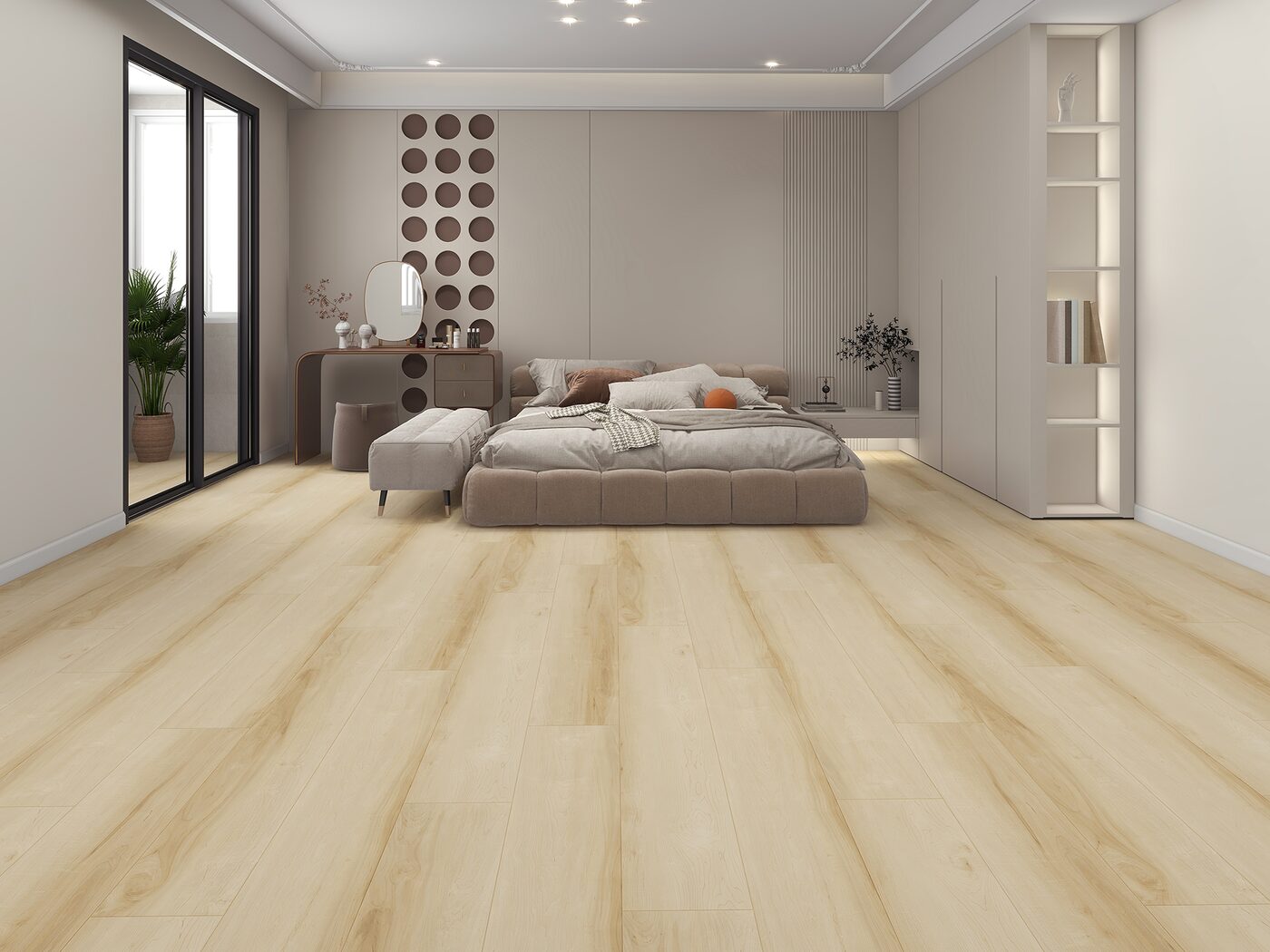
Quick answer: Wide plank vinyl flooring is a strong choice when you want a cleaner, more modern wood look with fewer visual breaks. Nine-inch LVP is wide enough to make a noticeable design difference without automatically being too large for normal rooms. The tradeoff is that plank width does not hide a bad subfloor: flatness, moisture control, expansion space and layout still need to meet the exact manufacturer requirements.
| Plank format | Typical visual effect | Best fit |
|---|---|---|
| 5–6 inches | More traditional / busier | Classic layouts and narrower-board preference |
| 7–8 inches | Wide-plank look | Most room sizes and transitional styles |
| 9+ inches | Large-format, open visual | Modern homes, open plans and wide-board hardwood look |
Plank width changes the look of an LVP floor more than many shoppers expect. Two products can have the same color, core and wear layer but feel completely different once installed simply because one uses narrow boards and the other uses long, wide planks.
That is why wide plank vinyl flooring has become a major design category of its own. It combines the large-board look associated with premium hardwood with the waterproof rigid-core construction, click-lock installation and easier maintenance that attract buyers to LVP in the first place.
For a real example, we will use Solstone Astoria. It is part of the Metropolitan Collection XL and uses 9" × 60" planks, which puts it squarely in the large-format LVP category.
What Is Considered Wide Plank Vinyl Flooring?
There is no single industry rule that every manufacturer uses, but in practical shopping terms, LVP around 7 inches wide and above is commonly described as wide plank. Products around 9 inches and wider are often marketed as extra-wide, oversized or large-format planks.
Length matters too. A 9-inch-wide plank that is only 36 inches long will create a different floor pattern from a 9-inch plank that runs 60 or 72 inches. Longer boards reduce the number of end joints and create longer visual lines across the room.
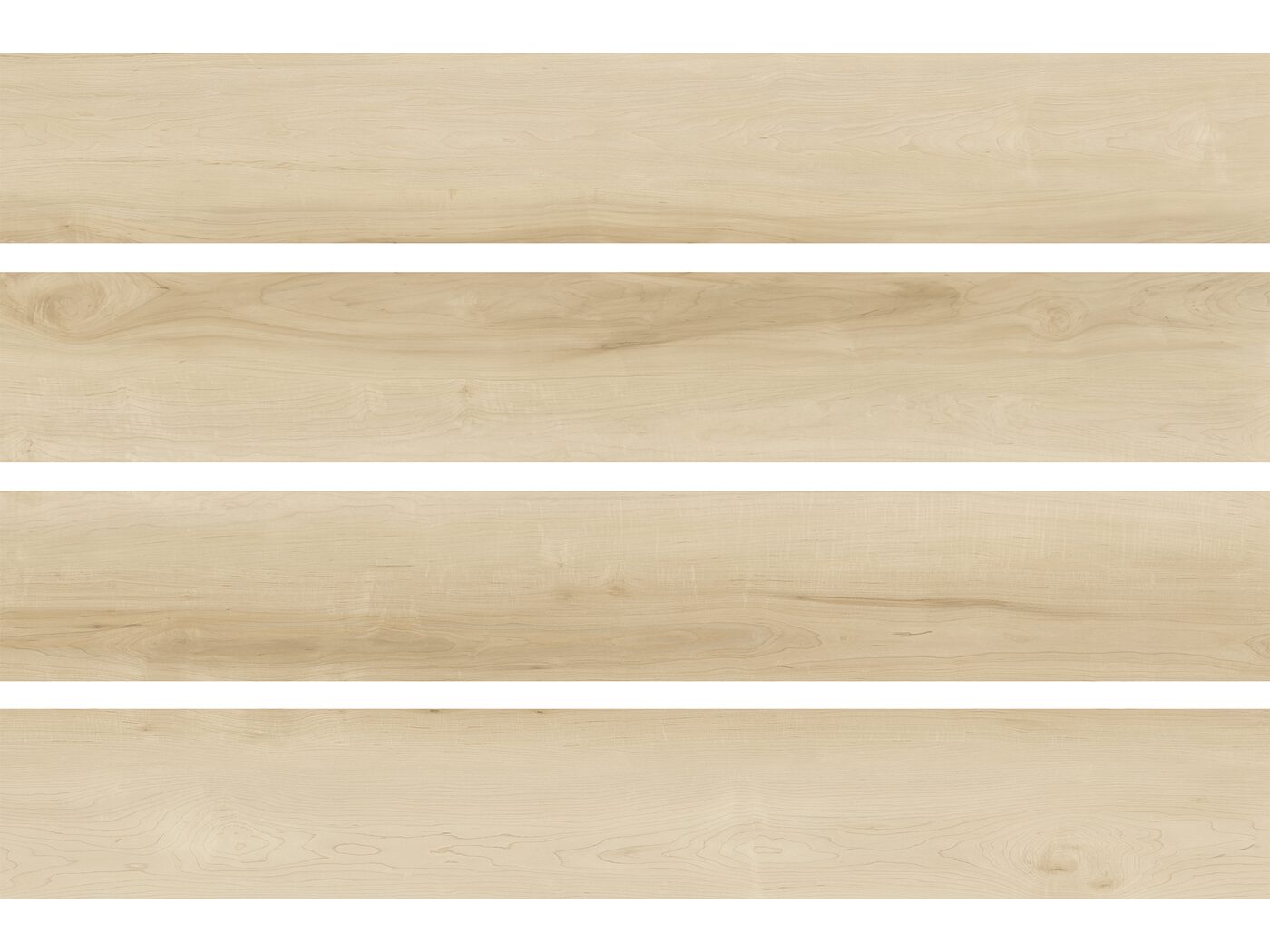
Astoria combines both dimensions: it is 9 inches wide and 60 inches long. That gives it a much larger visual footprint than a common 7" × 48" LVP plank.
Wide Plank LVP vs Standard-Width Vinyl Plank
The main difference is visual scale. Narrower planks create more lines across the floor, while wider planks reduce the number of individual pieces and allow more of the printed wood grain to show on each board.
Using nominal dimensions, a 7" × 48" plank covers about 2.33 square feet, while a 9" × 60" plank covers about 3.75 square feet. Before cuts and waste, covering 100 square feet would take roughly 43 of the smaller nominal planks versus about 27 of the 9" × 60" planks — around 38% fewer individual pieces.
That does not mean every wide-plank installation is automatically faster or easier. Doorways, closets, room shape, subfloor repairs and layout can matter more than the raw plank count. But it explains why large-format floors usually look less busy: there are simply fewer individual boards and joints across the same area.
Important: “Wide plank” describes the dimensions of the flooring, not its quality. A 9-inch plank can still be poorly built. Compare core construction, wear layer, finish, locking system, attached pad, warranty and installation requirements along with the size.
Why Do Homeowners Choose Wide Plank Vinyl Flooring?
1. A cleaner, more modern floor pattern
Wider and longer boards reduce visual interruptions across the floor. In open living rooms, great rooms and connected kitchen/living spaces, that can create a calmer backdrop than a floor made from many short, narrow planks.
2. More of the wood grain is visible
A larger plank gives the printed design more room to show knots, color variation and grain movement. That matters with light oak and natural wood visuals because too many short repeats can make an otherwise attractive floor look artificial.
3. Fewer board edges in the field of view
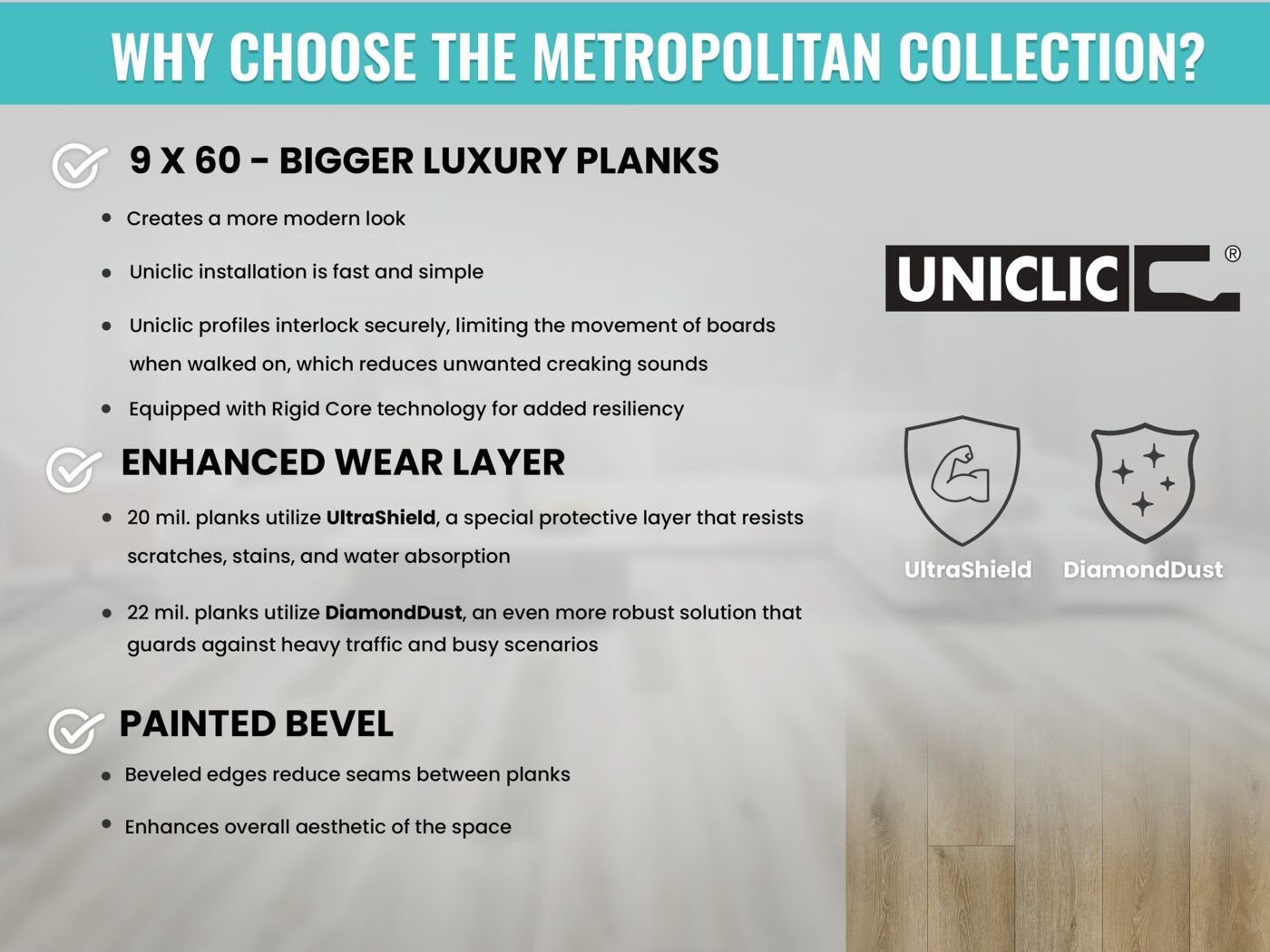
Every plank still has joints, and correct locking is critical, but a 9" × 60" format uses fewer individual pieces over the same area than a smaller plank. The result is a more continuous surface visually.
4. Strong fit for current interior styles
Wide boards pair naturally with modern, transitional, Scandinavian, coastal and contemporary interiors. Light and neutral wide-plank floors are especially flexible because they can support dark cabinetry, warm wood furniture, black accents or soft neutral walls without making the floor the busiest element in the room.
Does Wide Plank Vinyl Flooring Make a Room Look Bigger?
It can make a room feel more open, but plank width is only one part of the visual effect. Wider boards create fewer lines, and longer planks extend the eye farther across the floor. Light colors can add to that airy feeling by reflecting more light and reducing contrast.
That is one reason Astoria works well as an example. Its blend of light wood tones and warmer tan variation keeps the 9-inch format from feeling visually heavy.
However, there is no rule that says wide plank always makes a room bigger. A very dark high-contrast floor, poor plank direction or a layout with awkward narrow cuts can still make a room feel busy.
Is 9-inch LVP too wide for a small room?
No — not automatically. Small bedrooms, offices and condos can use 9-inch planks successfully. The more important questions are:
- Will the first and last rows be reasonably balanced?
- Does the plank direction work with the room shape and main light source?
- Is the color appropriate for the amount of natural light?
- Are closets, doorways and transitions planned before installation starts?
- Is the subfloor flat enough for the rigid click-lock system?
Why 9" × 60" LVP Feels Different From 7" × 48"
Going from 7" × 48" to 9" × 60" changes both width and length at the same time. The board becomes about 29% wider and 25% longer by nominal dimension, creating substantially more surface area per plank.
That larger format is especially noticeable in:
- Open-plan living spaces: long boards visually connect separate zones.
- Primary bedrooms: fewer joints keep the floor calmer around large furniture.
- Long hallways: the 60-inch length can reinforce the room direction.
- Modern kitchens: broad wood visuals pair well with large islands and slab-style cabinetry.
- Commercial and rental spaces: large planks can create a premium appearance without using real wide-plank hardwood.
Wide Plank Vinyl Flooring Pros and Cons
| Advantages | What to watch for |
|---|---|
| Modern wide-board hardwood look | Layout mistakes are more noticeable on large boards |
| Fewer individual planks across the same area | Subfloor must meet the product’s flatness requirement |
| More grain and color variation visible per board | Poor pattern blending can make repeats obvious |
| Can make open spaces feel less visually busy | Expansion gaps and transitions still matter |
| Large-format appearance without wide hardwood maintenance | Width does not make a weak product durable |
Does Wide Plank LVP Need Special Subfloor Preparation?
The safest answer is: follow the exact flooring collection’s installation guide rather than a generic wide-plank rule. For Astoria, Solstone’s Metropolitan Collection XL instructions are very specific.
The manufacturer says the subfloor must be dry, structurally sound, clean and flat to 3/16" within a 10-foot radius. Wood subfloors should have high spots reduced and low spots filled when needed; concrete should also be corrected with grinding or a Portland-based leveling compound when outside tolerance.
The same instructions call for:
- 3/8" (10 mm) expansion gaps at walls and other fixed objects.
- Additional expansion breaks using T-molding for areas greater than 900 sq ft, longer than 30 ft in either direction, transitions between rooms and asymmetrical areas.
- End joints staggered by at least 8 inches.
- Working from several open cartons and blending grain/color variation before installation.
Those requirements matter more to long-term performance than the idea that “wide plank is easy because there are fewer pieces.” Large boards still depend on a stable, properly prepared substrate and correct expansion planning.
See the Metropolitan Collection XL installation instructions for the manufacturer’s complete requirements.
Is Wide Plank Vinyl Flooring Good for Florida Homes?
Yes, but Florida conditions make the installation system especially important. A wide waterproof plank does not make slab moisture, high spots, low spots or expansion requirements disappear.
For Metropolitan XL over concrete, Solstone requires moisture testing and a minimum 6-mil polyfilm moisture barrier between the concrete and the rigid-core vinyl flooring. The instructions also state that concrete should be fully cured and kept within the collection’s flatness requirements.
In Central Florida projects, we would pay particular attention to:
- Concrete-slab moisture and vapor protection
- Flatness before a 60-inch rigid plank is locked into place
- Strong direct sunlight near large windows and sliders
- Sand and grit brought in from patios, garages and outdoor areas
- Expansion breaks in large open floor plans
For broader climate guidance, see our Florida flooring humidity guide and LVP-over-tile guide for Florida homes.
Real Wide Plank Example: Solstone Astoria
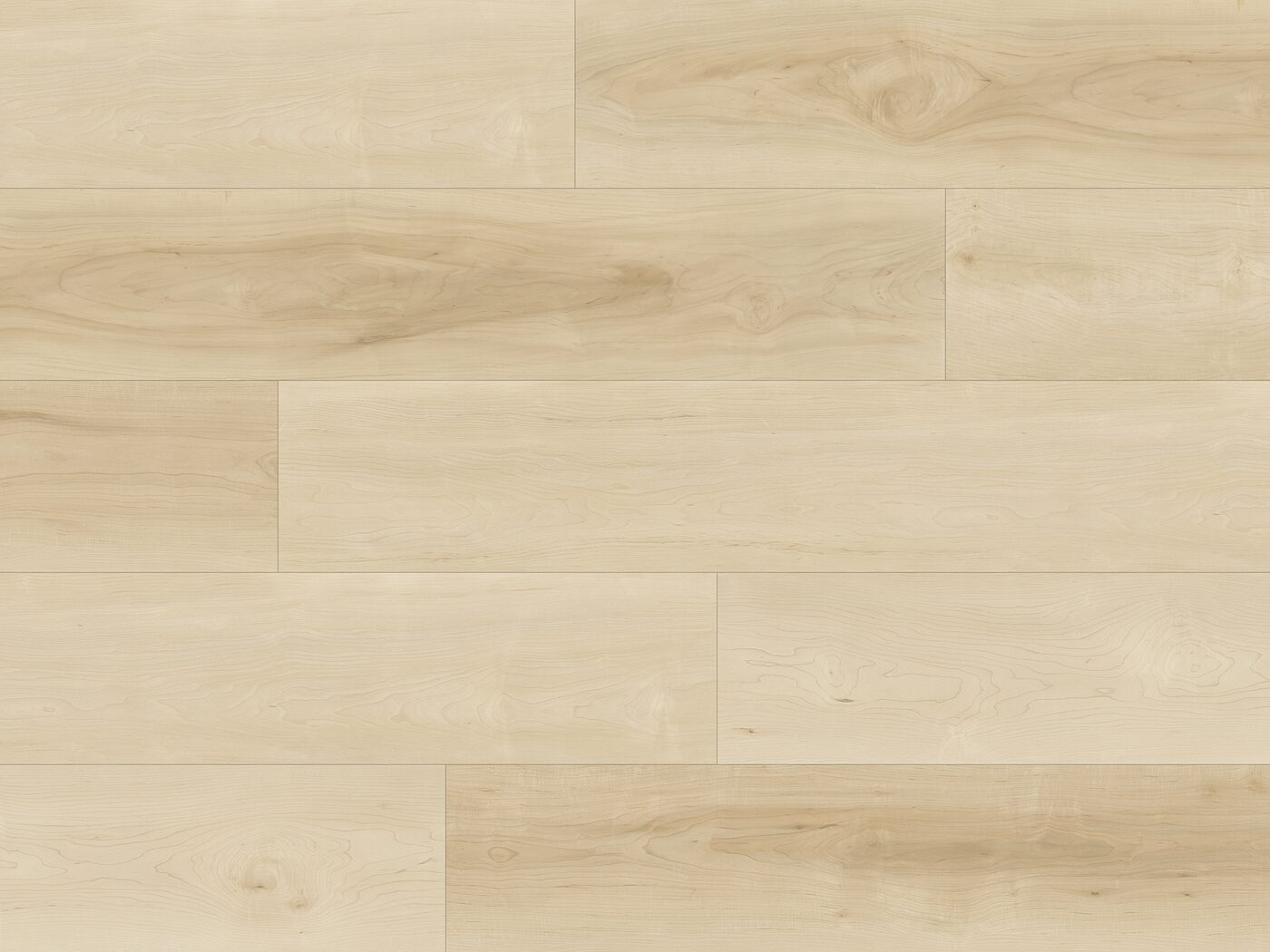
Solstone Astoria is a light natural wood-look LVP from the Metropolitan Collection XL. It uses the same 9" × 60" nominal plank dimensions in both its 20-mil and 22-mil constructions.
Across the collection, Solstone lists:
- Stone polymer composite / rigid polymeric core construction
- Painted bevel edges
- Natural wood texture embossing
- Floating Uniclic installation
- 1.0 mm IXPE sound-reducing attached pad
- FloorScore and GREENGUARD Gold certification
- Compatibility with embedded radiant heat up to the manufacturer’s 27°C / 80°F limit
The biggest buying decision is whether to choose the 20-mil or 22-mil construction, because the upgrade changes more than two mil of wear-layer thickness.
Astoria 20 Mil vs 22 Mil: What Actually Changes?
| Specification | Astoria / Metro 20 mil | Astoria / Metro 22 mil |
|---|---|---|
| Wear layer | 20 mil | 22 mil |
| Overall thickness | 6.0 mm | 7.0 mm |
| Nominal plank size | 9" × 60" | 9" × 60" |
| Finish | UltraShield coating | DiamondDust coating |
| Attached pad | 1.0 mm IXPE | 1.0 mm IXPE |
| Installation | Floating | Uniclic | Floating | Uniclic |
| Carton coverage | 22.64 sq ft / 6 planks | 18.86 sq ft / 5 planks |
| IIC / STC | 63 / 63* | 63 / 63* |
| Castor-chair test | ≥10,000 cycles | ≥11,000 cycles |
| Residential warranty | 20 years | 30 years |
| Commercial warranty | 15 years | 15 years |
*Sound ratings are manufacturer-reported test results for a specific tested assembly and should not be assumed to represent every building or subfloor assembly.
See the source documents: Metropolitan XL 20-mil specification sheet and Metropolitan XL 22-mil specification sheet.
The 22-mil upgrade is more than 2 mil
Astoria’s 22-mil option is also 1 mm thicker overall, changes from UltraShield to DiamondDust, increases the residential warranty from 20 to 30 years and has a slightly higher castor-chair cycle result. The commercial warranty and manufacturer-reported IIC/STC values remain the same.
Which Astoria Wide Plank Option Should You Choose?
Choose Astoria 20 mil when:
- You want the 9" × 60" wide-plank look for a normal residential project.
- A 6.0 mm overall construction fits the project.
- The 20-year residential warranty is appropriate for your needs.
- You prefer the UltraShield-coated construction.
- You want to prioritize value while still getting the Metropolitan XL plank format.
Choose Astoria 22 mil when:
- You want the thicker 7.0 mm overall construction.
- The DiamondDust finish is important to your project.
- You prefer the longer 30-year residential warranty.
- The floor will see heavier everyday use, frequent furniture movement or demanding traffic.
- You want the upgraded construction rather than choosing purely on wear-layer number.
Our practical recommendation: choose the plank size first because that determines the visual. Once you know the 9" × 60" Astoria look works in your space, choose 20 mil or 22 mil based on the complete construction, traffic, warranty and budget — not simply because 22 is the larger number.
See the 9" × 60" Astoria Floor
View current Astoria pricing, compare the 20-mil and 22-mil options, order a sample, or ask Cavalieri Flooring whether wide plank LVP makes sense for your room.
Frequently Asked Questions
What is considered wide plank vinyl flooring?
There is no universal cutoff, but LVP around 7 inches wide and above is commonly described as wide plank. Nine-inch products are firmly in the wide-plank category, and many sellers describe 9- to 12-inch products as extra-wide or large-format.
Does wide plank vinyl flooring make a room look bigger?
It can make a room feel more open because there are fewer visual breaks and wider boards create longer sight lines. Color, lighting, plank direction and room proportions still matter, so width alone does not guarantee a larger-looking room.
Is 9-inch vinyl plank too wide for a small room?
Not necessarily. Nine-inch LVP can work well in small bedrooms, offices and condos, especially with a light visual. Good layout matters more than an arbitrary room-size rule.
Is wide plank LVP harder to install?
The click-lock method is similar, but the substrate and layout still have to meet the collection requirements. Metropolitan XL requires a dry, structurally sound, clean subfloor flat to 3/16 inch within a 10-foot radius.
Does wide plank vinyl need a flatter subfloor?
Every rigid-core floor must meet its manufacturer’s flatness limits. For Astoria, Solstone specifies 3/16 inch within a 10-foot radius, with high and low spots corrected before installation.
What is the difference between Astoria 20 mil and 22 mil?
The 20-mil Metropolitan XL construction is 6.0 mm overall with UltraShield and a 20-year residential warranty. The 22-mil version is 7.0 mm overall with DiamondDust and a 30-year residential warranty. Both use 9" × 60" planks, 1.0 mm IXPE, Uniclic installation and a 15-year commercial warranty.
Is 20 mil enough for wide plank LVP?
It can be for many projects. Wear layer is only one specification. Astoria’s 20-mil option still combines a 6.0 mm rigid-core construction, attached pad, UltraShield finish and Uniclic system. Compare the complete plank rather than treating 20 versus 22 as the only quality measure.
Is wide plank vinyl flooring good for Florida homes?
Yes when the slab, moisture control and installation are handled correctly. For Metropolitan XL over concrete, the manufacturer requires moisture testing and a minimum 6-mil polyfilm moisture barrier between the concrete and rigid-core flooring.
Not Sure Whether Wide Plank LVP Will Work in Your Room?
Tell us your room size, subfloor type, traffic level and whether you need installation. We can help you decide if a 9" × 60" floor such as Astoria fits the project.
Or call: (321) 424-0546
Related Products, Articles & Services
- Shop Solstone Astoria 9" × 60" Waterproof LVP
- Browse Solstone Vinyl Collections
- 12 Mil vs 20 Mil Wear Layer Guide
- Best Types of Vinyl Flooring for Your Home
- Which Vinyl Flooring Is Right for Your Home?
- Best Flooring for Florida Homes
- Can You Install LVP Over Tile in Florida?
- Vinyl Flooring Installation in Orlando
- Get a Free Flooring Estimate
Compare the Full Plank — Not Just the Width
Wide plank size changes the look, but the complete flooring system determines performance. Compare the core, finish, wear layer, attached pad, warranty and installation requirements before you order.