Quick answer: Hardwood floor refinishing in Orlando is usually the right move when the wood is structurally sound but the finish is dull, scratched, worn through or simply the wrong color. A screen-and-recoat can refresh an intact finish without sanding to bare wood, while a full sand-and-refinish removes the old finish, addresses deeper surface wear and lets you change stain color. The key is confirming the floor has enough usable wood and no unresolved moisture or structural problem before sanding begins.
Searching for hardwood floor refinishing in Orlando usually starts with one question: can the existing floor be saved, or is replacement the safer investment? The answer depends less on age than many homeowners expect. A decades-old solid oak floor can be an excellent refinishing candidate, while a newer engineered floor may have limited sanding potential if its real-wood wear layer is thin.
This guide is designed to help Orlando homeowners understand the decision before requesting a quote. It covers current pricing, the difference between recoating and full refinishing, engineered-hardwood limitations, dust containment, finish choices, Florida moisture conditions and what to ask a contractor. If you already know you want an on-site assessment, visit our hardwood floor refinishing service in Orlando or request a free estimate.
Not Sure Whether Your Hardwood Can Be Refinished?
Tell us about your floor and we can help you plan an on-site assessment in Orlando.
How Much Does Hardwood Floor Refinishing Cost in Orlando in 2026?
There is no single Orlando price that applies to every hardwood floor. Published 2026 pricing varies because contractors include different amounts of preparation, dust containment, repair work, stain, finish coats and specialty labor. Angi's Orlando cost guide reports roughly $3–$7 per square foot for professional refinishing, while local specialty contractors publish higher ranges for premium or more complex work. Cavalieri Flooring's current service pricing lists $3–$6 per square foot for a full sand-and-refinish and $1.50–$3 per square foot for a screen-and-recoat, before unusual repairs or specialty scope.
| Service | Planning range | Best fit |
|---|---|---|
| Screen & recoat | $1.50–$3/sq ft* | Dull or lightly worn finish; no color change |
| Full sand & refinish | $3–$6/sq ft* | Bare spots, deeper scratches, worn finish, color change |
| Complex / premium scope | Can run higher | Repairs, stairs, specialty species, difficult access, custom stain or finish systems |
*Current Cavalieri published planning ranges as of September 2026. Final price depends on the actual floor and scope.
The price usually moves with five things: square footage, condition, wood species, repair needs and finish/stain selection. Stairs, border details, extensive handwork, damaged boards and small minimum-charge projects can also increase the effective cost per square foot. For a deeper budget breakdown, see our hardwood refinishing cost and ROI guide.
Screen & Recoat vs Full Sand-and-Refinish
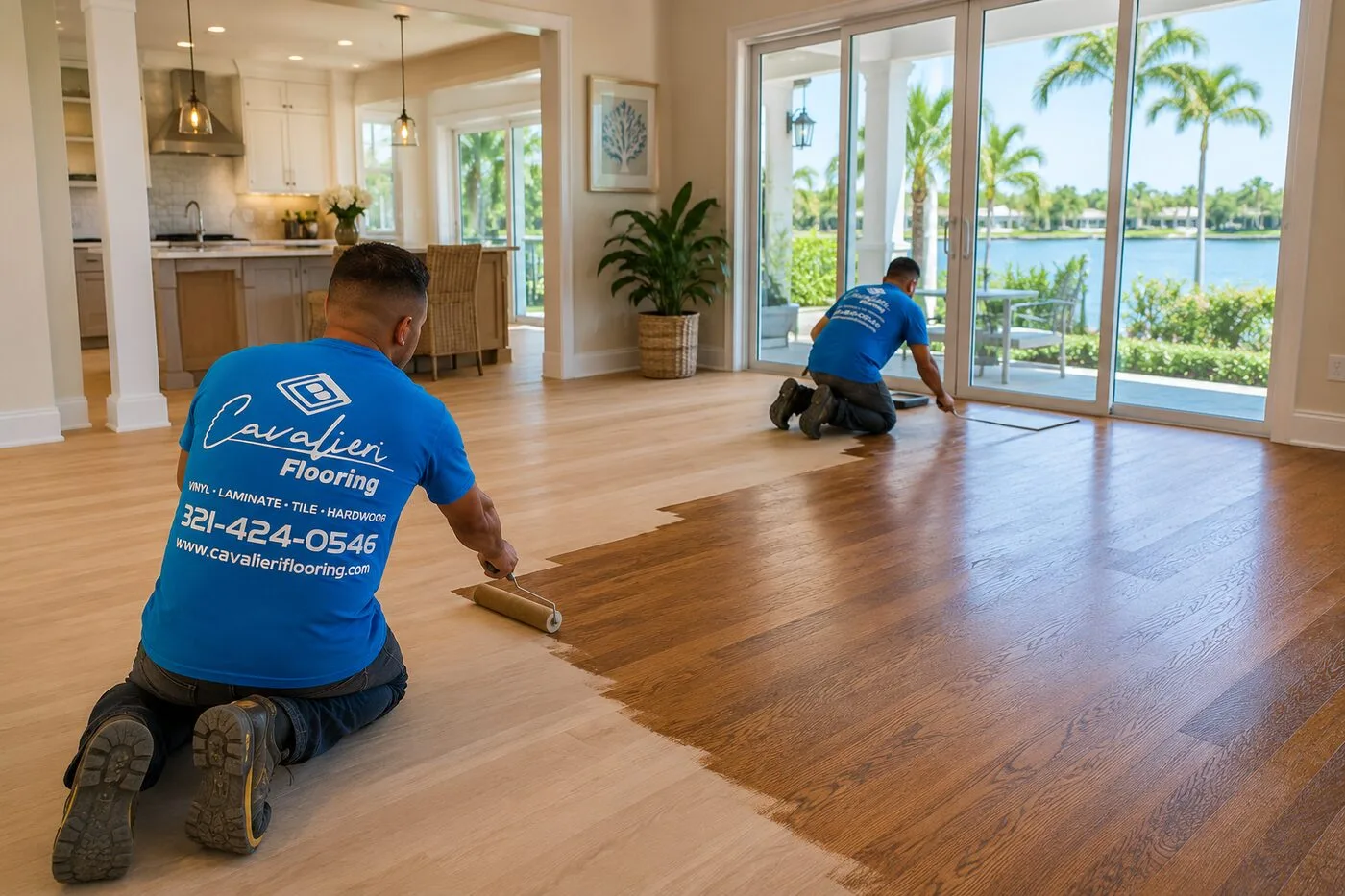
This is the decision that can save the most money when the existing floor is still in good condition. The National Wood Flooring Association (NWFA) describes a maintenance coat as cleaning the existing finish, lightly abrading it and applying a fresh finish coat. A complete sand-and-refinish is more appropriate when there are deep scratches, dents, finish worn through to bare wood or a desired color change.
| Condition | Screen & recoat | Full refinish |
|---|---|---|
| Finish looks dull | Often a good fit | Usually unnecessary |
| Light scratches only in finish | May be enough | Optional if other issues exist |
| Bare wood showing | Usually not enough | Usually appropriate |
| Deep scratches / stain damage | Cannot remove damage in wood | Can address many surface defects |
| Want a different stain color | No | Yes |
| Structural / moisture failure | No | Repair or replacement may be needed first |
A recoat is not simply a “cheap refinish.” It has a different job: restoring protection when the existing finish is still a viable base. Likewise, sanding is not automatically the better service simply because it is more extensive. The best contractor should recommend the least invasive process that actually solves the problem.
Can Your Hardwood Floor Be Refinished?
A good refinishing candidate generally has sound boards, enough remaining wood to sand safely and problems concentrated in the surface or finish. Age alone does not disqualify a floor. In fact, one of the major benefits of real wood flooring is that it can often be renewed rather than discarded.
Signs that refinishing may make sense include:
- Dull or uneven sheen that cleaning no longer improves
- Surface scratches, traffic lanes or finish worn thin
- Old stain color you want to change
- Minor dents or surface discoloration that can be sanded
- Isolated damaged boards that can be repaired before sanding
- Solid hardwood with adequate thickness remaining above the tongue
Situations that require more caution include widespread cupping, active moisture intrusion, rot, major board movement, severe pet contamination, extensive termite damage or a floor that has already been sanded close to its structural limit. In those cases, the correct sequence is diagnosis and repair first—not simply sanding harder.
Can Engineered Hardwood Be Refinished?
Sometimes. This is one of the areas where online advice is often too absolute. The NWFA notes that engineered wood floors can be sanded and refinished, but not as many times as solid wood flooring. The practical limit is the real-wood wear layer: if there is not enough usable wood above the core or tongue, aggressive sanding can permanently damage the floor.
That means an Orlando contractor should not promise a full sand on engineered hardwood based only on the product category. The floor should be evaluated for construction, remaining wear layer, flatness, prior sanding and localized damage. In some cases a screen-and-recoat is the better approach because it renews the finish without removing meaningful wood thickness.
Important: there is no trustworthy universal answer such as “engineered hardwood can always be refinished twice.” The NWFA says sanding potential varies with the wear layer, condition, flatness, equipment and contractor skill. The exact floor has to be inspected.
Hardwood Floor Refinishing Process: What Actually Happens?
A professional refinish is a sequence, not one sanding pass and one coat of polyurethane. The quality of the final surface depends on what happens before the last coat is ever applied.
1. Inspect the floor and identify the wood
The contractor should determine whether the floor is solid or engineered, inspect for moisture-related damage, look for loose boards and repairs, and decide whether a recoat or full sanding is appropriate.
2. Prepare the rooms and repair problem boards
Furniture is removed, protruding fasteners are addressed, loose boards are secured and isolated damage is repaired before the main sanding sequence. If moisture is active, that issue should be resolved before refinishing.
3. Sand progressively to bare wood
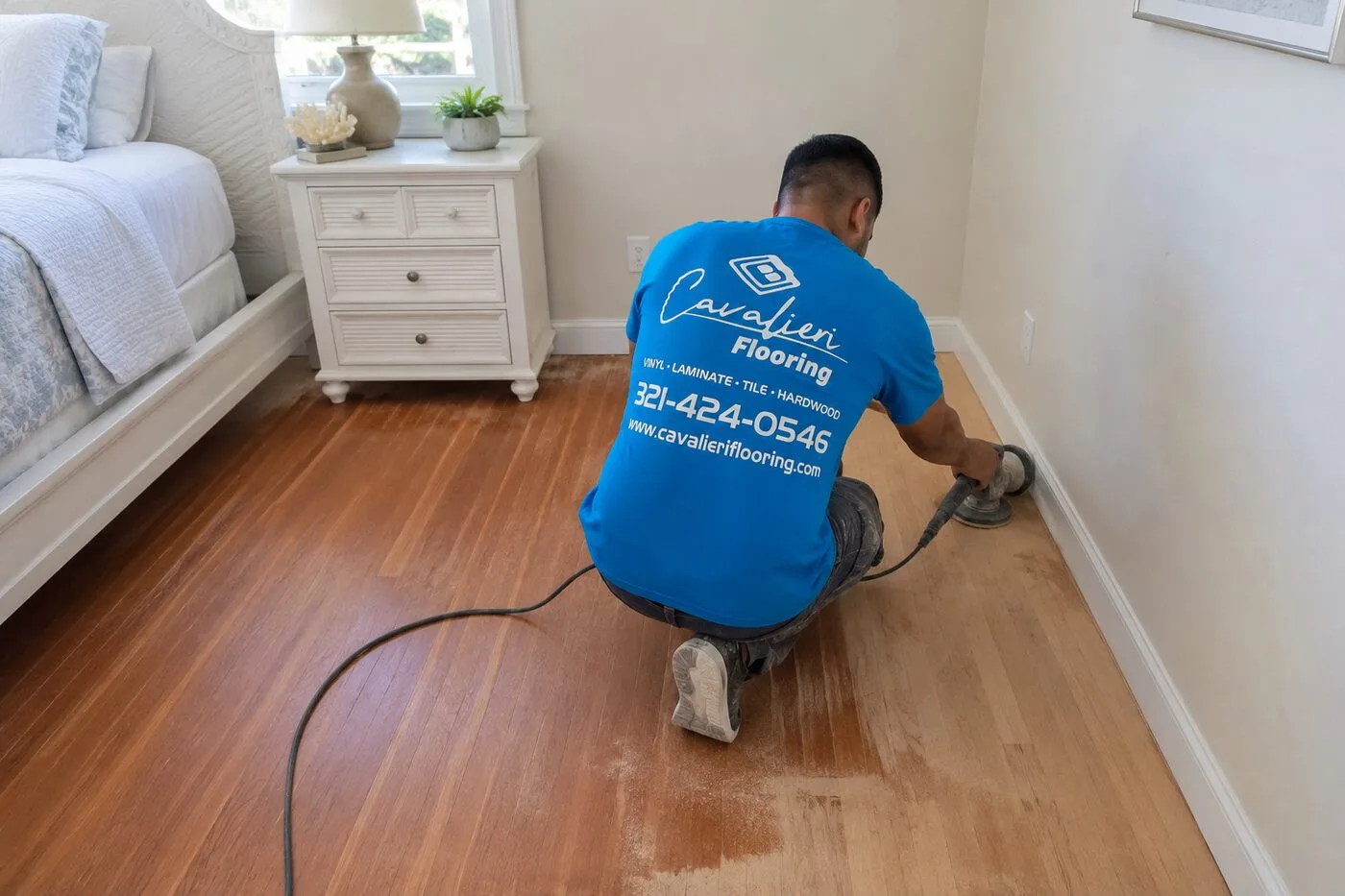
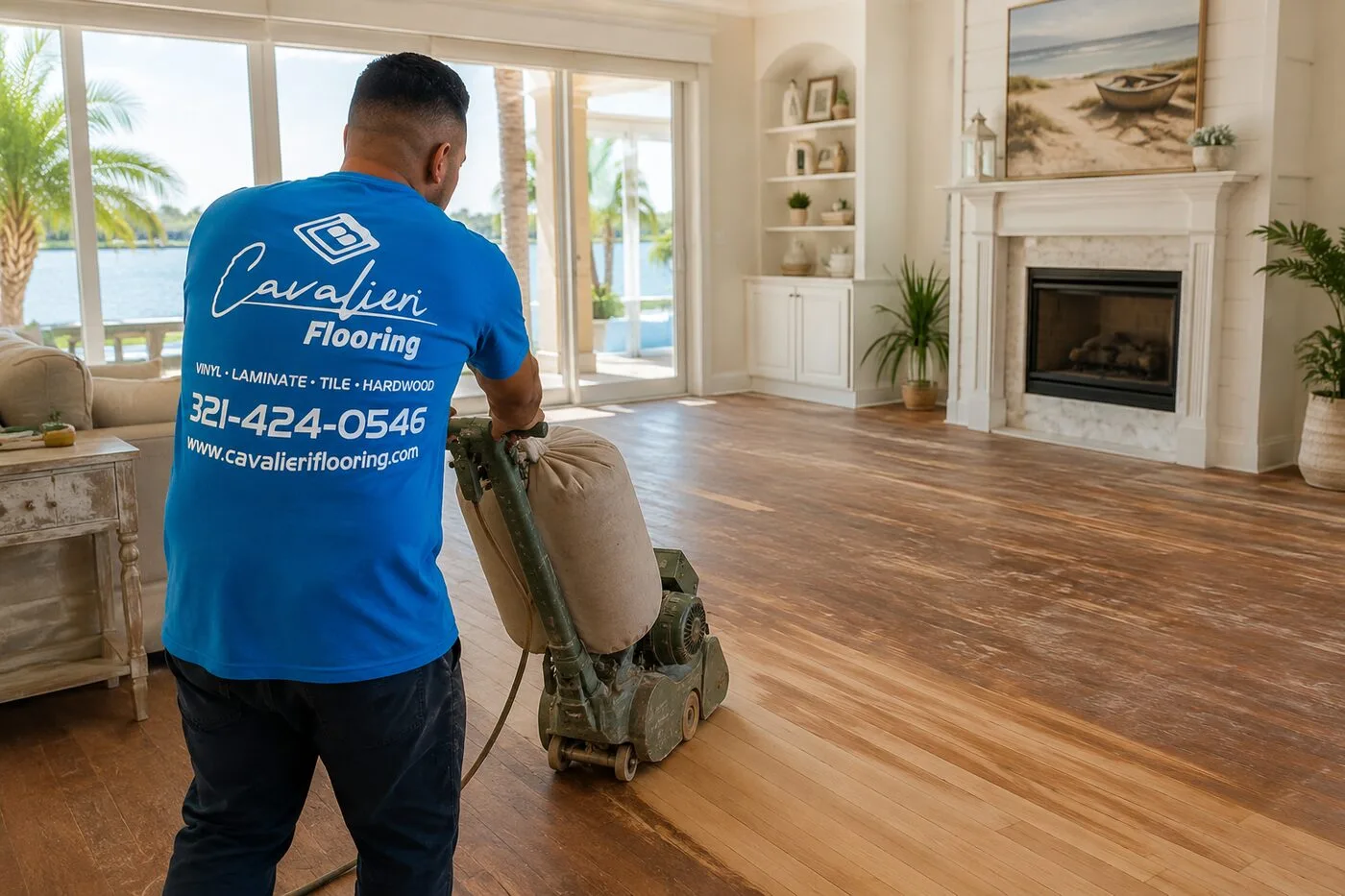
Full refinishing typically uses progressively finer abrasives to remove the old finish and flatten the surface without leaving deep sanding marks. Edge sanders and detail tools handle areas large machines cannot reach.
4. Final preparation and optional stain
After the sanding sequence, the floor is thoroughly cleaned. If you want a color change, stain samples should be viewed on the actual wood whenever practical because the same stain can look different on red oak, white oak, maple, pine or engineered veneers.
5. Apply the finish system
The finish protects the wood from normal wear. Depending on the product, the system may use multiple coats with abrasion or preparation between coats as required by the finish manufacturer.
6. Follow dry and cure instructions
“Dry enough to walk on” and “fully cured” are not the same thing. Foot traffic, furniture, rugs, cleaning and pet use should follow the exact finish manufacturer's schedule rather than a generic internet timeline.
Does Dustless Hardwood Floor Refinishing Really Work?
Professional dust containment is one of the biggest quality-of-life upgrades in modern refinishing, but the word dustless can be misunderstood. Sanding equipment can be connected to high-capacity vacuum systems that capture a large share of the dust at the source. That significantly reduces airborne particles and cleanup compared with older open-bag sanding methods.
It is still more accurate to say dust-controlled than literally dust-free. Edge sanding, hand detailing, vacuuming, repairs and normal movement through the jobsite can still create residual dust. Good contractors also protect adjacent areas and HVAC openings instead of relying on the sander vacuum alone.
When comparing Orlando refinishing quotes, ask whether dust containment is included, which sanding machines connect to vacuum equipment, how adjacent rooms and HVAC openings will be protected, and what cleanup is included. Have the contractor document these details in the written estimate so you can compare scopes consistently.
Water-Based vs Oil-Based Finish: Which Is Better?
There is no universal winner. According to the NWFA finish guide, water-based finishes are normally clear, very durable and quick drying. Oil-based finishes are durable and add an amber tone. That visual difference can be important: a clear water-based system can preserve a lighter natural look, while oil-based polyurethane can warm the appearance of the wood over time.
| Factor | Water-based | Oil-based |
|---|---|---|
| Color | Normally clearer | Adds amber tone |
| Drying | Typically faster | Typically slower |
| Durability | Durable systems available | Durable systems available |
| Best choice | Depends on desired appearance, schedule, traffic and the specific finish product | |
Sheen matters too. Satin and matte finishes reflect less light and tend to make ordinary small scratches less noticeable than gloss. That can be useful in busy households, but sheen is primarily an appearance and maintenance choice—not a substitute for choosing an appropriate finish system.
What Orlando’s Humidity Means for Hardwood Refinishing
Florida humidity does not mean hardwood cannot be refinished. It means the floor's moisture condition and the home's indoor environment deserve attention before and after the work. Wood naturally gains moisture in more-humid conditions and loses moisture in drier conditions. The NWFA notes that excessive swings can contribute to cupping, gapping or splitting and recommends maintaining a consistent indoor environment of roughly 60–80°F and 30–50% relative humidity.
For an Orlando project, the practical questions are:
- Is there an active plumbing, slab, exterior or HVAC moisture source?
- Are cupped boards stable, or is the moisture condition still changing?
- Has the home been kept under normal air-conditioning conditions?
- Are doors, sliders or pool traffic introducing recurring water?
- Will the finish be applied within the product manufacturer's temperature and humidity limits?
If you have unexplained cupping or recurring gaps, fix the cause before cosmetic refinishing. Sanding a moisture-distorted floor while it is still changing can produce a flat-looking surface temporarily but a new problem later. For broader climate guidance, see our Florida flooring humidity guide.
How Long Does Hardwood Floor Refinishing Take?
Most full residential refinishing projects take several days rather than several hours. A typical schedule has to account for room preparation, repairs, sanding, optional stain, multiple finish coats and product-specific dry times. Larger homes, stairs, custom colors, repairs or slower-drying finish systems can extend the schedule.
A screen-and-recoat can often be completed much faster because the floor is not sanded to bare wood and no stain change is involved. However, the most important timeline is the finish manufacturer's: light foot traffic may be allowed before furniture, rugs, cleaning or full use. Never assume “dry to the touch” means fully cured.
Want an Orlando Refinishing Assessment?
We can inspect the floor, identify whether it needs a recoat, full sanding, repair or replacement, and give you a written estimate based on the actual condition—not just square footage.
How to Choose a Hardwood Floor Refinishing Contractor in Orlando
Before hiring a hardwood refinishing contractor in Orlando, compare more than the price per square foot. Ask for a written scope that identifies surface preparation, board repairs, dust containment, stain and finish products, the number of coats, and the expected schedule. Confirm the contractor’s insurance and request photographs of comparable completed work so you can evaluate the quality of the finish and the scope of service.
Ask these questions before hiring:
- Will you inspect whether the floor can safely be sanded? This is essential for engineered or previously refinished floors.
- What dust-containment system do you use? Ask what is connected to the field and edge sanders and how adjacent rooms are protected.
- What repairs are included before sanding? Loose, damaged or moisture-affected boards should not simply be hidden under a new finish.
- Which finish product will you use? Ask for the actual manufacturer and product, not just “water-based” or “commercial-grade.”
- How many coats and what preparation happens between coats? The answer should follow the finish manufacturer’s system.
- When can people, pets, furniture and rugs return? Dry and cure guidance should be specific to the product being applied.
- Can I see comparable local work? Finished-project photos and case studies are more useful than generic stock images.
Local project example: LA Fitness hardwood refinishing in Orlando
Our LA Fitness hardwood sand-and-refinish case study documents work on a heavily used maple athletic floor in Orlando. The project involved assessing the floor’s condition, addressing repair needs, sanding and applying a new finish. It illustrates why a contractor should evaluate wear, repairs and the intended use of the space before recommending a refinishing scope. See the case study for the project details and photographs.
Should You Refinish or Replace Your Hardwood Floor?
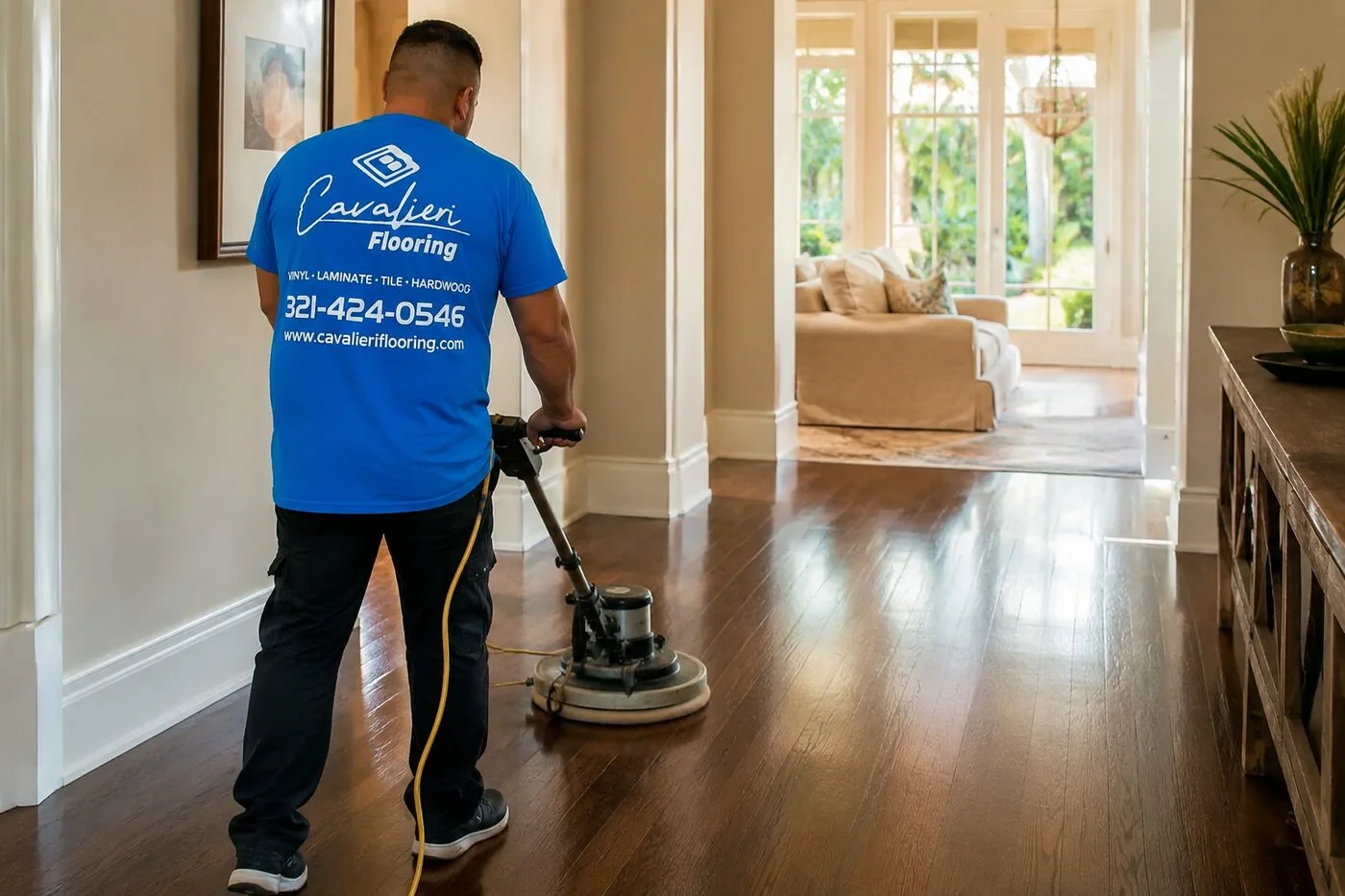
Refinishing preserves the existing wood, avoids tear-out and can transform both color and surface condition. Replacement becomes the better path when the existing floor cannot safely be sanded, has widespread structural damage, contains too many failed boards to repair economically or no longer fits the desired construction.
| Situation | Refinish / recoat | Consider replacement |
|---|---|---|
| Surface scratches / dull finish | Excellent candidate | Usually unnecessary |
| Want a new stain color | Full refinish can work | Only if construction/style also needs to change |
| A few damaged boards | Repair then refinish | Usually not necessary |
| Active moisture / rot | Resolve cause first | May be required |
| Engineered floor with little wear layer | Recoat may still be possible | Full sanding may not be safe |
| Widespread structural failure | Not a cosmetic fix | Often the better route |
If the floor is salvageable, refinishing can preserve material and character that would otherwise be removed. If it is not salvageable, being told that before paying for sanding is equally valuable. A good assessment should be willing to recommend either outcome.
Hardwood Floor Refinishing Orlando FAQs
How much does hardwood floor refinishing cost in Orlando?
Published Orlando prices vary by scope. Cavalieri Flooring currently lists $3–$6 per square foot for a full sand-and-refinish and $1.50–$3 per square foot for a screen-and-recoat. Repairs, stairs, specialty species, custom staining, small-project minimums and premium finish systems can raise the total.
What is the difference between refinishing and a screen-and-recoat?
Full refinishing sands the floor back to bare wood and allows a stain-color change. A screen-and-recoat lightly abrades the existing finish and adds a fresh finish coat without removing the floor's stain or sanding down to raw wood.
How long does hardwood floor refinishing take in Orlando?
A full project commonly takes several days because repairs, sanding, optional stain, finish coats and drying all happen in sequence. The exact schedule depends on square footage, condition and the finish manufacturer's dry and cure requirements.
Is dustless hardwood floor refinishing really dust-free?
No. Professional vacuum-connected sanding systems can dramatically reduce sanding dust, but “dustless” should not be interpreted as zero dust. Edge work, detail sanding and normal jobsite activity can still create some residual particles.
Can engineered hardwood floors be refinished?
Sometimes. The NWFA says engineered hardwood can be sanded and refinished, but generally fewer times than solid hardwood. The exact floor must have enough real-wood wear layer remaining to sand safely.
How many times can hardwood floors be refinished?
There is no universal number. The NWFA says the answer depends on remaining wear-layer thickness, floor flatness and condition, equipment and contractor skill. Solid hardwood generally provides more sanding potential than engineered hardwood.
Should I choose water-based or oil-based finish?
Both can be durable. NWFA guidance describes water-based finishes as normally clear and fast drying, while oil-based finishes add an amber tone. The right choice depends on your desired color, schedule, traffic and the specific finish system.
Can I keep the natural wood color?
Yes. Stain is optional on many full refinishing projects. A clear or natural finish can highlight the wood's existing tone, while stain is used when you want to shift the color.
When should hardwood be replaced instead of refinished?
Replacement may be needed when there is widespread structural failure, rot, severe moisture damage, extensive board movement or too little usable wood remaining for safe sanding. Isolated board damage can often be repaired before refinishing.
Does Florida humidity affect refinished hardwood floors?
Yes. Wood gains and loses moisture as the surrounding air changes. The NWFA recommends a stable indoor environment around 60–80°F and 30–50% relative humidity. Active moisture problems should be corrected before refinishing.
Get a Hardwood Refinishing Estimate in Orlando
Tell us about the floor, approximate square footage, current condition and whether you want to keep the existing color or change it. We can help determine whether you need a recoat, full refinish, repairs or replacement.
Or call: (321) 424-0546
Related Hardwood Resources & Services
Sources & industry guidance
For technical guidance in this article, we referenced the National Wood Flooring Association's homeowner resources on refinishing, solid vs engineered wood, finish types and moisture management. Orlando cost context was compared with current 2026 local market pages and Angi's Orlando refinishing cost guide.
Always follow the exact hardwood and finish manufacturer's instructions for a specific floor. Site conditions and product systems vary.
Restore the Hardwood You Already Own
If your Orlando hardwood floor is structurally sound, the right recoat or full refinish may restore it without the cost and disruption of replacement. Start with an on-site assessment so the recommendation is based on the actual floor.