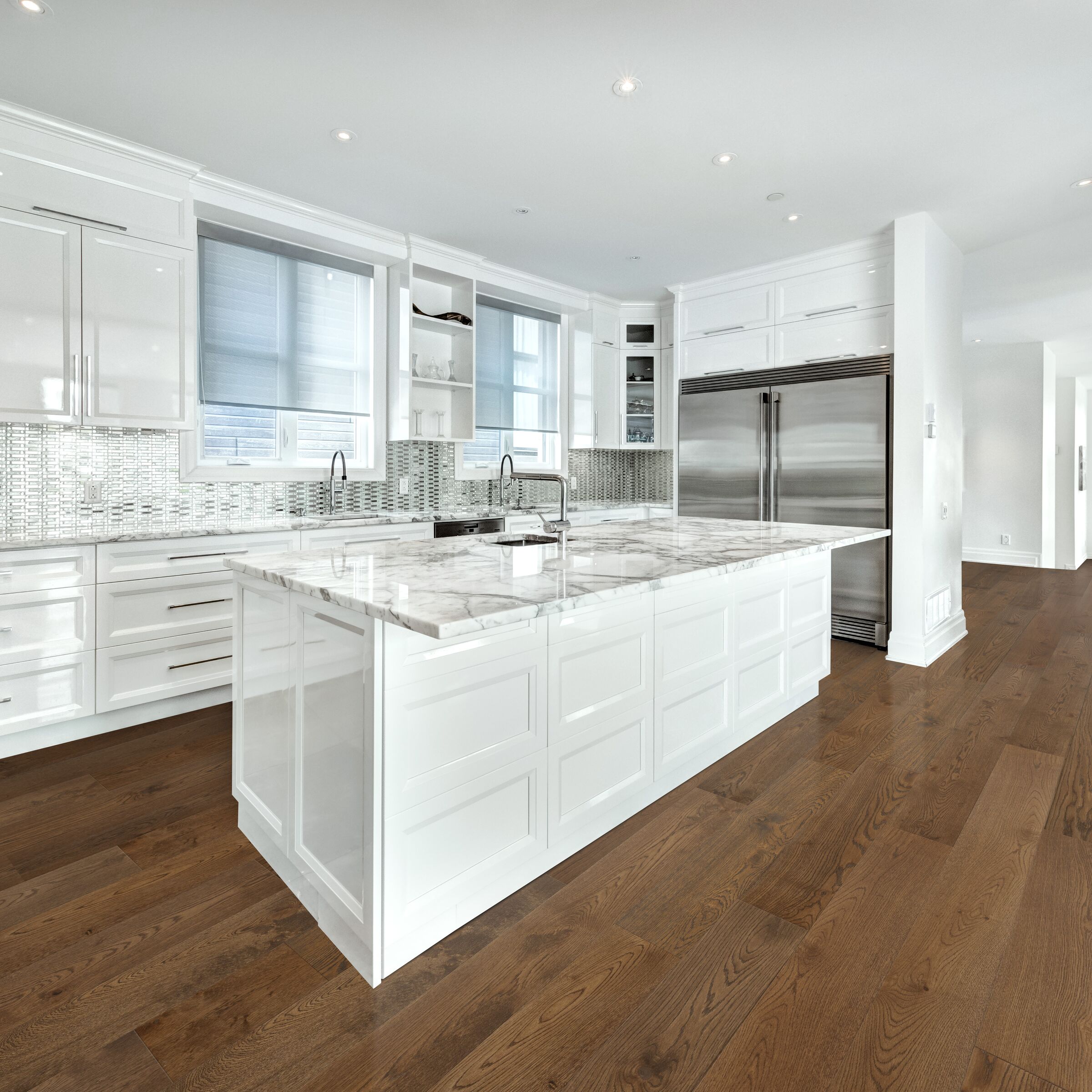
The term "waterproof laminate" has become increasingly common in flooring marketing, but what does it really mean? Understanding the difference between water-resistant and truly waterproof laminate is crucial for making the right flooring choice for your home.
💡 Key Takeaway
Modern waterproof laminate handles spills and humidity well, but is not fully submersible. For full bathrooms, consider luxury vinyl plank instead.
Traditional Laminate vs. Waterproof Laminate
Traditional Laminate Construction
- Core: High-density fiberboard (HDF) made from wood particles
- Water vulnerability: Swells when exposed to moisture
- Edge sealing: Limited protection at seams
- Suitable areas: Dry living spaces only
Waterproof Laminate Construction
- Core: WPC (Wood Plastic Composite) or SPC (Stone Plastic Composite)
- Water resistance: Core material doesn't absorb water
- Edge sealing: Advanced sealing technology
- Suitable areas: Kitchens, bathrooms, and basements
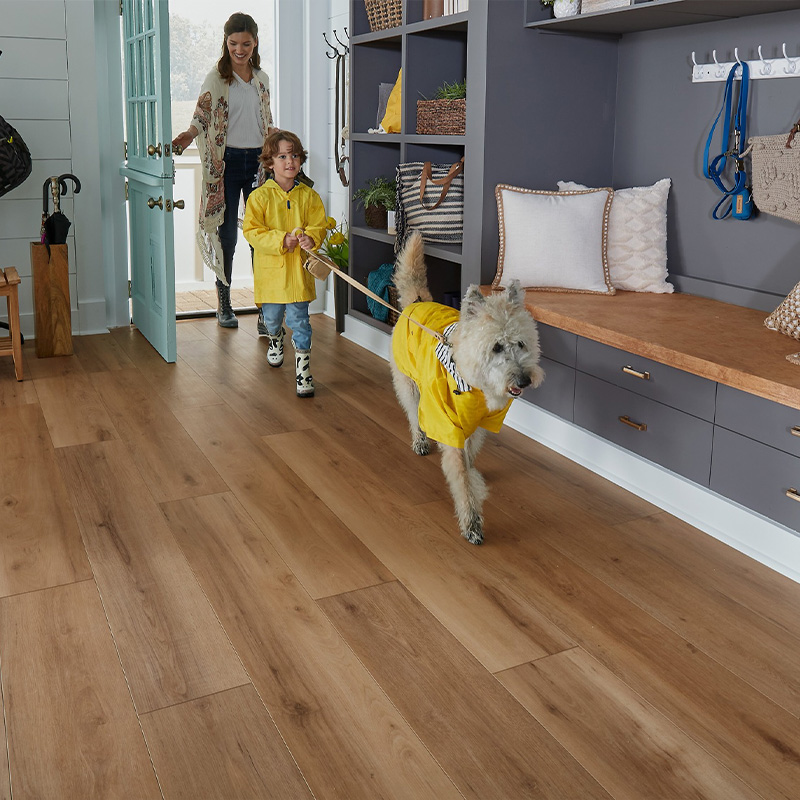
What Makes Laminate "Waterproof"?
Core Material Technology
The key to waterproof laminate lies in the core material:
WPC (Wood Plastic Composite) Cores
- Blend of wood fiber and plastic polymers
- Maintains wood-like feel while resisting moisture
- Softer underfoot than traditional laminate
- Better insulation properties
SPC (Stone Plastic Composite) Cores
- Limestone and PVC combination
- Extremely stable and dimensionally sound
- Thinner profile while maintaining strength
- Superior resistance to temperature changes
Advanced Edge Sealing
Waterproof laminate features:
- Wax or polymer edge sealing
- Tight-fitting click systems
- Water-resistant adhesives
- Sealed perimeter installation
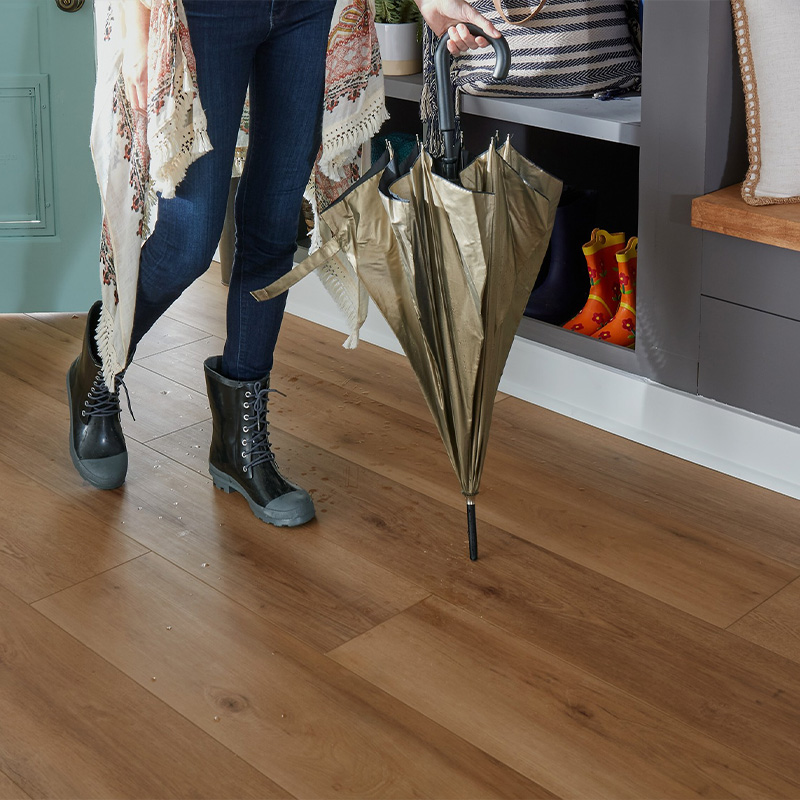
The Reality: How Waterproof Is It?
What Waterproof Laminate Can Handle
- Spills: Coffee, wine, and food spills won't damage the floor
- Pet accidents: Can handle urine and other pet-related moisture
- Kitchen mishaps: Dishwasher leaks and sink splashes
- Humidity: High humidity environments like bathrooms
- Minor flooding: Brief exposure to standing water
Limitations to Consider
- Seam vulnerability: Prolonged water exposure at seams can cause issues
- Subfloor preparation: Requires proper vapor barrier over concrete
- Installation quality: Poor installation can compromise waterproofing
- Perimeter sealing: Edges against walls need proper sealing
Installation Requirements for Maximum Protection
Subfloor Preparation
- Level surface: Maximum 3/16" variation over 10 feet
- Clean and dry: No moisture issues before installation
- Vapor barrier: Required over concrete subfloors
- Acclimation: Allow planks to adjust to room temperature
Installation Best Practices
- Proper expansion gaps: 1/4" around perimeter
- Quality underlayment: Use manufacturer-recommended padding
- Seam sealing: Apply recommended sealants at joints
- Transition strips: Proper moisture barriers at doorways
Comparing Waterproof Laminate to Alternatives
Waterproof Laminate vs. Luxury Vinyl
Waterproof Laminate Advantages:
- More authentic hardwood appearance
- Harder, more durable surface
- Better scratch resistance
- Often less expensive
Luxury Vinyl Advantages:
- 100% waterproof throughout
- Softer, warmer underfoot
- Better for uneven subfloors
- More installation flexibility
Waterproof Laminate vs. Traditional Tile
Waterproof Laminate Advantages:
- Warmer surface temperature
- Easier DIY installation
- More comfortable underfoot
- Lower cost
Tile Advantages:
- Completely waterproof when properly installed
- Extremely durable
- Heat resistant
- Timeless appeal
Best Applications for Waterproof Laminate
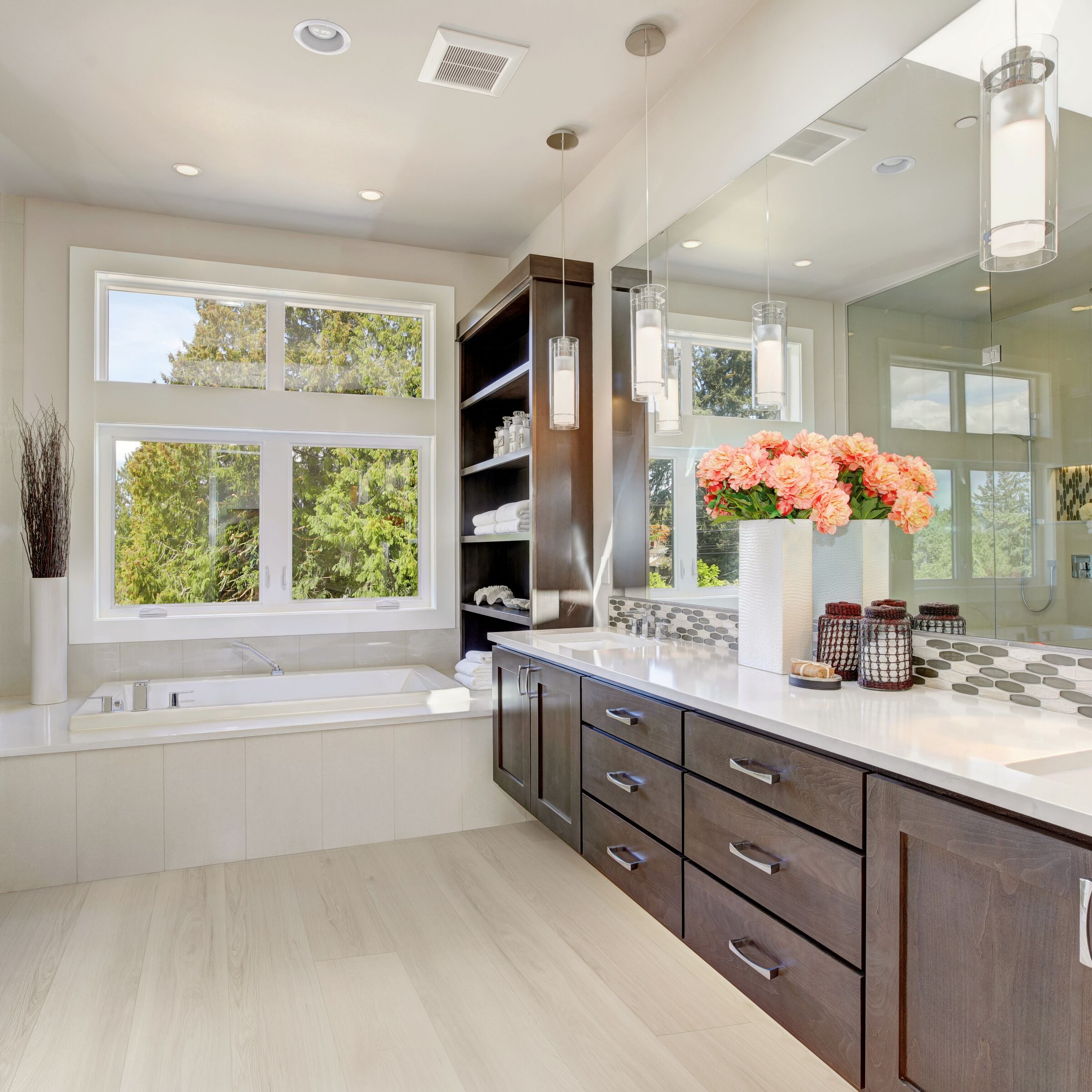
Ideal Locations
- Kitchens: Handle spills and appliance leaks
- Bathrooms: Powder rooms and half baths work well
- Basements: Excellent for below-grade installations
- Laundry rooms: Can handle washer/dryer moisture
- Mudrooms: Withstand wet shoes and outdoor gear
Consider Alternatives For
- Full bathrooms with tubs/showers: True waterproof flooring better
- Areas with poor drainage: Risk of standing water
- Outdoor applications: Not designed for exterior use
- Commercial wet areas: Need commercial-grade waterproofing
Maintenance for Waterproof Laminate
Daily Care
- Sweep or vacuum regularly
- Clean spills promptly (though not urgently required)
- Use appropriate cleaning products
- Maintain proper humidity levels (30-50%)
Long-term Maintenance
- Inspect seams periodically
- Reapply edge sealant if recommended
- Address any lifting or gaps immediately
- Professional inspection every few years
Cost Considerations
Waterproof Laminate Pricing
- Budget options: $2-4 per sq ft
- Mid-range: $4-7 per sq ft
- Premium: $7-12 per sq ft
- Installation: $2-5 per sq ft
Value Comparison
- More expensive than traditional laminate
- Comparable to quality luxury vinyl
- Less expensive than natural hardwood
- Competitive with mid-range tile
Making the Right Choice
Choose Waterproof Laminate When:
- You want hardwood appearance with water resistance
- Installing in moisture-prone areas
- Budget is a consideration
- You prefer a harder walking surface
- DIY installation is planned
Consider Alternatives When:
- Maximum waterproofing is essential
- Extremely high moisture environments
- Subfloor conditions are challenging
- Comfort underfoot is the priority
Waterproof vs. Water-Resistant Laminate: The Real Difference
The two terms get used interchangeably in showrooms and online listings, but they describe very different levels of protection. Water-resistant laminate uses a tighter HDF core and improved edge treatments to shrug off surface spills for a limited time, typically a few hours, before moisture can seep into the seams and swell the board. Waterproof laminate goes further by replacing the wood-based core with a WPC or SPC composite that does not absorb water at all, so the plank itself will not warp even when liquid sits on top of it.
The practical takeaway is that water-resistant laminate is built to survive accidents, while waterproof laminate is built to survive moisture as a normal condition of the room. That distinction matters most at the seams and the perimeter, where any laminate is at its weakest. A genuine waterproof product pairs its stable core with a sealed click system and a wax-coated edge so that water beads on the surface and wipes away instead of wicking into the joints. When you shop, read the warranty language carefully: a true waterproof claim is usually backed by a specific number of hours or a lifetime surface-water guarantee, whereas water-resistant products carry far more cautious wording. If you are weighing this against other floors, our guide on vinyl vs. laminate flooring breaks the comparison down further.
Where to Use Waterproof Laminate in Your Home
Waterproof laminate earns its keep in the rooms where traditional laminate has always struggled. Kitchens are the most popular application because the floor faces dropped ice cubes, dishwasher drips, and the occasional pot of boiling water, all of which a quality waterproof core handles without complaint. Laundry rooms and mudrooms are equally good candidates since they deal with wet shoes, melting snow, and the slow leaks that appear behind washing machines. In each of these spaces the floor gets the realistic look of wood without the constant worry that a spill will turn into a costly repair.
Basements and other below-grade rooms are another natural fit, provided the slab is dry and properly prepared. Because the composite core is dimensionally stable, it tolerates the cooler, damper conditions found underground better than a wood-core product would. Powder rooms and half baths work well too. The one area where we still steer clients toward luxury vinyl or tile is a full bathroom with a tub or shower, where standing water and steam are everyday realities rather than rare accidents. For any moisture-prone install, getting the subfloor right is half the battle, which is why professional laminate installation pays for itself in long-term performance.
It is also worth thinking about flow and consistency when you plan your rooms. Many homeowners want a single floor running continuously from the kitchen into the living room, hallway, and bedrooms, and waterproof laminate makes that possible without compromising in the wetter zones. Because it installs as a floating click-lock floor, it can span large connected areas with simple expansion gaps at the walls and transitions only at doorways into true wet rooms. Choosing one durable, moisture-ready product for the bulk of your home keeps the look seamless, simplifies future repairs, and means you only have to learn one cleaning routine.
Waterproof Laminate vs. Vinyl: Which Should You Choose?
This is the most common question we hear, and the honest answer is that both are excellent choices that simply prioritize different strengths. Waterproof laminate tends to deliver a more authentic hardwood look and a harder, more scratch-resistant surface, which makes it appealing in busy households with kids and pets. It is also frequently a little less expensive per square foot than comparable luxury vinyl, so budget-conscious shoppers often lean toward it for large open-plan areas.
Luxury vinyl plank, on the other hand, is waterproof through and through rather than just engineered to resist moisture, so it is the safer pick for full bathrooms, commercial wet areas, and any space that may see standing water. Vinyl is also softer and warmer underfoot and more forgiving over subfloors that are slightly uneven. For most Orlando homes we recommend waterproof laminate in kitchens, living areas, and bedrooms, and luxury vinyl in true wet zones. If you want help comparing actual products side by side, browse our laminate collections or request a free estimate and we will match the right material to each room.
Caring for Waterproof Laminate in Florida Humidity
Central Florida's climate puts every floor to the test. Daytime humidity regularly climbs above 70 percent, summer heat is relentless, and most local homes are built on concrete slab-on-grade foundations that can release moisture vapor over time. Waterproof laminate is well suited to these conditions because its composite core will not swell the way a wood-core plank can, but smart maintenance still keeps it looking its best for decades. The single most important step is controlling indoor humidity: running your air conditioning and aiming for a relative humidity between 40 and 50 percent prevents the small seasonal expansion and contraction that can stress any floating floor.
Before installation, a moisture barrier or vapor-rated underlayment over a Florida slab is non-negotiable, and the slab should be tested so trapped moisture does not become a problem later. Day to day, sweep or dry-mop to keep gritty sand from scratching the surface, wipe spills promptly even though the core can handle them, and use a damp rather than soaking-wet mop with a cleaner approved by the manufacturer. Avoid steam mops, which force hot vapor into the seams, and skip wax or oil-based polishes that leave a residue. Because our coastal sun can fade flooring near large windows, consider UV-filtering window film or simply rotating rugs to keep the color even. With these habits, waterproof laminate stands up beautifully to the demands of a Florida home.
Frequently Asked Questions About Waterproof Laminate
Is laminate flooring really waterproof?
Modern waterproof laminate with a WPC or SPC core genuinely resists water far better than traditional laminate because the core does not absorb moisture. That said, no floating floor is fully submersible. It is designed to handle spills, splashes, and humidity, not standing flood water that sits for days.
How long can water sit on waterproof laminate?
Most quality waterproof laminate products are rated to handle surface water for anywhere from several hours to a few days, depending on the manufacturer and the seam sealing. Always check the specific warranty, and wipe up large spills promptly to protect the perimeter and the subfloor beneath the planks.
Can I install waterproof laminate in a bathroom?
Powder rooms and half baths are excellent candidates for waterproof laminate. For a full bathroom with a tub or shower, where standing water and steam are constant, we usually recommend luxury vinyl plank or tile instead, since those surfaces are waterproof throughout rather than moisture-resistant.
Is waterproof laminate or vinyl better?
Waterproof laminate offers a more authentic wood look and a harder, scratch-resistant surface, often at a lower price. Luxury vinyl is waterproof all the way through and softer underfoot. For most rooms laminate is a great value, while true wet areas are better served by vinyl.
Does waterproof laminate come with a warranty?
Yes. Reputable waterproof laminate typically carries a residential warranty covering the surface against water damage, often for a set number of hours of exposure or for the life of the floor. Warranties usually require proper installation, a suitable underlayment, and prompt cleanup, so keep your documentation and follow the manufacturer's care guidelines.
The Bottom Line
Waterproof laminate represents a significant advancement in flooring technology. While not 100% waterproof like luxury vinyl, it offers excellent water resistance that makes it suitable for most moisture-prone areas in homes. The key is understanding its capabilities and limitations, ensuring proper installation, and choosing the right product for your specific needs.
Need Help Choosing the Right Floor?
Our flooring experts are ready to help you find the perfect match for your space.
Or call us now: (321) 424-0546
Recommended Products
Related Articles & Resources
Exploring waterproof laminate options?
Browse our collection of waterproof laminate flooring and speak with our experts about the best moisture-resistant solution for your home.
Shop Waterproof Laminate