Shower leaks are deceptive. Unlike a burst pipe or a dripping faucet, a leak behind shower tile doesn't announce itself with obvious water on the floor. Instead, water quietly seeps through cracked grout, failed caulk, or a missing waterproof membrane and infiltrates the wall cavity behind the tile — soaking into backer board, framing, and subfloor for months before you have any idea something is wrong.
By the time a homeowner notices visible damage, the leak has often been running long enough to cause mold growth, rotted framing, and damaged subfloor that requires a complete bathroom renovation to fix. We've seen it firsthand — including a case right here in Orlando where a second-floor shower leak went undetected long enough to damage the floor below the bathroom.
Catching a shower leak early is the difference between a $300 re-grout and a $7,000 full remodel. Here's exactly what to look for.
💡 Key Takeaway
Most shower leaks start at grout lines, caulk joints, or failed waterproofing — not the tile itself. The tile looks fine while water moves silently behind it. Watch for soft tile, recurring grout cracks, musty odors, and wall discoloration near the shower — these are the earliest warning signs before visible water damage appears.
Why Shower Leaks Go Unnoticed for So Long
Tile is waterproof. Grout and caulk, however, are not — at least not permanently. Over time, grout becomes porous and develops micro-cracks. Caulk shrinks, pulls away from corners, and loses its bond. When these sealants fail, water finds a path behind the tile surface and into whatever is behind it.
In a properly built shower, a waterproof membrane behind the backer board is the last line of defense. If that membrane was never installed, was applied incorrectly, or was damaged during demolition of a previous renovation, there is nothing stopping water from reaching the wall framing and subfloor.
Because the water disperses through porous materials rather than dripping visibly, it takes time to saturate the framing and cause visible symptoms at the surface. In a humid Florida bathroom, conditions that accelerate mold growth are already present — making a hidden shower leak particularly damaging in Orlando homes.
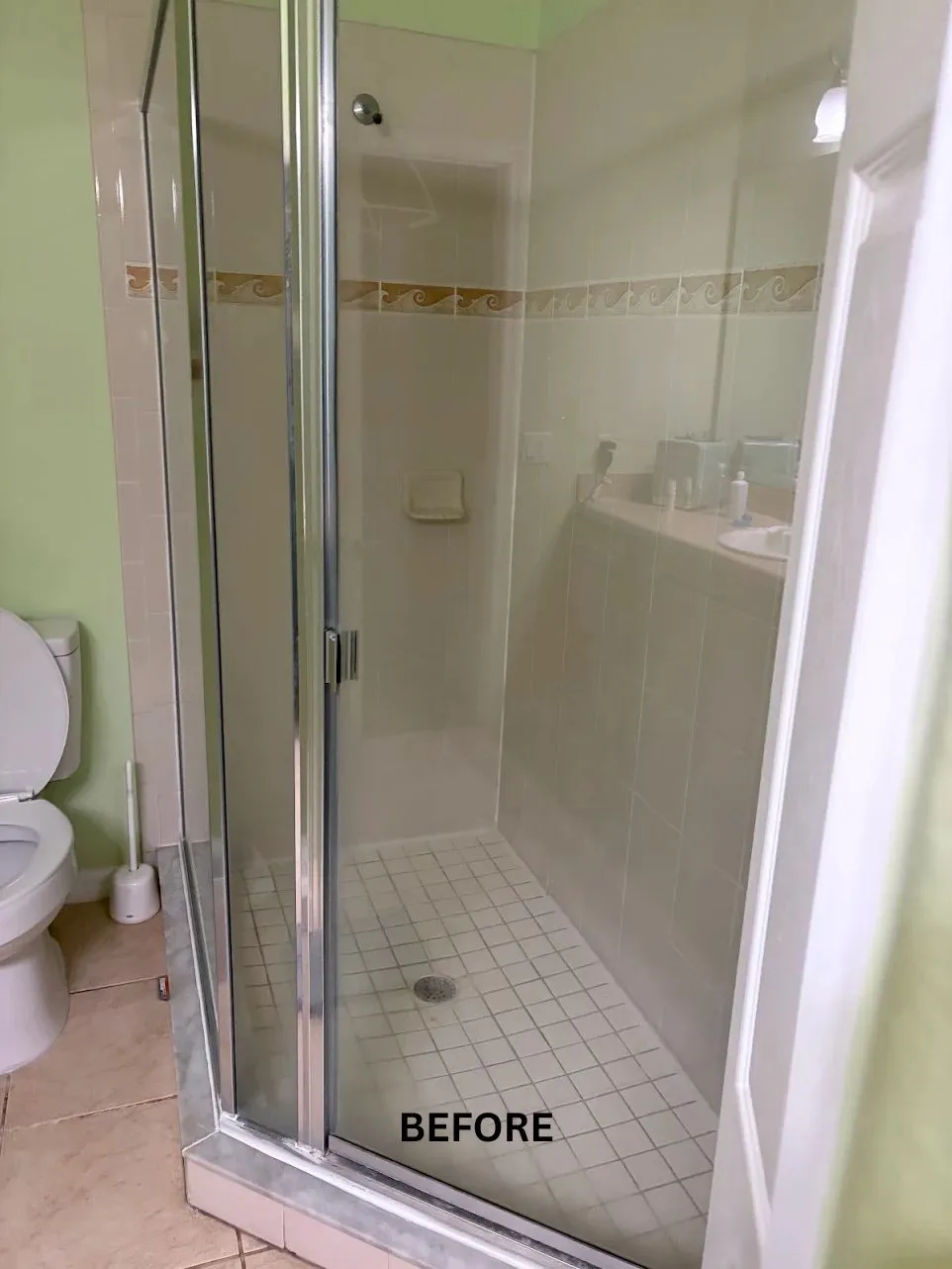
8 Warning Signs Your Shower Is Leaking Behind the Tile
1. Tile That Moves or Feels Hollow
Tap your shower wall tile gently with a knuckle. Tile that is properly bonded to a solid substrate makes a dense, flat sound. Tile that sounds hollow — or that visibly flexes or moves when you press it — has lost its bond to the backer board behind it. This almost always means the backer board has absorbed moisture and deteriorated. Water has been behind that tile long enough to destroy the bond between the thinset and the substrate.
This is one of the most reliable indicators of a leak. Even one or two hollow tiles in a shower surround warrant a closer inspection of the entire wall.
2. Grout That Keeps Cracking in the Same Spots
Grout cracks occasionally — a single crack isn't necessarily alarming. But if you re-grout a section and the crack returns within a few months in exactly the same location, something is moving underneath the tile. That movement is usually a backer board that has absorbed moisture and begun to flex or deteriorate. The substrate should be rigid; when it isn't, the grout reflects it.
Pay particular attention to horizontal grout lines at the base of the shower wall (where it meets the floor pan) and at inside corners — these are the highest-stress zones and the first to crack when the substrate weakens.
3. Caulk That Fails Repeatedly at Corners and the Shower Base
Caulk at inside corners and the tile-to-floor joint needs to be flexible enough to handle slight movement. If your caulk keeps pulling away from the wall, cracking, or developing gaps within 6–12 months of application — even after you've used quality silicone caulk — the wall substrate may be moving slightly due to moisture absorption. The caulk itself isn't failing; it's the surface behind it that's unstable.
4. A Persistent Musty Smell That Won't Go Away
A clean shower that smells musty or moldy even after thorough cleaning is almost certainly harboring mold or mildew that you can't see. Mold grows behind tile in wet framing, damp backer board, and saturated insulation. You're smelling what's growing inside the wall cavity. In Florida's warm, humid climate, mold establishes quickly — sometimes within 24–48 hours of a water intrusion event — and spreads faster than in cooler climates.
If cleaning the visible grout and tile surface doesn't eliminate the odor, the source is behind the tile.
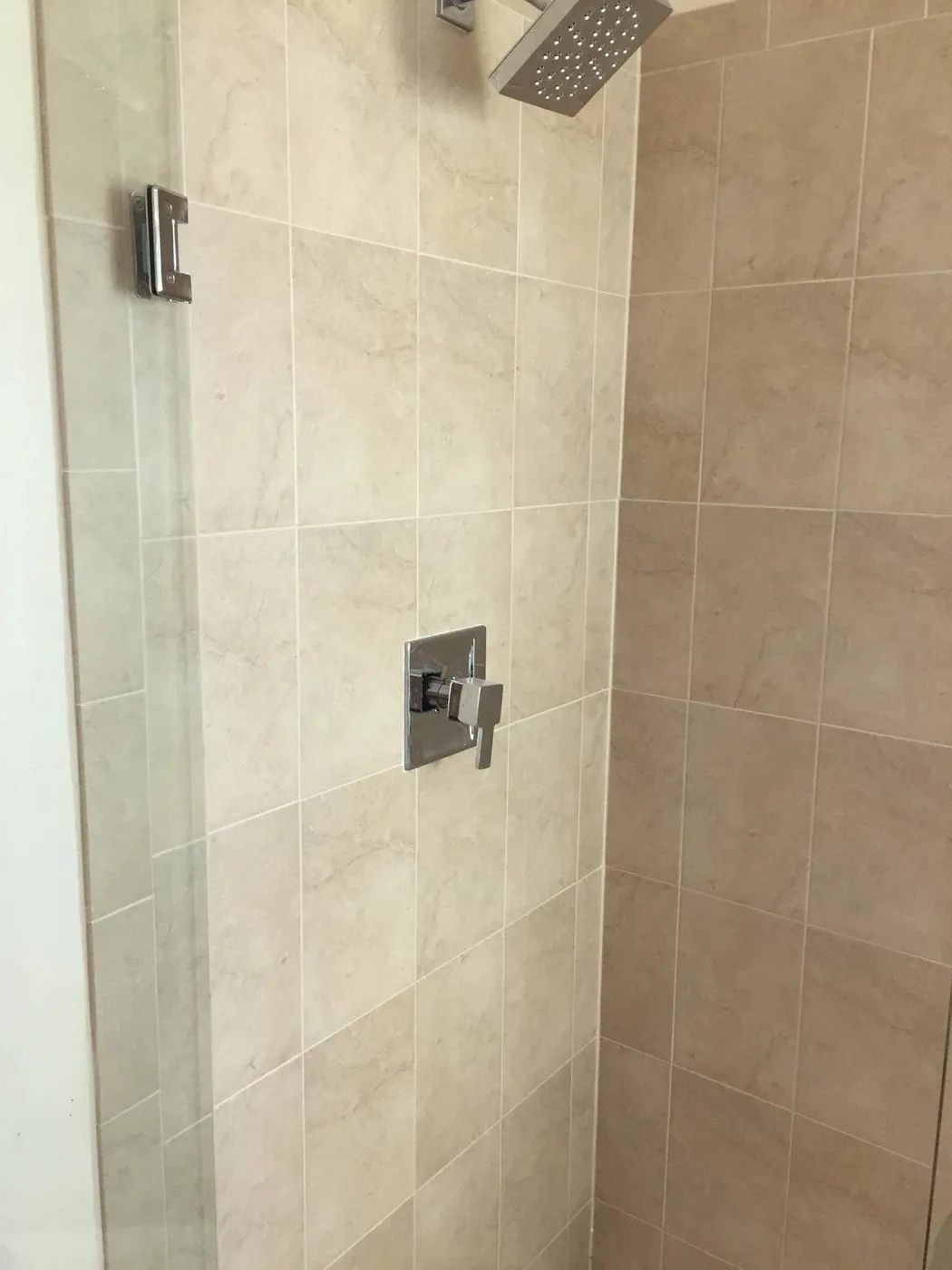
5. Visible Mold on Grout Lines That Returns After Cleaning
Surface mold on grout is common in any bathroom and usually responds to cleaning. But mold that returns within days or weeks in the same spots — particularly on grout lines at the base of the shower wall — indicates moisture is consistently present behind or within the grout itself. The mold has a water source you can't reach by cleaning the surface.
This is different from general bathroom mildew, which is caused by ambient humidity and appears across a broader area. Persistent mold localized to specific grout lines, particularly lower on the wall, points strongly to water infiltration from behind.
6. Peeling Paint, Bubbling Drywall, or Discoloration on Adjacent Walls
If the wall adjacent to your shower — often in a bedroom or hallway — shows paint that is peeling, bubbling, or developing soft spots, water is traveling laterally through the framing from the shower wall. By the time this symptom appears, the leak has been running long enough to fully saturate the framing and begin affecting adjacent finished surfaces.
Any soft, spongy, or deformed drywall near a shower should be treated as evidence of an active or recent leak until proven otherwise.
7. Water Stains or Damage on the Ceiling Below a Second-Floor Bathroom
A second-floor bathroom that is leaking behind the shower tile will eventually show evidence on the ceiling of the room below. By this stage the leak is severe — the framing and subfloor are saturated enough that water is traveling through the floor structure and appearing on the ceiling below. This is the most urgent presentation of a shower leak and requires immediate attention.
We handled exactly this situation in an Orlando remodel in the 32829 zip code: a homeowner's second-floor shower had been leaking long enough that water was actively affecting the first floor below. The project required full demo, replacement of the backer board and waterproofing system, and a complete shower retile — see the full case study here.
8. Loose Floor Tile in or Around the Shower
Shower floor tile that moves, rocks, or has clearly separated from the substrate has lost its bond due to moisture intrusion. The floor mortar bed or backer board has absorbed water and deteriorated. This is particularly common at the threshold of a shower — where water is most likely to pool and where caulk failure first allows water to reach the subfloor.
Loose floor tile is never a cosmetic issue you can fix by re-adhering the tile. The substrate must be inspected and replaced before any new tile is set.
What Actually Causes Shower Leaks
Understanding what causes leaks helps you assess your risk before symptoms appear.
- Failed or missing waterproofing membrane: The single most common cause of serious shower leaks. Many older showers — and some poorly installed newer ones — were built without a proper waterproof membrane behind the backer board. The tile and grout slow water down but don't stop it. Without a membrane, water that gets behind the tile has nowhere to go but into the framing.
- Deteriorated grout: Cement-based grout is porous and becomes more so over time, especially without periodic sealing. Grout that hasn't been sealed in years allows water to pass through it directly rather than beading on the surface.
- Failed caulk at corners and transitions: The inside corners of a shower (wall-to-wall and wall-to-floor) require flexible caulk rather than rigid grout. Grout in these locations will always crack because the two adjoining surfaces move independently. Failed caulk at these joints is one of the most common entry points for water.
- Tile installed over wrong backer material: Regular drywall — even "moisture-resistant" green board — is not a suitable shower substrate. Only cement board, fiber-cement board (like Durock), or foam waterproof panels should be used as shower tile backer. Showers tiled over regular drywall will leak eventually, regardless of how well the tile and grout are installed.
- Voids under tile: Tile set without full coverage of thinset leaves voids where water collects and then infiltrates through grout lines. Proper tile installation requires at least 95% thinset coverage (by TCNA standards) on all tiles in wet areas.
Second-Floor Shower Leaks: A Special Case
A shower on the second floor of a home presents the highest leak risk in terms of damage potential. When a ground-floor shower leaks, water typically spreads into the subfloor and slab — serious, but usually contained. When a second-floor shower leaks, gravity directs water downward through the floor structure into the ceiling and walls of the room below.
The path water takes is unpredictable — it may travel along joists, pool in ceiling cavities, or emerge far from the shower itself. Homeowners frequently describe noticing a stain or soft spot on a first-floor ceiling and being surprised to learn the source was the shower directly above, not a plumbing issue.
If you have a second-floor bathroom with any of the warning signs listed above, treat it as urgent. The cost of repair increases significantly once the ceiling below is affected, because you are now repairing two rooms instead of one.
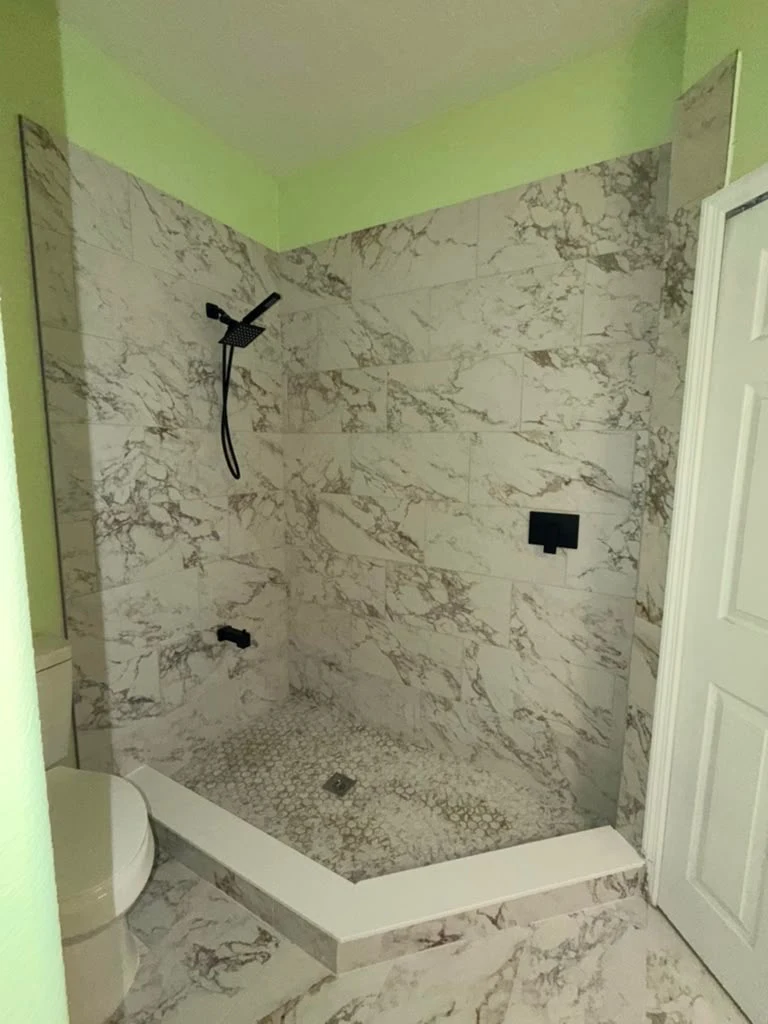
What to Do If You See These Signs
Step 1: Don't Use the Shower
If you're seeing multiple warning signs — particularly hollow tile, recurring grout failure, or any moisture appearing in adjacent rooms — stop using the shower. Every shower you take is adding to the moisture load behind the tile. If you must use it, keep showers brief and dry the walls thoroughly afterward.
Step 2: Get a Professional Inspection
A tile contractor can tap-test your shower walls and floor systematically, probe caulk joints, and identify where water is entering. This inspection is often free or low-cost and gives you a clear picture of whether you need a re-grout, a partial re-tile, or a full renovation.
Step 3: Don't Tile Over the Problem
The most common mistake homeowners make is trying to seal an existing leak by adding new tile or caulk over the old installation. This delays the problem by months, not permanently. If the backer board has absorbed moisture, it must be replaced. If the waterproofing membrane is missing or failed, it must be installed correctly. Learn how a proper shower waterproofing system is built before agreeing to any repair approach.
Step 4: Address the Root Cause
The repair must address why the leak happened, not just what it damaged. If the leak was caused by a missing waterproofing membrane, re-tiling without adding a membrane will produce another leak. If the cause was wrong backer material, that material must be replaced. A proper repair involves full demo to inspect all affected substrate, correct whatever was wrong with the original installation, and rebuild with current best practices.
Frequently Asked Questions
How do I know if my shower is leaking behind the tile?
The most reliable signs are: tile that sounds hollow or moves when pressed, grout that cracks repeatedly in the same locations, caulk that fails within months of application, a musty odor that persists after cleaning, visible mold on grout lines that keeps returning, and any moisture or discoloration on walls or ceilings adjacent to the shower. Any of these warrants a professional inspection.
Can a shower leak without visible water on the floor?
Yes — this is how most shower leaks begin. Water travels through cracked grout or failed caulk, absorbs into backer board, and disperses into wall framing before any pooling occurs. You may see no standing water for months while structural damage progresses behind the tile.
What causes shower tile to leak?
The most common causes are: cracked or deteriorated grout, failed caulk at corners and transitions, a missing or improperly applied waterproofing membrane, backer material that isn't rated for wet areas, and tile set with insufficient thinset coverage leaving voids where water pools.
How much does it cost to fix a leaking shower?
It depends on how far the damage has spread. A simple re-grout and re-caulk may cost $200–$500. Replacing backer board and redoing waterproofing typically runs $1,500–$4,000. A full bathroom remodel addressing structural water damage runs $5,000–$10,000+. Early detection dramatically lowers repair cost.
Can I tile over a leaking shower without fixing the waterproofing?
No. Tiling over an existing leak without correcting the waterproofing failure is the most common cause of repeat shower leaks. The new tile will look fine initially, but water continues through the same path. The problem returns faster because the substrate is already compromised.
Think your shower may be leaking?
Cavalieri Flooring serves Orlando and Central Florida for bathroom remodels, shower renovations, and full waterproofing system installations. We offer free in-home estimates — our team can inspect your shower, identify the source of the leak, and give you an honest assessment of what it takes to fix it correctly.
Schedule Free Inspection