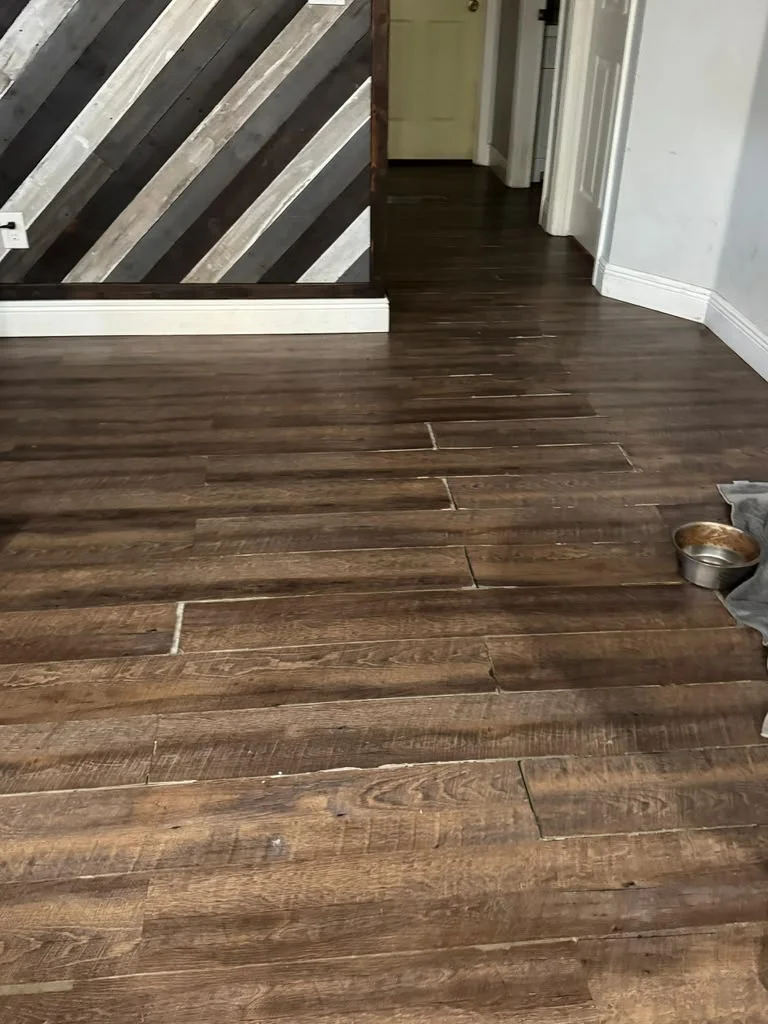
Quick answer: LVP often buckles when its movement is restricted. It may lift when moisture, subfloor irregularities, adhesive failure, or locking-joint problems affect the installation. It may separate when planks contract or when the locking system is damaged. In Florida, direct sunlight, indoor temperature changes, and concrete-slab moisture are important conditions to investigate, but the visible pattern and product requirements must be checked before choosing a repair.
Quick Diagnosis: What You See vs. Most Likely Cause
| What the homeowner sees | Most likely cause | Repair possible? |
|---|---|---|
| Floor forming a ridge or wave near the wall | Missing or closed expansion gap | Usually yes |
| Planks lifting near sliding glass doors or south/west windows | Direct Florida sun — thermal expansion | Partial — gap fix + sun control |
| Joints peaking (tenting) between planks | Expansion pressure with no escape route | Often yes — expand gaps |
| Ends separating across multiple rows | Uneven subfloor or weak locking joints | Partial repair possible |
| Floor bouncing when walked on | Low spot below the floor — unsupported span | Subfloor repair needed first |
| Buckling near kitchen or bathroom | Moisture intrusion from slab or plumbing | Depends on damage extent |
| Floor rising around kitchen island | Island pinning floating floor | Repair requires moving island |
| Failure soon after installation | Possible installation, product-handling, locking-joint, or subfloor issue | Professional diagnosis recommended |
| Random joints opening throughout the floor | Contraction, installation damage, or defective locking | Partial — depends on cause |
| Whole sections of floor lifting off subfloor | Moisture damage — planks swollen or adhesive failed | Usually full replacement |
| Buckling across several rooms after the AC was off | Extreme indoor heat or humidity change | Depends on joint and plank damage |
First: What's the Difference Between Buckling, Peaking, Lifting, and Gapping?
These terms get used interchangeably online, but they describe different failures with different causes and different repairs. Using the right term when you call an installer helps them diagnose the problem before they arrive.
- Buckling: The floor rises in a visible wave or hump — often spanning several planks. Usually caused by thermal expansion with no room to move. The floor has grown longer than the space allows and has no choice but to go up.
- Peaking (tenting): A specific joint between two planks rises into a sharp ridge. The expansion pressure is concentrated at one joint rather than distributed across a wave. Often an early sign of a missing expansion gap before full buckling develops.
- Lifting: Individual planks or sections of planks rise off the subfloor — often at edges, near walls, or near moisture sources. Caused by moisture swelling, adhesive failure, or subfloor unevenness preventing full contact.
- Gapping (separating): Joints open up between planks — visible lines appear where planks used to meet tightly. Usually caused by contraction from low humidity or temperatures, improper acclimation, or subfloor movement pulling planks apart.
- Joint failure: The locking mechanism between planks breaks, snaps, or releases — usually from subfloor flexing, impact damage, or improper installation force. The joint opens and cannot be re-engaged without replacing planks.
1. Missing or Closed Expansion Gap
The single most common cause of LVP buckling across all climates — and entirely preventable. Floating LVP expands and contracts with temperature. The expansion gap (typically 1/4 to 3/8 inch) around the perimeter of every room gives the floor room to grow without pushing against walls.
When that gap is missing — either because it was never left, because furniture was pushed against the wall and compressed the floor, or because baseboard was installed touching the floor — the expanding planks have nowhere to go. The floor buckles upward instead.
How to diagnose: Remove a baseboard section near the buckle. If the floor is touching the wall with zero gap, you've found the cause. If there is a proper gap, look for another cause.
Repair: A flooring professional can pull back the floor from the affected wall, trim the plank ends to restore the expansion gap, and reinstall the baseboard with a gap maintained. This is the most repairable of all LVP failure types — no plank replacement is usually needed.
2. Florida Sunlight and Direct Heat — The State-Specific Problem
This is a condition many Florida homeowners underestimate. Strong direct sun through west-facing or south-facing sliding glass doors and large windows can heat LVP significantly, but the actual surface temperature and allowable exposure depend on the glass, product, installation, and site conditions. Check the exact flooring collection's temperature and expansion requirements before treating heat as the cause.
Temperature changes can create movement in a floating floor, but the amount depends on the product's construction, coefficient of expansion, temperature change, run length, and installation gaps. Use the manufacturer's stated movement and expansion-gap requirements rather than applying a universal calculation.
Signs this is the cause: Buckling or lifting occurs specifically near sliding glass doors, south or west windows, or sunroom entries. It may appear seasonally (worse in summer afternoons) or worsen after unusually sunny days.
Solutions beyond just fixing the gap:
- Consider solar-control film, shading, or another glazing treatment. The amount of heat reduction varies with the glass, film, orientation, shade, and installation, so confirm expected performance for the specific window.
- Use blinds or curtains during peak sun hours (12–5 PM in Florida).
- Ensure the expansion gap is at the maximum of the manufacturer's specification for high-heat environments — not the minimum.
- Consider a glue-down LVP product for rooms with heavy direct sun, as glue-down installation controls movement far more effectively than floating.
3. Moisture Through the Florida Concrete Slab
Florida concrete slabs sit on grade, in contact with soil and groundwater year-round. Moisture vapor continuously migrates upward. When LVP is installed over a slab with excessive moisture vapor emission — either directly or over tile — the moisture can cause:
- Adhesive failure in glue-down installations, allowing planks to lift
- Swelling of the LVP core material in moisture-sensitive products
- Mold and mildew growth underneath, causing the floor to feel soft or springy
- Buckling in areas where moisture concentration is highest (near slab seams, drains, or exterior walls)
How to diagnose: If lifting or buckling is concentrated near the perimeter of the home, near the kitchen sink, near a bathroom wall, or in an area with any history of water intrusion — moisture is the prime suspect. A professional can perform a calcium chloride or RH probe test to confirm slab moisture levels.
Important distinction: True waterproof LVP resists water on its surface — liquid water from spills. It does not necessarily resist moisture vapor from below. Read the product's moisture vapor emission rate specifications before assuming any LVP is immune to slab moisture.
For more on this topic see our full guide on installing LVP over tile in Florida — the moisture testing section applies equally to bare-slab installations.
4. Uneven Subfloor
LVP must be installed over a surface flat to within 3/16 inch per 10 feet (some manufacturers specify 1/8 inch per 6 feet). When the subfloor has high or low spots beyond this tolerance, problems develop in two ways:
- High spots: The plank rocks over the high spot when weight is applied, flexing the locking joint thousands of times over its life. Eventually the joint fails or the plank cracks.
- Low spots: Planks spanning a low spot have no support in the middle. Under foot traffic, they flex downward — again stressing the locking joint at each end. The joint eventually releases, creating a gap or a soft, springy feel.
How to diagnose: Place a 6-foot or 10-foot straightedge on the floor and look for gaps underneath. Gaps greater than 3/16 inch indicate a subfloor problem. On concrete, this is corrected with a self-leveling compound. On wood subfloors, high spots are sanded and low spots are filled before installation.
Addressing this problem after the LVP is already installed usually requires removing the floor in the affected area, correcting the subfloor, and reinstalling. This is why proper subfloor prep before installation is non-negotiable — see our subfloor preparation services in Orlando.
5. Improper Acclimation
Acclimation requirements vary by product. Some vinyl plank collections require 24–48 hours in the installation area, while certain rigid-core products may not require traditional acclimation when jobsite temperature and humidity are already within the manufacturer’s specified range. Always follow the installation instructions for the exact flooring collection.
Flooring stored in a garage, moving truck, or outdoor storage unit may be exposed to different temperature and humidity conditions than the installation area. Confirm the required handling and acclimation procedure in the exact product’s installation guide before installation.
When product handling requirements are not followed, possible results include:
- Planks contracting after installation, which may contribute to visible gaps
- Planks expanding after installation, which may contribute to peaking or buckling
Problems related to storage or jobsite conditions may appear soon after installation or after environmental conditions change. The timing alone does not confirm acclimation as the cause; the product instructions, storage history, expansion space, subfloor, and locking joints should all be inspected.
6. Cabinets, Kitchen Islands, and Built-In Appliances Pinning the Floor
This is the cause most online guides miss entirely, and it generates a significant number of service calls from homeowners who don't understand why their new floor is buckling even though they left proper perimeter gaps.
Many floating LVP installation guides prohibit installation beneath kitchen cabinets, islands, bathroom vanities, or other permanently fixed fixtures. These objects may restrict the floor’s ability to expand and contract. Requirements vary by product, so the exact flooring collection’s installation instructions should determine how cabinets, islands, and fixed fixtures are handled.
A common installation sequence is to install permanent cabinets first and run the floating flooring up to the required expansion space around them. When an island or cabinet is pinning an existing floor, a professional may need to remove or re-cut the flooring around the fixture. The correct repair depends on the product, installation method, and how the fixture is attached.
Heavy appliances are a secondary version of the same problem.
Refrigerators, washing machines, and other heavy stationary appliances can pin a floating floor if positioned without a proper gap. In a kitchen with both a refrigerator at one end and an island in the middle, the floor may be effectively pinned in three directions — leaving nowhere for expansion to go.
7. Long Continuous Runs Without Transitions
Some LVP installation guides specify maximum continuous-run lengths or require transitions in particular layouts; the exact limit depends on the collection, room geometry, temperature range, and installation method. Long open-plan rooms should be checked against the selected product’s installation instructions before the floor is installed without transitions.
Long runs can accumulate movement as temperature and humidity change, but the amount varies by product and site conditions. Use the manufacturer’s expansion-gap, transition, and movement requirements rather than applying a universal distance or expansion calculation.
The fix may involve adding a T-molding transition at the interval required by the flooring manufacturer. Where a product’s installation instructions require transitions, they are a functional part of the installation rather than merely a decorative choice.
8. Wrong Underlayment — Especially Double Underlayment
Underlayment that is too thick, too compressible, or doubled up (installed under an LVP product that already has attached underlayment) can destabilize the locking joint system. The floor may micro-flex with every footstep in a way that stresses the joint more than a firm, stable substrate would.
The most common Florida version of this problem: a homeowner purchases LVP with attached underlayment and then, reading online advice about moisture protection, adds a second layer of foam underlayment underneath. The result is a floor that feels slightly spongy and whose joints begin separating within 6–18 months.
Do not add a second underlayment beneath flooring with an attached pad unless the exact product’s installation instructions specifically permit it. When moisture protection is required over concrete, use the vapor-retarder or moisture-control system approved by the flooring manufacturer rather than assuming every product requires the same material or thickness. Read our complete LVP underlayment guide for the full breakdown.
9. Defective or Installation-Damaged Locking System
The click-lock locking system that holds LVP planks together is precision-engineered with tolerances measured in fractions of a millimeter. When locking tongues or grooves are damaged — either from a manufacturing defect or from improper installation technique (forcing planks, using excessive mallet force, dropping planks) — the joint holds initially but releases under use.
Signs this is the cause: Gaps appear in scattered, seemingly random locations rather than in a pattern associated with heat, moisture, or subfloor issues. Problems appear within the first few months before temperature or seasonal changes could account for movement.
Damaged locking joints cannot be repaired — the affected planks must be replaced. If widespread joint failure appears across a new installation, document the pattern, photograph everything, and contact both the installer and the manufacturer. This is a warranty situation.
10. HVAC Shutdowns and Extreme Indoor Temperature Changes
Luxury vinyl plank flooring performs best when the home remains within the temperature and humidity range specified by the manufacturer. Problems can develop when the air-conditioning system is turned off for an extended period, the property remains vacant during hot weather, or indoor temperatures change dramatically after installation.
This is particularly important in Florida rental properties, vacation homes, newly constructed homes, and houses undergoing renovation. A closed property without active air conditioning can become substantially hotter and more humid than normal living conditions. The flooring may expand across the entire installation rather than only near a sunny window.
Signs this may be the cause: Buckling or peaking appears across several rooms after the property was vacant, the HVAC system stopped working, or the thermostat was raised significantly. The problem may not be concentrated near a plumbing fixture, exterior wall, or sliding glass door.
What to do: Restore normal indoor conditions gradually and inspect the perimeter expansion gaps, transitions, doorways, and fixed objects for areas restricting movement. Do not force raised planks back into position. If the locking joints have been damaged or the planks remain distorted after conditions stabilize, the affected flooring may require replacement.
Temperature requirements vary by product, so homeowners and property managers should follow the installation and warranty instructions for the exact LVP collection installed.
What Can Be Repaired vs. What Requires Replacement?
The following are typical Orlando-area repair ranges as of August 2026. Actual pricing depends on floor accessibility, material availability, moisture conditions, subfloor repairs, room layout, and the extent of the damage.
| Problem | Repair approach | Estimated cost |
|---|---|---|
| Missing expansion gap (no plank damage) | Pull back floor, trim planks, reinstall | $150–$400/room |
| Uneven subfloor (isolated) | Remove affected section, correct subfloor, reinstall | $300–$800 + subfloor prep |
| Island/cabinet pinning (no moisture) | Remove pinned section, re-cut, reinstall | $200–$600 |
| Isolated defective planks | Replace affected planks with matching material | $100–$300 per section |
| Moisture damage (moderate) | Remove and dry affected section, address moisture source, reinstall | $400–$1,200+ |
| Widespread moisture damage or slab failure | Full removal, moisture mitigation, new installation | Full project cost |
Warranty Implications: What Voids Coverage
Most LVP manufacturers cover manufacturing defects but specifically exclude failures caused by:
- Installation errors (missing expansion gap, improper subfloor prep, wrong adhesive)
- Moisture vapor emissions above the specified limit
- Installation in areas exceeding the product's ambient temperature specification
- Installation under cabinets, islands, or fixed appliances
- Failure to acclimate per the installation guide
- Use of incorrect or additional underlayment
Document everything before calling the manufacturer or your installer. Photographs of the failure pattern, dates of installation, who installed it, and records of any previous water events are all relevant to a warranty claim.
Frequently Asked Questions
Can buckled LVP be fixed without replacing the entire floor?
Sometimes. If buckling is caused solely by a missing expansion gap and the planks themselves are not damaged, a professional can pull back the floor, trim the planks, restore the gap, and reinstall. If moisture has swollen the planks or the locking system has failed, replacement is required.
Why is my vinyl plank floor buckling near the sliding glass door?
Direct sun exposure can be a contributing cause, but it is not possible to diagnose the cause from location alone. Check the product’s temperature limits, expansion-gap requirements, window exposure, subfloor, and moisture conditions. Solar control or shading may help, but the correct remedy depends on the exact product and site.
What causes LVP to separate at the joints?
Joint separation (gapping) can result from an uneven subfloor flexing the joint, product-specific installation or acclimation requirements not being followed, changes between air-conditioned interiors and outdoor conditions, or a defective locking system. Each has a different repair approach — diagnosis comes first.
Can I install LVP under kitchen cabinets or islands?
Do not assume a floating floor can be installed beneath a cabinet, island, or other fixed fixture. Many installation guides require the floor to remain free to expand and contract, while product-specific instructions may address exceptions. Follow the exact flooring collection’s installation guide and confirm how fixed fixtures should be handled.
Does LVP buckle more in Florida than other states?
Florida homes can experience strong solar exposure, air-conditioning-related indoor/outdoor condition changes, and concrete-slab moisture concerns. Whether those conditions create a higher risk depends on the product, installation, exposure, subfloor, and moisture-control details.
How long should LVP acclimate before installation?
Acclimation requirements vary by product. Some vinyl plank collections require 24–48 hours in the installation area, while certain rigid-core products may not require traditional acclimation when jobsite temperature and humidity are already within the manufacturer’s specified range. Always follow the installation instructions for the exact flooring collection.
What is the difference between buckling, peaking, lifting, and gapping in LVP?
Buckling = large wave from expansion. Peaking = single joint rising into a ridge. Lifting = planks rising off the subfloor from below. Gapping = joints opening from contraction or movement. Each requires a different diagnosis and a different repair — the terms are not interchangeable.
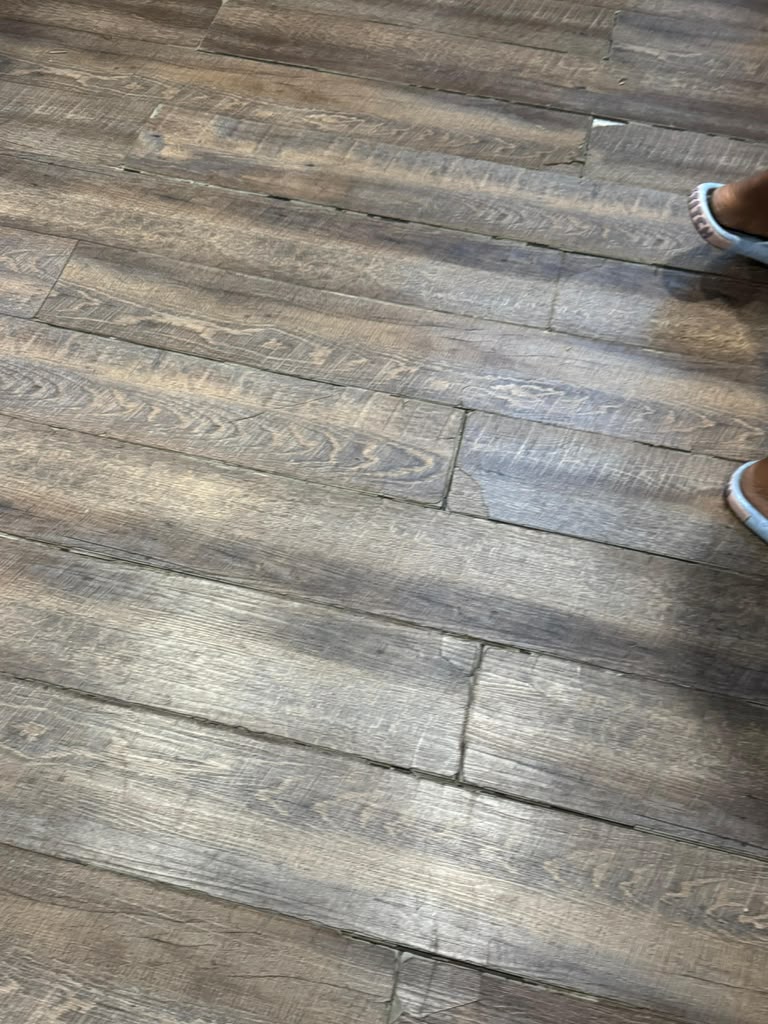
LVP Failure in Your Orlando Home?
We diagnose and repair LVP problems across Orlando, Lake Nona, Winter Garden, and Kissimmee. Get an honest assessment — we'll tell you whether repair or replacement is the right call.
Or call: (321) 424-0546
Related Articles & Services
Buckling, Lifting, or Separating — We Can Tell You Why
Cavalieri Flooring has diagnosed and repaired LVP failures across Central Florida for years. Most problems have a clear cause and a clear solution. Let us take a look before you replace an entire floor that might only need a targeted repair.