Professional concrete grinding, self-leveling compound, and moisture testing in Orlando, FL — the critical first step that determines whether your new floor will perform for decades or fail in months.
Subfloor PrepConcrete LevelingOrlando, FL
Project Overview
Subfloor preparation is the least visible and most important part of any flooring installation. The quality of the substrate directly determines the performance and longevity of whatever floor goes on top of it — and no amount of premium flooring material can compensate for a subfloor that isn't flat, structurally sound, and moisture-controlled.
In Florida, virtually all residential and commercial floors are installed over concrete slabs. Unlike northern climates where wood framing subfloors are common, Florida homes are built on slab-on-grade foundations — which means the concrete slab is the direct substrate for flooring in nearly every room. These slabs develop irregularities over time through settling, crack movement, and the accumulation of previous flooring adhesive residue — all of which must be addressed before any new flooring is installed.
This project involved a full concrete subfloor preparation sequence — grinding high spots, applying self-leveling compound to low areas, and verifying moisture conditions — preparing a previously floored space for new LVP installation throughout.
The Challenge: Florida Slabs and Moisture
Concrete subfloor preparation in Central Florida involves challenges specific to the state's climate and construction practices:
Adhesive residue from previous flooring: Older homes often have multiple layers of adhesive from previous vinyl tile, sheet vinyl, or carpet pad tack strips embedded in the concrete surface. This residue creates high spots and uneven surfaces that must be mechanically ground down before leveling compound can be applied effectively.
Moisture vapor emission: Florida's high water table and humid climate create elevated moisture vapor emission from concrete slabs throughout the year — a major concern for adhesive bond integrity and the long-term performance of moisture-sensitive flooring materials.
Crack management: Concrete slabs in Florida develop hairline and structural cracks from thermal cycling, soil movement, and age. These cracks must be evaluated and treated appropriately — filled with flexible filler for non-moving cracks, or accommodated with expansion joints for moving cracks — before leveling.
Leveling compound depth: Large low spots may require multiple pours of leveling compound with sufficient cure time between applications. Attempting to fill deep depressions in a single pour exceeds the compound's maximum build depth and produces unreliable results.
Our Process: Grind, Fill, Test, Verify
Subfloor preparation begins with a thorough walk of the space using a long straightedge to identify all high and low points. We use a 10-foot aluminum straightedge to check for flatness deviation and map the floor's topography before committing any work sequence.
Grinding phase: A concrete grinder with appropriate diamond tooling removes all high spots, adhesive ridges, concrete bumps, and surface contaminants that would prevent leveling compound from bonding or creating a new high point. The grinder is operated systematically across the entire floor surface, not just at the obvious high spots — low-grade unevenness that doesn't register to the eye will still affect floating floor performance.
Patching and crack treatment: All identified cracks are cleaned and filled with appropriate filler based on crack type and movement status. Non-moving hairline cracks receive rigid patching compound; any cracks showing differential movement are evaluated for their effect on the flooring system.
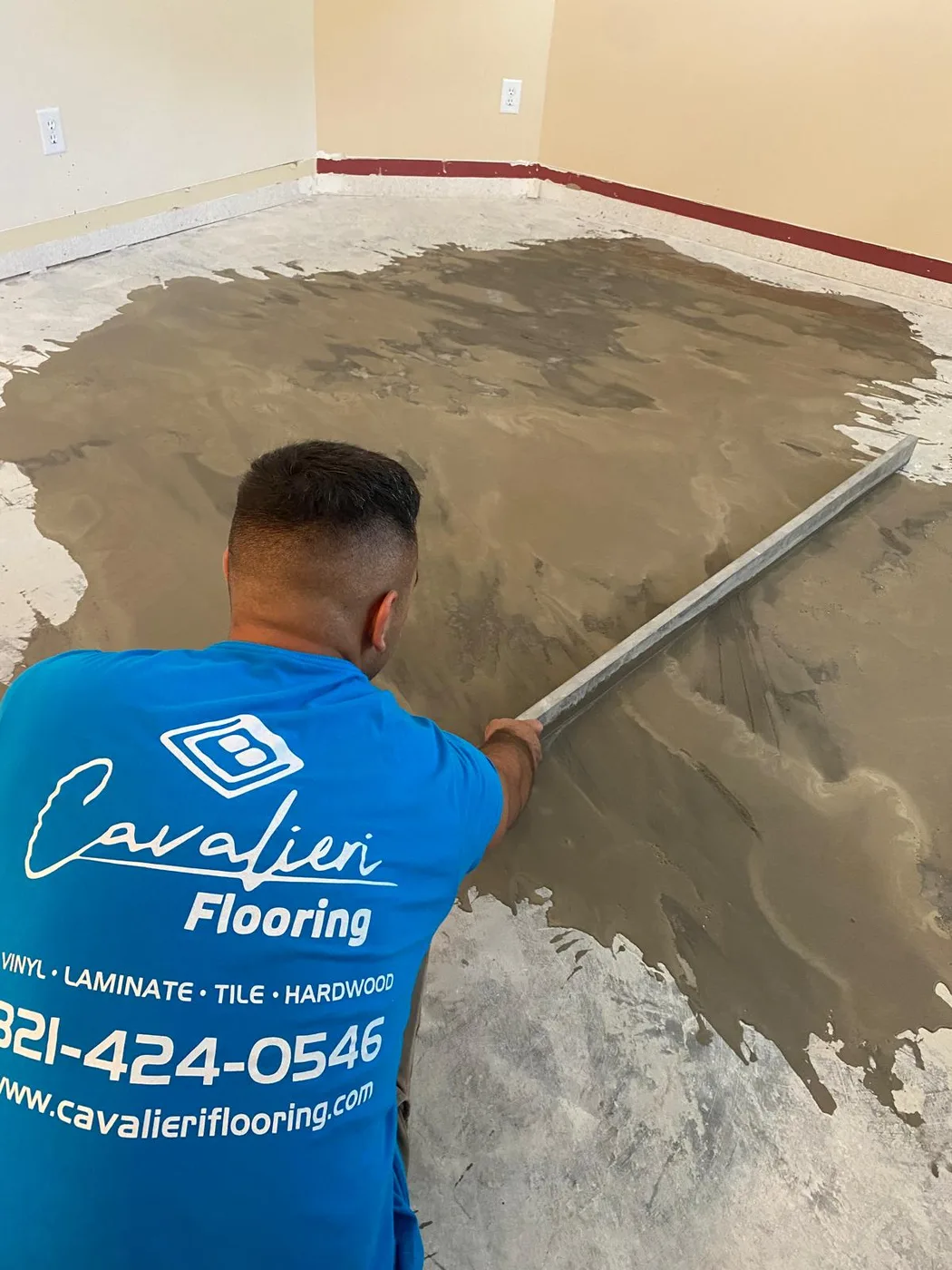
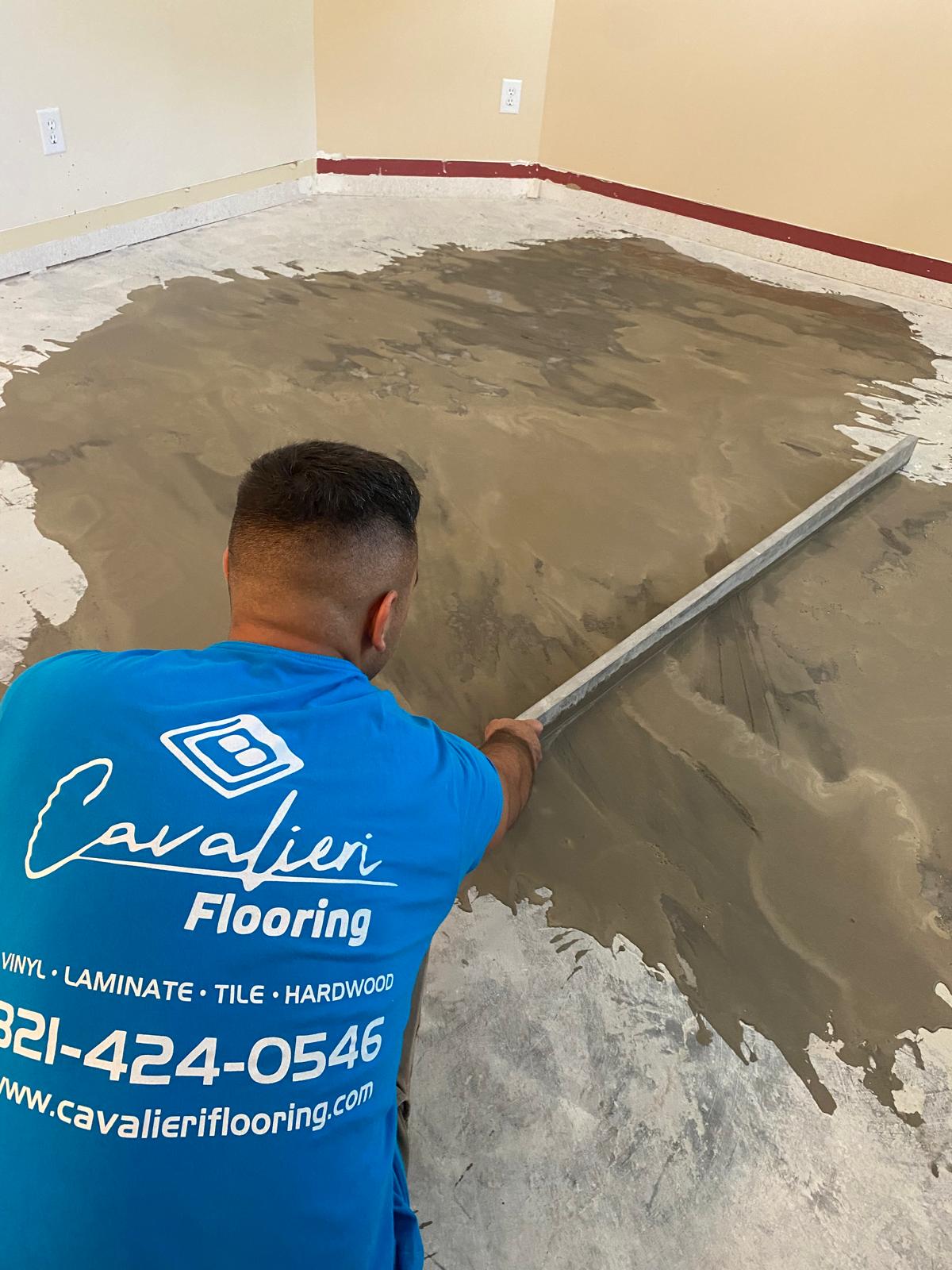
Self-leveling compound: Low areas receive self-leveling compound mixed to manufacturer specifications and poured to fill all identified depressions. The compound flows to a level plane and is guided to cover all low areas consistently. Cure time is monitored before flooring installation is allowed to proceed.
Moisture testing: Calcium chloride or relative humidity probe testing is performed per ASTM standards to verify the slab's moisture vapor emission rate is within the tolerance of the specified flooring adhesive. If moisture levels are elevated, we apply a moisture barrier membrane or use a moisture-tolerant adhesive system before proceeding.
Results: A Flat, Stable Substrate Ready for Long-Term Performance
The completed subfloor preparation delivered a flat, clean, moisture-tested substrate ready for the specified flooring installation. By investing the time and material in proper subfloor prep, the owner secured the foundation for a floor that will perform correctly for the full expected lifetime of the product — without the delamination, rocking, or adhesive failure that result from shortcuts at this stage.
Flatness within specification tolerance across full floor area
All previous adhesive residue and high points ground down
Cracks identified, evaluated, and treated appropriately
Moisture emission verified within adhesive system tolerance
Self-leveling compound fully cured before flooring installation
Prepared and leveled concrete subfloor ready for the finished flooring.
Frequently Asked Questions
Most flooring materials — including LVP, hardwood, tile, and laminate — require a flat substrate within specific tolerances to install correctly and perform over time. Unevenness causes floating floors to rock, glue-down floors to delaminate, and tiles to crack or develop lippage. The flatness requirement is typically 3/16 inch over 10 feet for most flooring types and stricter for large-format tile.
Concrete grinding removes high spots — protrusions, ridges, hardened adhesive from previous flooring, or concrete high points — using a mechanical grinder. Self-leveling compound (SLC) fills low spots — dips, depressions, cracks, and low areas — by flowing out to a flat plane and hardening. Most subfloor prep jobs require both: grinding highs first, then filling lows with compound.
Most self-leveling concrete compounds are walkable within 2 to 4 hours and ready for flooring installation within 24 hours, though some products require longer cure times. We always verify cure time with the specific product before allowing flooring installation to proceed — applying flooring over uncured compound is one of the most common causes of adhesive bond failure.
Yes — moisture testing is a critical step before any flooring is installed over concrete. Concrete slabs in Florida can emit elevated moisture vapor that migrates up through the slab and can attack adhesives, cause LVP to blister, warp hardwood, or cause tile grout to fail. We perform calcium chloride or relative humidity probe testing per industry standards and install appropriate moisture barriers or use compatible adhesives when moisture levels are elevated.
Yes. Subfloor preparation — including concrete grinding, leveling, patching, and moisture control — is a core part of our installation service for all flooring types. We never skip or shortcut this step, because the substrate is the foundation of every floor we install. Contact us for a free estimate that includes full subfloor assessment.