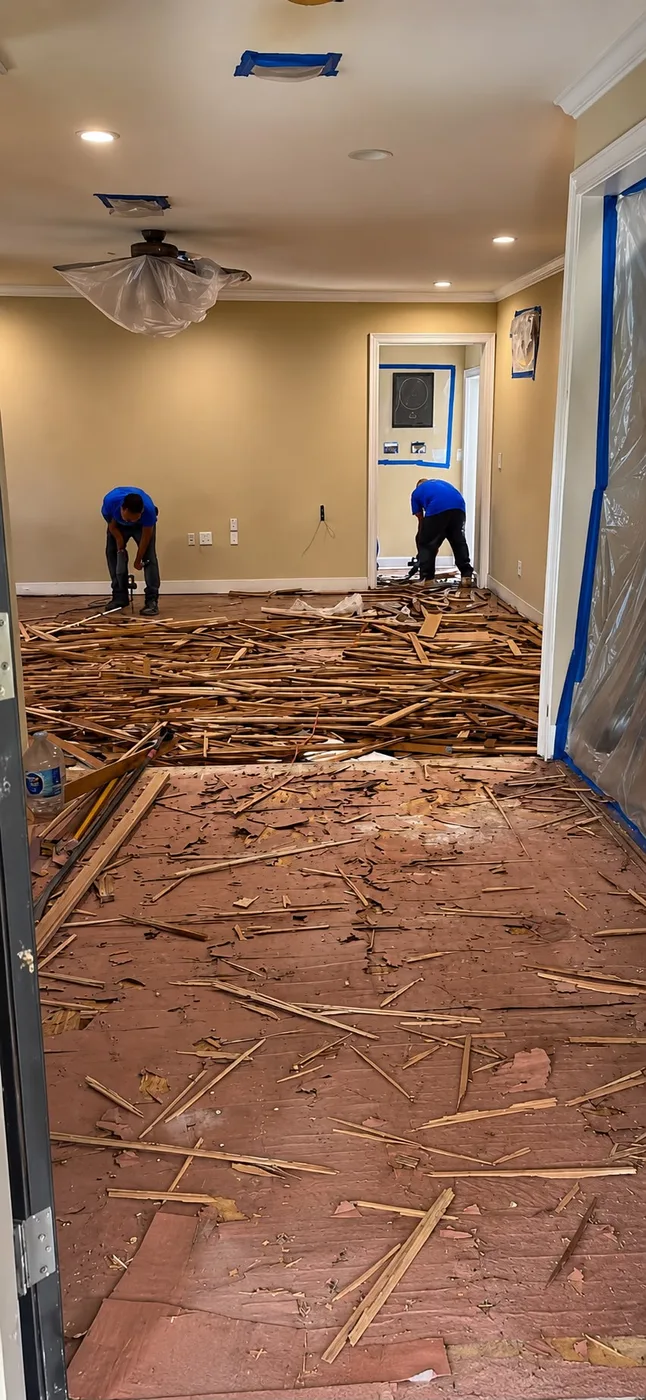
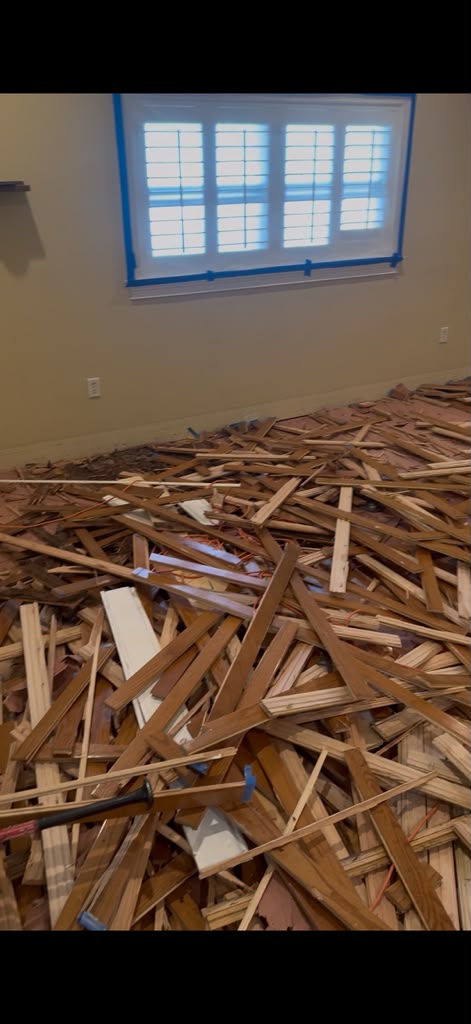
Careful removal of old nail-down hardwood and plywood subfloor preparation in an occupied Orlando home.
ResidentialHardwoodHardwood RemovalOrlando, FL
Project Overview
Nail-down hardwood flooring has been installed in Florida homes for generations — secured through face nailing or blind nailing through tongue-and-groove planks into a plywood subfloor. Over time, this flooring can develop issues that go beyond what hardwood refinishing can address: persistent cupping from moisture cycling, boards that have lost their tongue-and-groove lock, systemic squeaking from subfloor deflection, or simply a homeowner who wants a fresh style update. When refinishing is not the correct solution, complete removal and replacement may be necessary.
This Orlando residential project focused on the full removal of existing nail-down hardwood flooring, inspection and repair of the plywood subfloor, and careful preparation for the next flooring phase. Handling the removal and subfloor work in-house allowed us to identify and address substrate issues before a new floor was installed, rather than discovering problems later.
The Challenge: Hardwood Removal in an Occupied Home
The client was living in the home during the renovation, so the hardwood removal had to be contained carefully from the first plank to the final cleanup. We covered furnishings and exposed surfaces, isolated the work area, and sealed the transitions into the other rooms so demolition dust and debris stayed inside the active work zone instead of spreading through the home.
This required a more deliberate setup than an empty-house demolition: the crew maintained the containment throughout the removal, controlled debris as it was generated, and cleaned the protected paths and surrounding areas as the project progressed. The goal was to complete a dusty tearout while keeping the rest of the home comfortable and usable for the client.
The Removal Process
Nail-down hardwood removal is methodical work. The process involves:
Full dust containment: Furnishings, surfaces, and access paths were covered before demolition began, with the active work area isolated so dust did not migrate into the other rooms.
Starting from the wall: The baseboard is removed first to expose the floor edge, and the first few rows are pried up carefully using floor scrapers and flat bars to avoid damaging the subfloor surface.
Working board by board: Each plank is pried up from the subfloor, with care taken not to lever aggressively and cause screw or nail blow-through into the plywood. Boards with heavily corroded nail shanks require more careful extraction.
Nail removal and flush-driving: Nails left standing proud from the subfloor are either pulled or driven flush — any protruding fastener can interfere with the new installation or create an uneven area in the prepared substrate.
Subfloor sweep: After all planks are removed, the plywood subfloor is swept and inspected for structural integrity, soft spots, delamination, and any fastener-related damage from the removal process.
Subfloor Assessment and Repair
The value of a complete removal over going over-top becomes clear at the subfloor inspection stage. Hidden issues that would have been impossible to address with flooring in place are fully accessible:
Soft or spongy panels indicating subfloor delamination or moisture damage
Squeaky panels that need additional fastening to the joists below
Humps, low areas or damaged sections that may require sanding, patching, additional fastening or panel replacement
Previous moisture staining or suspected microbial growth requiring further evaluation before the new floor is installed
We address every identified issue before new flooring installation begins — these repairs are more accessible and typically less disruptive before the new flooring is installed. The same repairs become significant cost and disruption items if discovered after new flooring has been installed over them.
Preparing for New Hardwood Installation
With the subfloor repaired, flat, and verified, the prepared substrate was ready for the next flooring phase. A compatible new hardwood flooring installation can then proceed using the method approved for the plywood subfloor and selected product. Proper acclimation of hardwood material — particularly important in Florida’s climate — helps minimize post-installation movement.
Complete old hardwood removal with minimal subfloor damage
All subfloor issues identified and repaired before new installation
Prepared plywood subfloor ready for the next flooring phase
Installation method selected for the approved flooring system
Hardwood removal and exposed plywood subfloor prepared for the next flooring phase.
Frequently Asked Questions
Nail-down hardwood removal is performed using a combination of floor scrapers, pry bars, and power floor scrapers depending on the board width, nail type, and subfloor conditions. Each plank must be pried up and the nails removed or driven flush to prevent subfloor damage. The process is labor-intensive but should always be done carefully to preserve the plywood subfloor beneath for reuse.
In most cases, no. Installing new flooring directly over existing nail-down hardwood adds height, creates flatness issues from the old floor's wear pattern, and may void the warranty of the new flooring. For best results — and the longest-lasting installation — the old hardwood should be removed, the subfloor inspected and repaired, and the new floor installed on a clean, flat substrate.
Some minor scarring of the plywood subfloor surface is common during nail-down removal — this is normal and expected. Our crew works carefully to minimize damage, but some fastener marks and surface irregularities are inevitable. We assess the subfloor after demo and perform any necessary repairs — patching holes, securing loose panels, or spot-filling — before new flooring is installed.
For wood-framed plywood subfloors, nail-down installation is commonly used when approved by the flooring manufacturer. For concrete slabs, a compatible glue-down system may be used for certain solid or engineered hardwood products. The correct method depends on the flooring manufacturer, slab moisture conditions, adhesive system and project specifications. NWFA guidance recognizes multiple installation methods and emphasizes the approved flooring system, substrate preparation and moisture conditions — not one universal method for every Florida home.
Yes. Cavalieri Flooring removes nail-down hardwood, disposes of the old flooring, inspects the plywood subfloor and completes necessary preparation or repairs before the next flooring phase. We provide hardwood removal and subfloor preparation throughout Orlando and Central Florida.