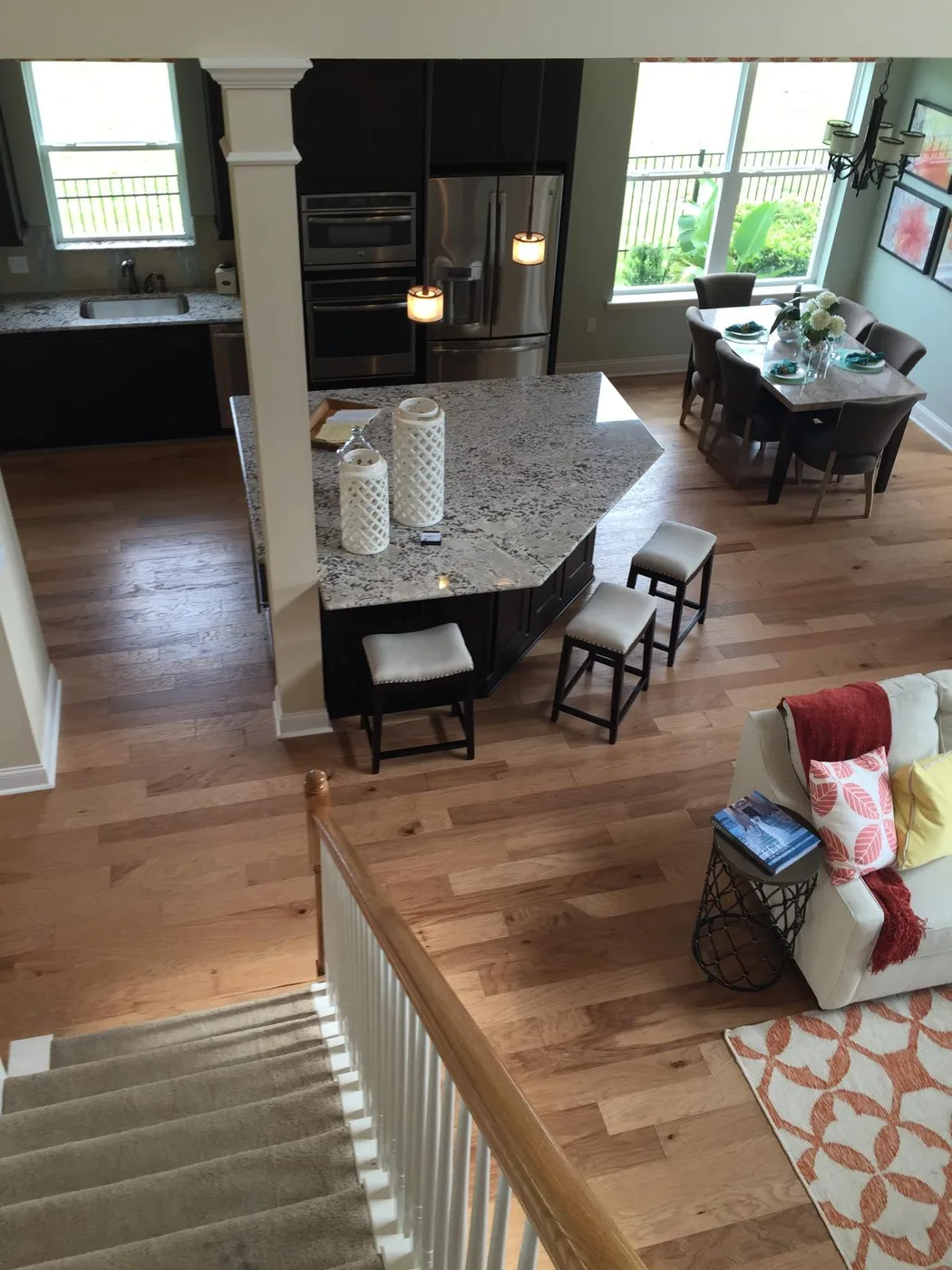
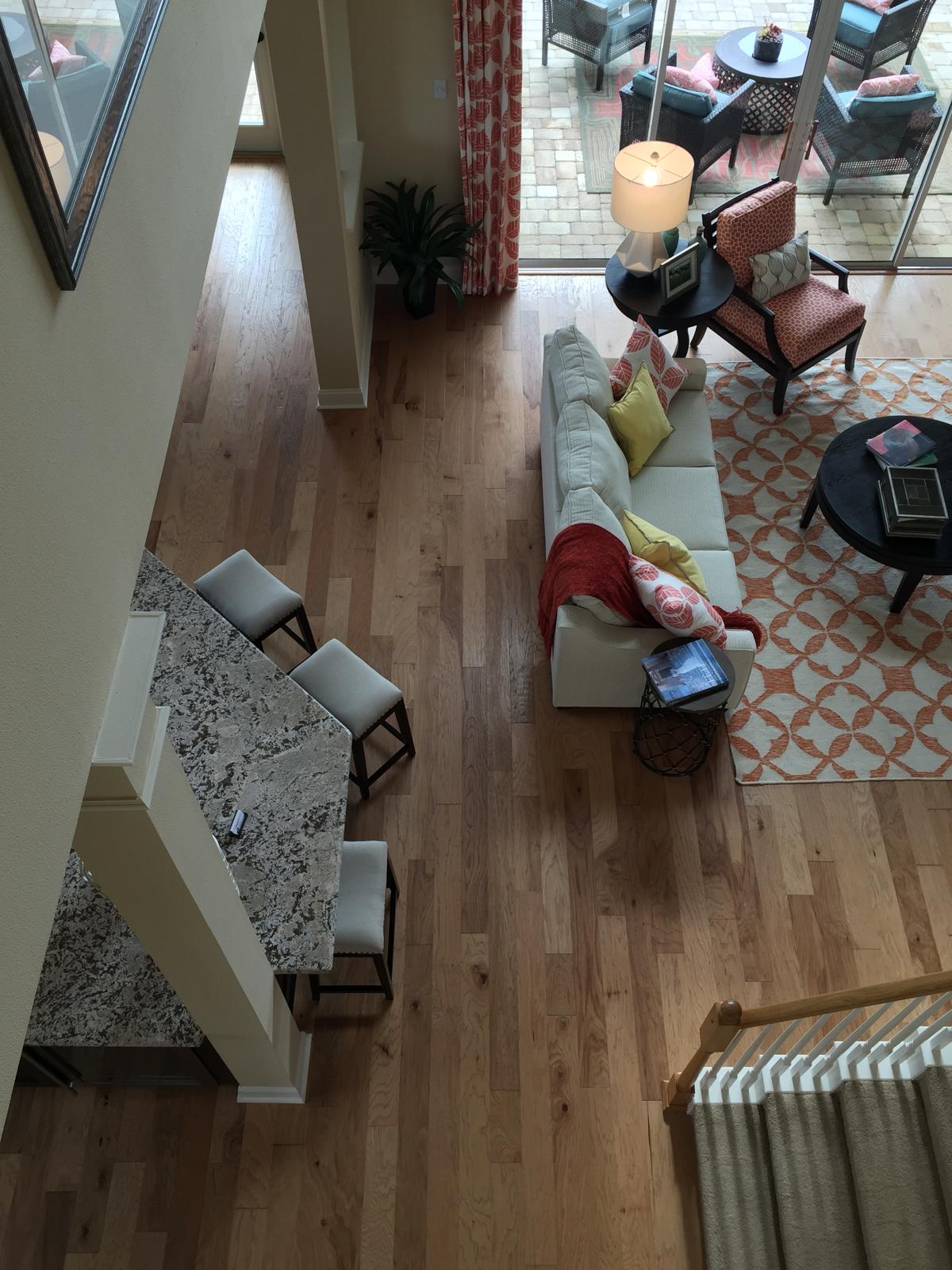
Traditional blind-nail installation of solid hardwood over a plywood subfloor in Orlando, FL — the time-tested method that delivers the most secure, solid-feeling hardwood floor possible.
ResidentialSolid HardwoodNail-DownOrlando, FL
Project Overview
The nail-down installation method is the traditional and most widely used technique for installing solid hardwood flooring over a plywood subfloor. Each plank is secured through blind-nailing — a pneumatic nailer drives a cleat or staple through the tongue of each board at a 45-degree angle, completely concealing the fastener under the groove of the next row. The result is a floor where the fasteners are invisible, the planks are locked together, and each board is independently secured to the subfloor below.
This Orlando residential project involved nail-down installation of solid hardwood across multiple rooms in a home with a wood-framed, plywood subfloor construction. The project included a full subfloor preparation phase before installation and complete baseboard and trim reinstallation as part of the finished scope.
The Right Method for the Right Substrate
Nail-down installation is the correct method when a home has a plywood subfloor of sufficient thickness — typically 3/4 inch minimum — and when the joists below are in good condition. The advantages of nail-down over other methods in this application include:
Permanent, distributed fastening: Each board is secured by multiple cleats or staples driven at regular intervals — typically every 6 to 8 inches along the board length. This distributed fastening pattern gives the floor excellent resistance to movement, cupping, and squeaking over time.
No adhesive to manage: Unlike glue-down installations, nail-down doesn't require adhesive staging, open time management, or the careful sequencing that glue-down demands. This makes the installation process faster and more manageable for large open floor plans.
Industry-standard for solid hardwood: Most solid hardwood manufacturers specify nail-down over plywood as the primary installation method — it's what the material was designed for, and installations done correctly will last generations.
Refinishability preserved: A nail-down solid hardwood floor can be sanded and refinished multiple times over its lifetime — a key advantage over engineered options. Each refinish cycle removes the surface wear and restores the floor to like-new condition.
Installation Process
The installation began with a thorough subfloor preparation — walking the entire floor area to identify and eliminate any squeaks by re-fastening loose panels with screws, sanding panel joint height differences, and verifying overall flatness. A flat, squeak-free subfloor is essential for a nail-down installation that will remain silent and stable for years.
The hardwood was acclimated in the space for the required period with the HVAC running before installation began. The starting row — the row from which all subsequent rows are measured — was carefully set perpendicular to the door opening and snapped to a chalk line, then face-nailed to secure it firmly as the anchor point for the rest of the floor.
From the second row onward, a pneumatic flooring nailer was used for all blind-nailing. The flooring nailer is driven with a mallet and driven along the tongue of each board, setting a cleat at the correct depth — not too deep to split the tongue, not too shallow to leave the fastener proud. Our installer works systematically across the room, racking several rows at a time to optimize the visual pattern of board lengths and end joints.
At walls and obstacles where the full nailer can't access, boards are hand-nailed or fastened with screws and the holes are later filled. The final rows at the opposite wall are also face-nailed and the holes filled, as baseboard installation will conceal them.
Results: Rock-Solid, Beautiful Real Wood
The completed nail-down hardwood installation delivered the premium underfoot experience that real wood floors are known for — completely solid, no flex, no movement, no hollow sound anywhere across the full floor. The natural grain variation of solid hardwood creates a visual richness that no engineered product replicates, and with proper care this floor will serve this home for decades and survive multiple refinishing cycles.
Subfloor prepared and squeak-free before installation
Hardwood properly acclimated to environment
Nail-down with cleats at full required density per manufacturer spec
Starter and finishing rows face-nailed and concealed by trim
Baseboard and trim reinstalled to complete the project
Completed solid wood flooring installed with the nail-down method.
Frequently Asked Questions
Nail-down hardwood installation secures each plank to the plywood subfloor using a pneumatic nailer that drives cleats or staples through the tongue of each board at an angle. This blind-nailing method hides the fasteners completely — they're concealed under the groove of the next row. The result is a floor secured by hundreds of individual fasteners per room, creating a solid, permanent connection between the hardwood and the subfloor.
Nail-down hardwood is well suited to any room with a plywood subfloor — including living rooms, dining rooms, bedrooms, hallways, and offices. It's not appropriate for wet areas like bathrooms. In two-story construction, nail-down hardwood provides excellent sound damping between floors due to the tight fastened connection.
Most nail-down hardwood manufacturers and installation guidelines specify a minimum plywood subfloor thickness of 3/4 inch (19mm) for standard 3/4-inch solid hardwood. Thinner subfloors may not provide adequate fastener holding power and can allow floor movement. We assess subfloor thickness and condition before any nail-down installation begins.
Preventing squeaks in nail-down hardwood starts with proper subfloor preparation — securing all loose panels, verifying joist spacing and condition, and using the correct fastener type and density for the flooring product. We also check for and eliminate any subfloor squeaks before installation begins, because a subfloor squeak will remain after the new floor is installed and will be very difficult to address afterward.
Yes. We install nail-down hardwood flooring in homes with plywood subfloors throughout Orlando and Central Florida. Our process includes subfloor preparation, hardwood acclimation, full installation, and baseboard/trim reinstallation as part of a complete project. Contact us for a free estimate.